

In a salon service, keratin hair extensions are judged long after the first mirror check. The real result appears when the hair is washed, brushed, dried, tied back, curled, slept on, and finally removed. Therefore, care and removal are not small afterthoughts. They protect the bond area, keep the lengths easier to manage, and help the next service begin with less stress.
This guide focuses on practical aftercare rather than another purchase checklist. It explains how pre-bonded strands behave in daily wear, how to protect the attachment area, how to test samples with real salon routines, and how to plan safe removal before the first strand is ever applied.
01 / Principle Education
First Understand What Pre-Bonded Care Really Protects
First, pre-bonded hair is not only a strand with a small attachment at the top. It is a service structure. The natural section, bond shape, strand weight, color blend, brushing habit, washing routine, styling heat, and removal method all affect the final result.
In the mirror, the hair may look beautiful right after installation. However, the first week tells a more honest story. The hair is washed, dried, tied back, brushed in a hurry, curled before dinner, and slept on through the night.
Therefore, care protects more than the surface shine. It protects the bond area from oil buildup, the natural section from pulling, and the lengths from dryness. It also keeps the final removal appointment calmer and more predictable.
In other words, a good pre-bonded service should feel quiet after leaving the chair. The bonds should not feel heavy. The ends should not turn rough too quickly. The removal should not feel like damage control.
02 / Scene-Based Judgment
Choose by Real Wearing Scenes, Not by Product Name Alone
A useful service plan begins with the scene where the hair must perform. For example, fine sides may need soft fullness instead of dramatic length. Meanwhile, a color service may need small contrast pieces that add dimension without changing the natural hair again.
In daily life, the most revealing moments are simple. Hair gets tucked behind the ear. A low ponytail exposes the side profile. Loose waves move across the shoulders. A quick blow-dry shows whether the ends still feel polished.
For this reason, pre bonded hair extensions work well when placement needs to be detailed. The method can help around temples, sides, layers, and smaller areas where a wide row may feel too visible.
At the same time, this method needs careful planning. Too much extension hair on a weak natural section may pull or separate. A shade that looks good in a pack may still appear too flat near the face. Therefore, daily movement should guide the final choice.
03 / Product Features
What Makes Pre-Bonded Hair Useful After Installation
Pre-bonded extensions are useful because the placement can be controlled strand by strand. Instead of adding the same density everywhere, the stylist can build more support where shape is needed and keep fragile areas softer.
The bond shape also affects comfort. A flat F Tip can feel compact in certain placement patterns. A U Tip can wrap around a small natural section during heat application. Both options can work well when section size and direction are planned correctly.
In addition, strand-level placement supports natural movement. The hair can separate softly when the head turns. This is important around sides, layers, ponytail movement, and loose wave finishes, where stiff movement can make even smooth hair look less natural.
However, product review should not stop at smoothness. A serious sample check should include bond size, strand weight, end fullness, shade behavior, wash response, heat styling, brushing feel, and removal behavior.
04 / Hands-On Sample Testing
A Better Checklist for Pre-Bonded Sample Review
A sample test should feel like a small version of a real appointment. First, the hair is reviewed dry. Then it is brushed, washed, dried, styled, photographed, and removed. This process reveals much more than a product photo.
Moreover, the test should include different lighting. A blonde shade may look clean under white light but warmer near a window. A rooted color may blend beautifully in motion but look too dark at the crown if the natural hair is lighter.
| Test Point | What to Check | Why It Matters |
|---|---|---|
| Bond shape | Size, edge, flatness, and uniformity | A neat bond helps placement stay discreet and comfortable. |
| Strand weight | Balance between extension weight and natural section size | Correct balance reduces pulling and visible separation. |
| End fullness | Density from mid-lengths to tips | Fuller ends make long lengths look more premium after styling. |
| Wash response | Texture after shampooing, conditioning, drying, and brushing | The first wash reveals daily manageability. |
| Color behavior | Shade under daylight, mirror light, and warm indoor light | Lighting checks reduce mismatch near the face and crown. |
| Removal response | How the bond softens, opens, and releases | Safe removal protects the next service plan. |
Overall, the strongest sample is not only soft in the package. It stays manageable after water, heat, friction, and removal. That is why sample testing should copy real service life instead of stopping at first touch.
05 / Product Entry Points
Product Images Should Support Reading, Not Interrupt It
The following product entries are placed near the parts of the article where they are useful. Each full image is clickable and leads to the relevant product page. The button repeats the same destination, so the reading path and product path stay clear.
F Tip for compact bond review and brunette shade testing
Brown and brunette shades are useful for checking shine, depth, and smoothness under salon light. They also make bond edges easier to evaluate because the attachment area can appear more visible on darker tones if the placement is not clean.
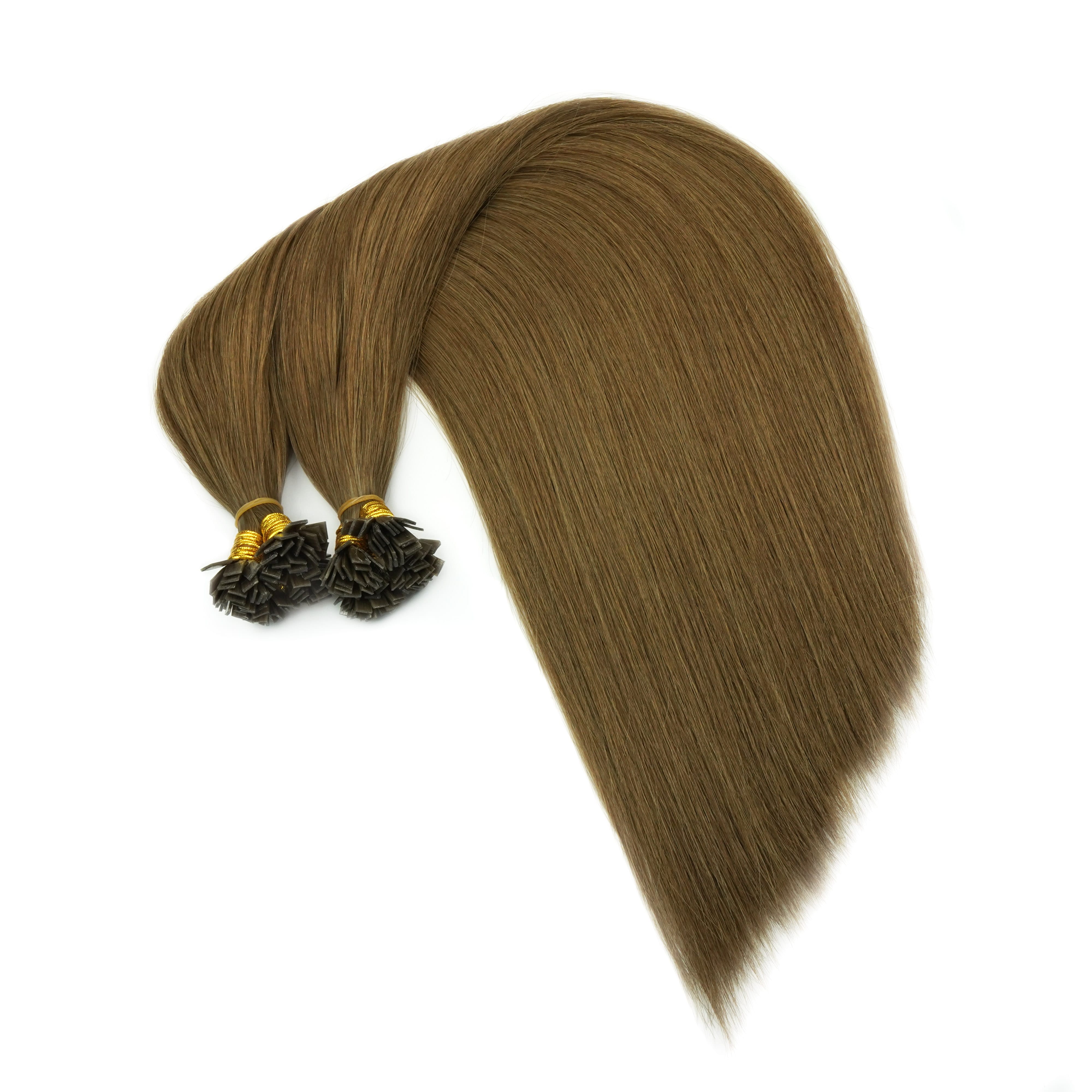
Use this type of image to explain brunette tone review, bond neatness, and end-density checks.
View F Tip Product →06 / Daily Care
Daily Care Should Feel Simple Enough to Follow
After installation, the first goal is to protect the bond area from pulling, oil buildup, and friction. The routine does not need to sound complicated. In fact, simple instructions are more likely to be followed.
First, brushing should start at the ends. Then the brush can move upward in small sections. While brushing near the attachment area, one hand should support the hair so the natural section does not take sudden tension.
Next, product placement matters. Conditioner, heavy masks, oily serums, and rich styling creams should stay away from the bond area. However, the mid-lengths and ends still need moisture, especially on blonde or longer shades.
Finally, night care should stay practical. Hair should be dry before sleep, and a loose braid or low ponytail can reduce friction. This habit keeps the lengths organized and makes morning brushing much easier.
A clean care card for salon education
Brush from the ends upward, then move toward the bond area.
Support the attachment area with one hand while brushing.
Keep conditioner, oil, and masks away from bonds.
Dry the root and attachment area before sleeping.
Use heat tools on the lengths, not directly on the bond.
Schedule professional removal before tangling becomes severe.
For broader maintenance education, Surblond Beauty’s CARING FOR YOUR HAIR EXTENSION page can support brushing, washing, sleeping, and general daily-use guidance.
F Tip for light shade and post-wash texture review
Light blonde shades show dryness, uneven texture, and end quality more clearly than many darker tones. Therefore, a blonde F Tip sample is useful when the review focuses on softness after washing, brush glide, and visible smoothness through the ends.
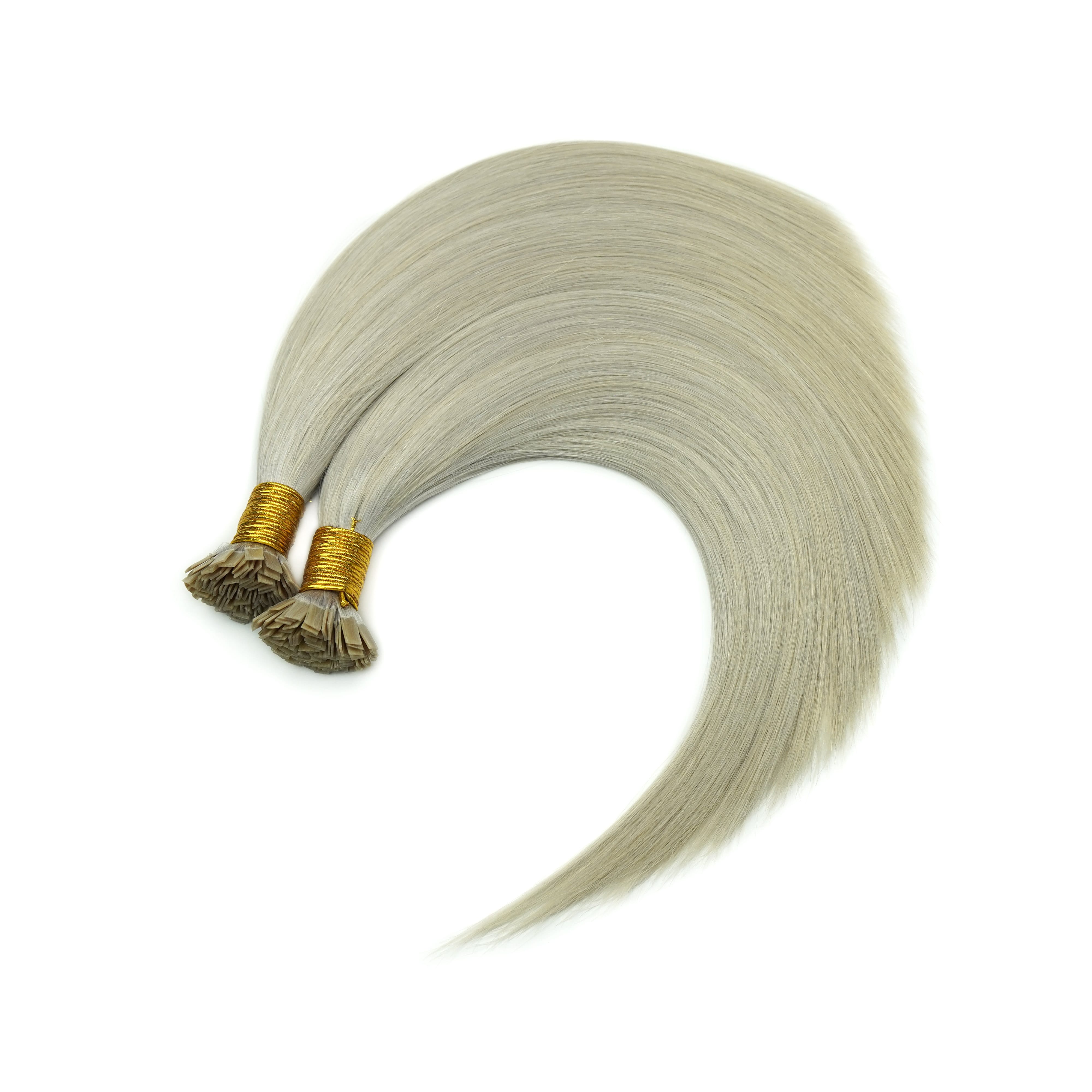
A light blonde F Tip sample helps check softness, shine, and end control after washing and drying.
Check F Tip Details →08 / Removal Planning
Safe Removal Starts Before the First Strand Is Applied
Removal should never be treated as a last-minute problem. A clean takedown is easier when the installation was mapped well from the start. The bonds should be reachable, the sections should not be overloaded, and the root area should stay organized during wear.
During removal, professional remover should soften the bond before pressure is added. The strand should not be pulled out dry. If resistance remains, more remover and more waiting time are usually safer than force.
After the bond opens, the natural hair needs careful combing. Shed hair that stayed inside the bond area must be released slowly. This step is normal, but it becomes difficult when removal is delayed too long.
The U Tip product page is useful for method education because the tip shape clearly shows how a heat-bond strand can be mapped, applied, and later removed in a controlled way.
A practical removal sequence
Step 1 Section cleanlyWork in small areas, especially around the nape and behind the ears. | Step 2 Soften the bondApply professional remover and allow enough time before opening the bond. | Step 3 Release gentlyOpen the softened attachment without dragging the natural section. | Step 4 Clear shed hairComb slowly before washing so loose shed hair does not tighten into knots. |
U Tip for classic heat-bond placement training
A U Tip sample is useful for explaining how the strand sits before application, how the bond wraps during heat work, and how the attachment area should be checked during removal planning. This makes it suitable for training materials and service demonstrations.
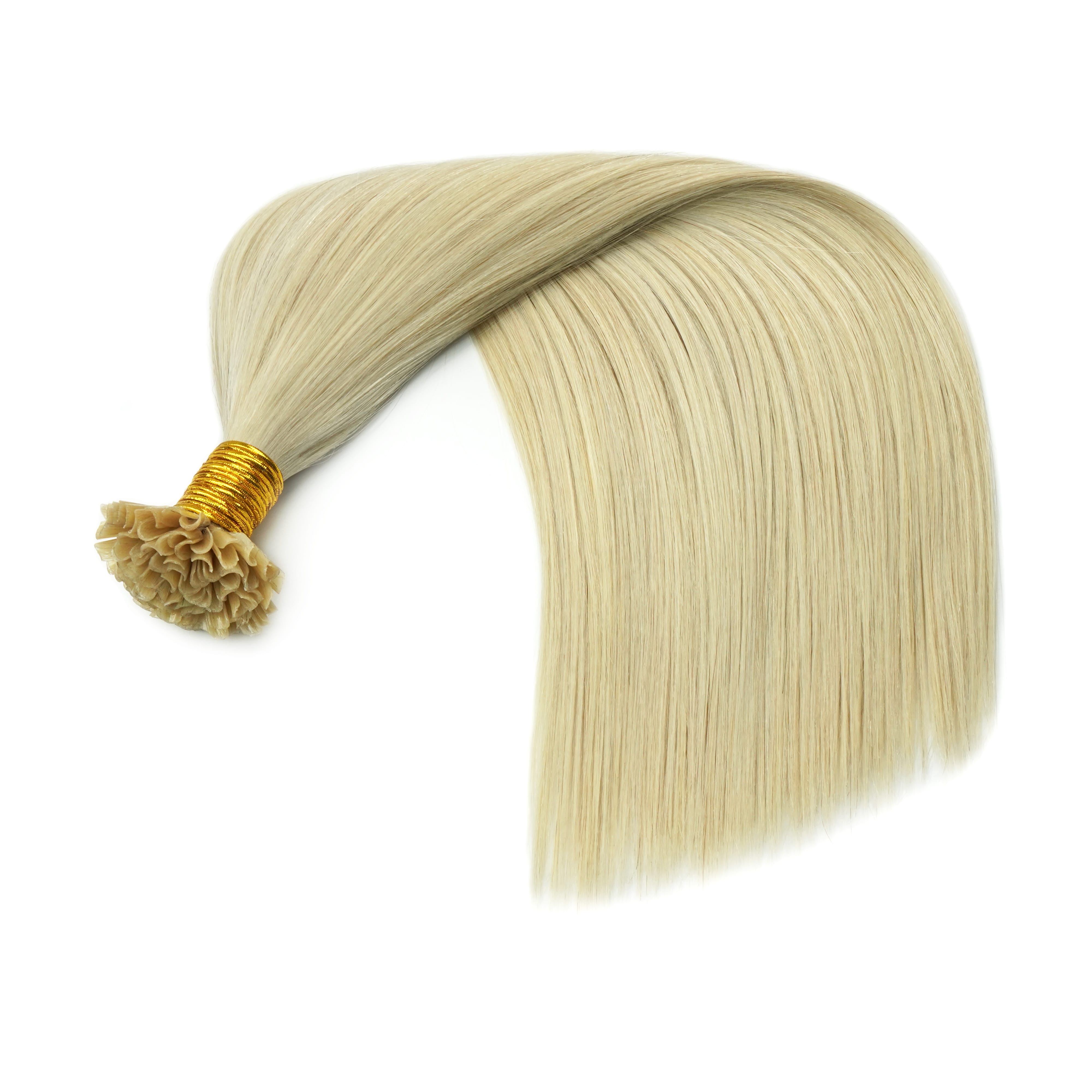
This U Tip image supports placement education, bond-shape review, and classic heat-bond explanation.
View U Tip Product →09 / Common Mistakes
Small Habits That Make Pre-Bonded Hair Harder to Maintain
One common mistake is placing heavy oil too close to the attachment area. Oil may help dry ends look smoother, but it can also make the bond feel slippery over time. Therefore, product placement matters as much as product quality.
Another problem is brushing from the root first. This creates sudden tension before the ends are clear. A better pattern begins at the ends, moves through the middle, and reaches the bond area last.
Sleeping with wet hair can also create trouble. Damp roots and moving pillows make tangles easier to form. By morning, the bond area may feel tight, and brushing may become more difficult than necessary.
Direct heat on bonds is another avoidable issue. Hot tools should style the lengths, not flatten or soften the attachment. Even if the bond looks unchanged at first, repeated heat can affect the way it holds.
Finally, removal without professional remover can turn a normal service into damage control. Bonds should not be cracked, scraped, or pulled out dry. Professional takedown keeps the next service easier to plan.
10 / Stock Logic
Build Stock Around Services, Not Random Shades
A practical pre-bonded range starts with common service needs. Side fullness, full length, color accent, fine-area placement, and classic transformation work all need different decisions. As a result, stock planning should begin with the service menu.
For a focused first range, natural black, dark brown, chocolate brown, medium brown, beige blonde, rooted blonde, and a few highlight shades may create a useful base. However, local salon demand should guide the final shade plan.
Length planning also needs care. Long lengths look impressive, but they require stronger end-care education. Shorter fill pieces may solve more everyday problems because they add shape without creating heavy maintenance pressure.
In addition, sample notes should be clear. Method, shade code, length, texture, strand weight, pack weight, and test purpose should be recorded. Over time, these notes become a cleaner reorder system.
A simple service-to-product map
| Service Scene | Main Goal | Selection Thought |
|---|---|---|
| Side fullness | Soft shape around temples and face | Choose discreet bonds, lighter density, and careful shade blending. |
| Full length | Visible length and fuller ends | Balance strand count with natural hair strength and wearing comfort. |
| Color accent | Highlight, lowlight, or face-frame effect | Test the shade in daylight and salon mirror light before stock planning. |
| Fine-area placement | Natural movement with less bulk | Use smaller sections and review movement in ponytails and side profiles. |
U Tip for long length and end-density comparison
Longer U Tip pieces are useful when the test focuses on full transformation services. The review should look at end fullness, smoothness after drying, and how the strand falls when lifted, moved, and released.
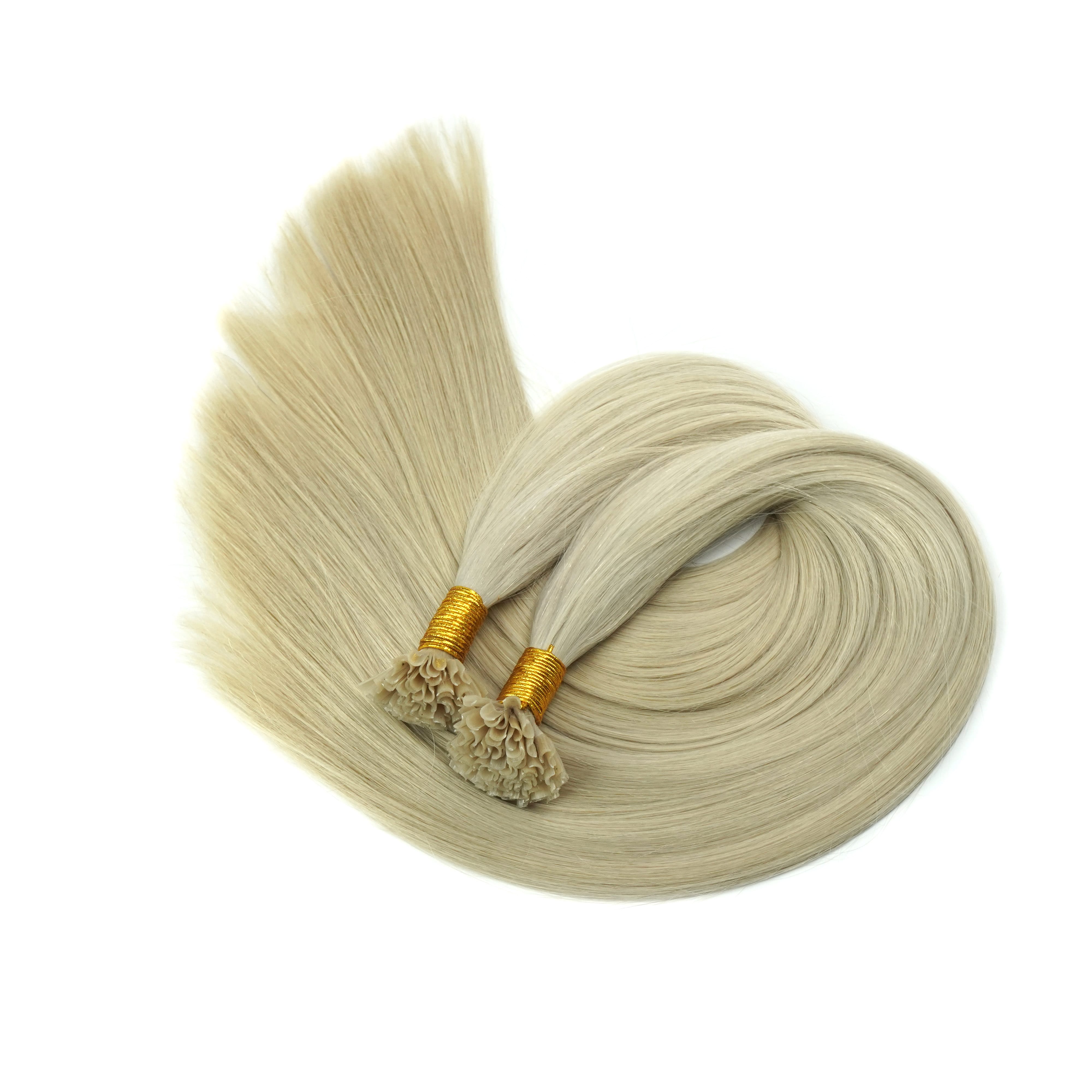
This U Tip photo fits the section about long-length planning, end-density review, and service mapping.
Explore U Tip Options →11 / Extended Reading
Useful Surblond Beauty Pages for the Next Step
A good article should guide reading and navigation at the same time. Therefore, the following links are placed as practical next steps. They support method comparison, product viewing, sample planning, and direct inquiry without interrupting the article flow.
12 / FAQ
FAQ: Care, Removal, Wear, and Sample Selection
How long should pre-bonded extensions stay in before removal?
Wear time depends on natural hair growth, scalp oil, section size, brushing habits, product use, and installation quality. However, removal should be planned before the bond area becomes tangled or uncomfortable. A scheduled check allows the stylist to review slippage, buildup, and root movement. This makes removal safer and helps the next service plan stay more accurate.
What products should stay away from the bond area?
Heavy oils, rich masks, slippery conditioners, and thick styling creams should not sit close to the bond area. These products may be useful on dry ends, but they can affect grip near the attachment. A better routine places moisture through the mid-lengths and ends while keeping the root area clean, light, and easy to brush.
Can pre-bonded extensions be styled with heat tools?
Yes, the lengths can be styled with normal professional heat tools when the temperature stays controlled. However, the bond area needs distance from direct heat. Curling irons, straighteners, and hot brushes should shape the lengths rather than press the attachment. This habit helps the bond keep its shape and supports a cleaner wear period.
Why should removal be included in sample testing?
Removal testing shows how the bond behaves at the end of the service. A sample may look smooth before installation, but takedown reveals whether the bond softens predictably, releases cleanly, and leaves manageable residue. This matters for staff training, service timing, and natural hair protection. Therefore, removal response should be recorded before regular stock planning.
What information should be included in a sample inquiry?
A clear sample inquiry should include method preference, color direction, length range, texture, strand weight, pack plan, and target service scene. It also helps to note whether the test focuses on side fullness, full length, color accents, or removal training. With these details, sample preparation can match real salon use more closely.
13 / Natural Conversion
Ready to Build a Pre-Bonded Sample Plan?
In summary, pre-bonded hair performs best when product selection, installation, care, and removal are planned together. The bond may be small, but it affects comfort, brushing, styling, and takedown. Therefore, a serious sample review should include daily handling, not only pack appearance.
For teams comparing keratin hair extensions, Surblond Beauty can support discussions around custom color, length, gram weight, texture, packaging, and sample preparation. A focused inquiry makes the next step easier and helps match product options with real salon service needs.
First, choose the service scene before selecting shades or lengths.
Next, test brushing, washing, heat styling, color behavior, and removal response.
Finally, record the results so repeat orders become easier and more consistent.
Request Sample Order → Contact Surblond Beauty → Browse Product Range →