

01 / Principle Education
First Understand What a Weft Changes in a Sew-In Service
First, a weft is the stitched base that holds loose hair together in one continuous strip. This strip allows hair to be installed in rows, so it can build visible fullness faster than many strand-by-strand methods. However, the seam is not just a small technical detail.
In practice, the seam changes comfort, row thickness, section planning, brushing feel, and final style movement. A soft seam may feel better on fine hair. Meanwhile, a stronger seam may support dense transformations with more confidence.
Therefore, sew in hair extensions should be chosen by service scene. The best option for natural side volume may not be the best option for a full back-row length change.
02 / Scene-Based Judgment
Match the Weft Type to the Real Hairstyle Goal
For natural volume, the row should stay discreet. The goal is fuller sides, softer ends, and better shape without a heavy crown. Therefore, lighter seam choices and careful gram control usually matter more than dramatic density.
For full length, the logic changes. Dense natural hair needs enough extension hair through the ends, or the finished shape can look thin. As a result, stronger row coverage and fuller end density become more important.
For color enhancement, the weft works like a styling tool. Rooted blonde, balayage, brunette lowlights, and dimensional honey tones can add depth without extra lightening. In this scene, shade placement and texture movement are just as important as the seam.
03 / Method Logic
A Simple Comparison Map for Weft Selection
Next, compare weft types by how they behave during sectioning, sewing, brushing, and grow-out. A product may look smooth in a photo, yet feel too firm in a real row. Likewise, a thicker seam may work well when the service needs stronger volume.
| Weft type | Best scene | Main benefit | Selection note |
|---|---|---|---|
| Cuttable thin seam option | Custom width and flat row mapping | Flexible placement with a low-profile feel | Useful when head shape needs detailed row control |
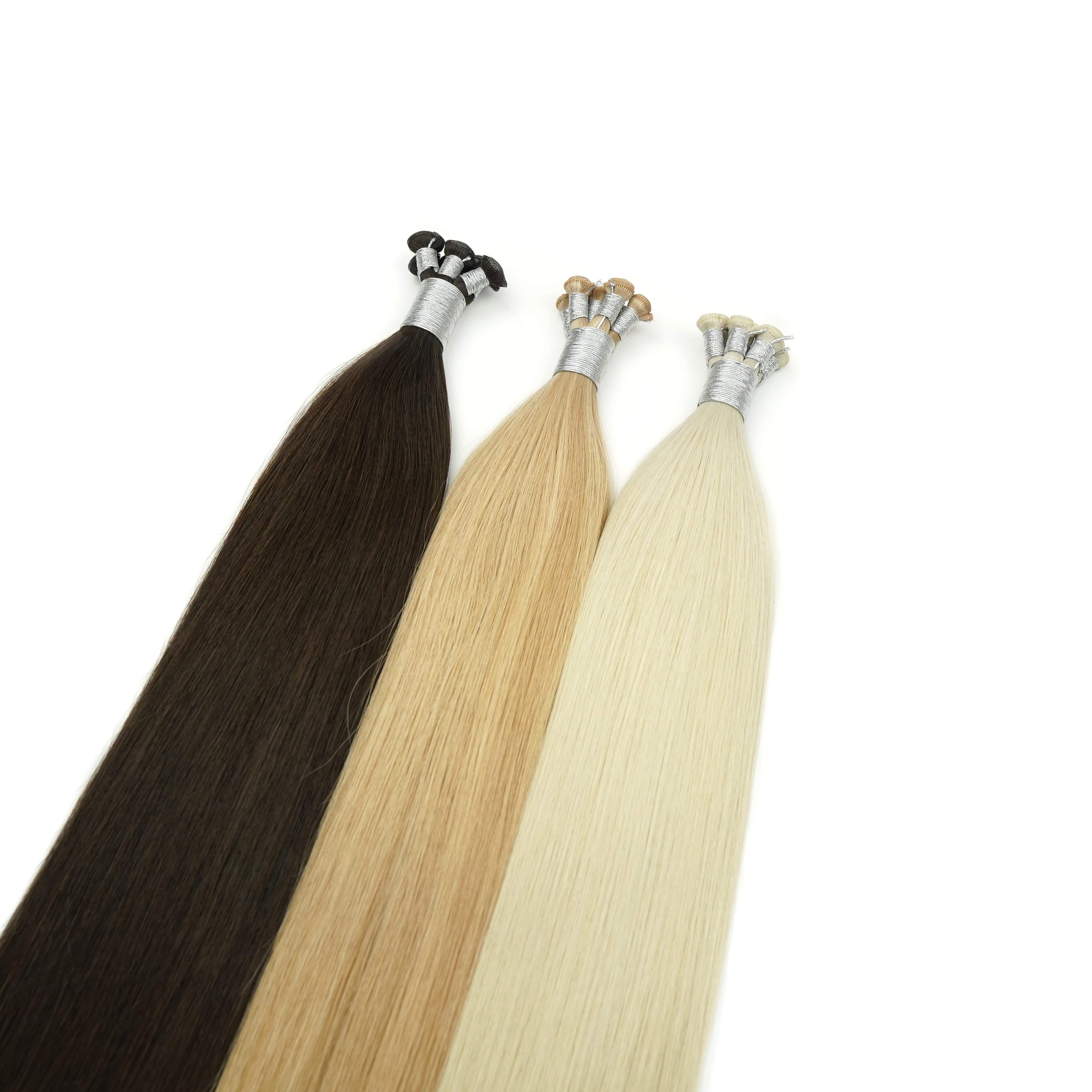
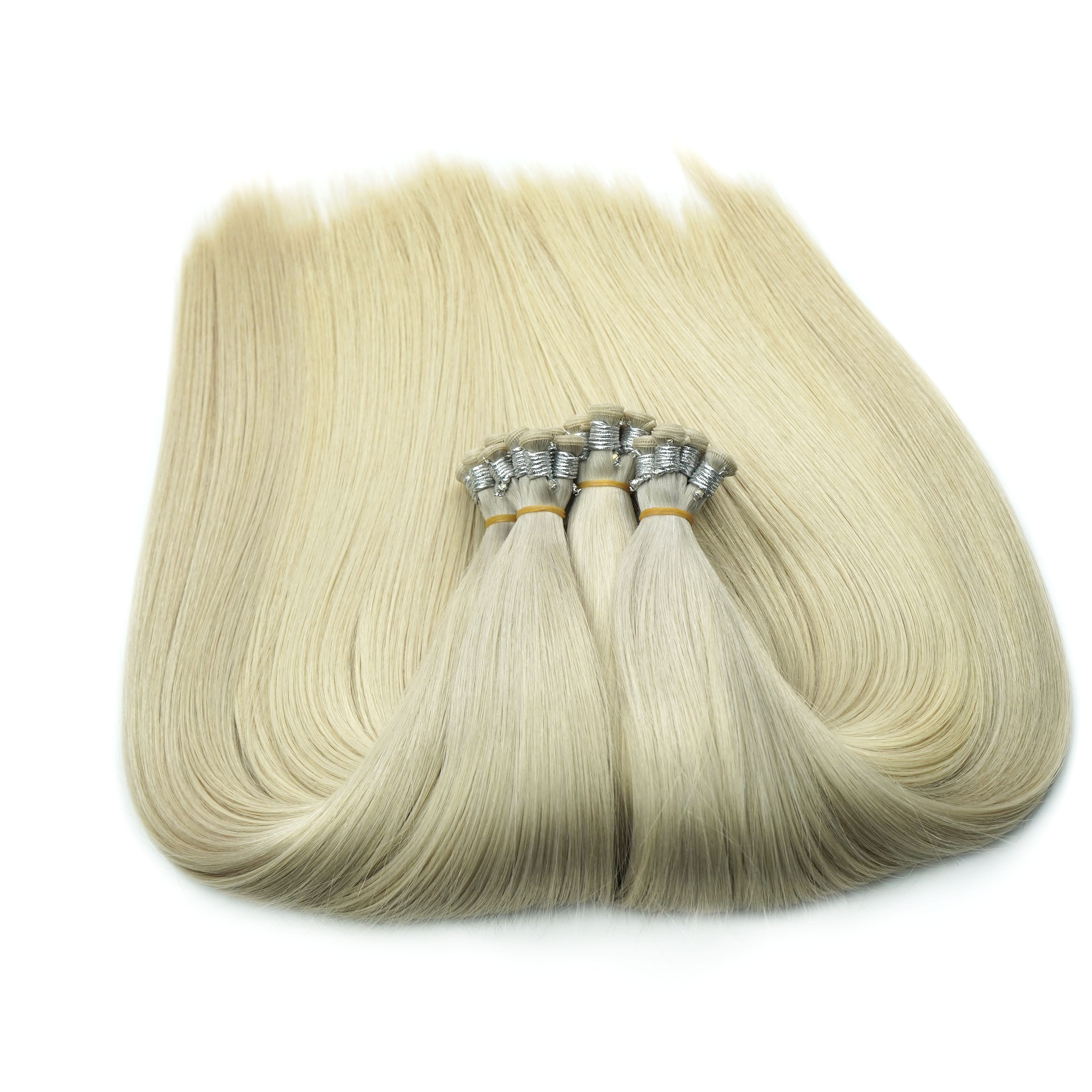
| hand tied weft | Soft rows and refined movement | Light seam feel and natural blending | Good for fine to medium density services |
| machine weft | Fuller rows and classic sew-in work | Strong stitched base and visible density | Cut edges need correct finishing after trimming |
| flat weft | Smooth daily wear and clean row finish | Flatter surface with neat placement | Useful when straight styling may reveal row bulk |
In short, one weft type should not carry every service. A balanced range can include a low-profile row, a fuller density row, and a smooth flat row. Therefore, selection becomes clearer when each product has a defined role.
04 / Product Entry Points
Product Roles Should Guide Action, Not Interrupt Reading
Lightweight rows for soft movement
First, lightweight row work is useful when the service needs movement rather than maximum thickness. The seam should sit calmly under natural hair and allow the finished style to fall softly. Therefore, this option fits refined volume, layered cuts, and subtle density correction.
At the same time, row planning still matters. Even a soft seam can feel heavy when too many grams sit in one section. For this reason, the service plan should balance grams, head shape, and natural density.
Stronger rows for fuller sew-in work
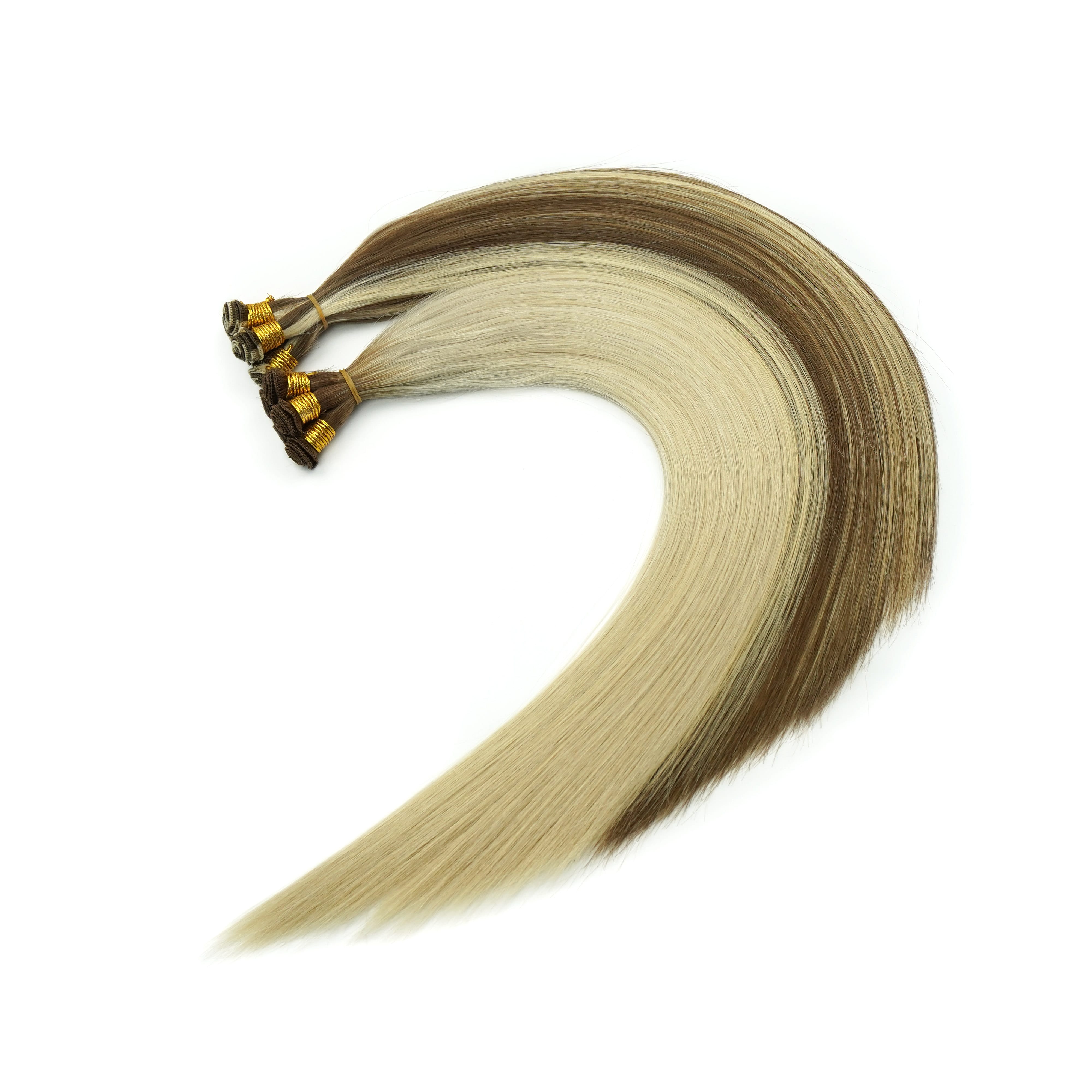
Meanwhile, a fuller row can make more sense for dense natural hair or a longer transformation. The finished shape needs enough weight through the ends, especially after cutting and styling. As a result, seam strength and end fullness become more important.
This type also suits classic sew-in workflows. It can support full backs, strong density, and structured volume. However, the row should still respect scalp comfort and natural section strength.
Smooth rows for clean daily wear
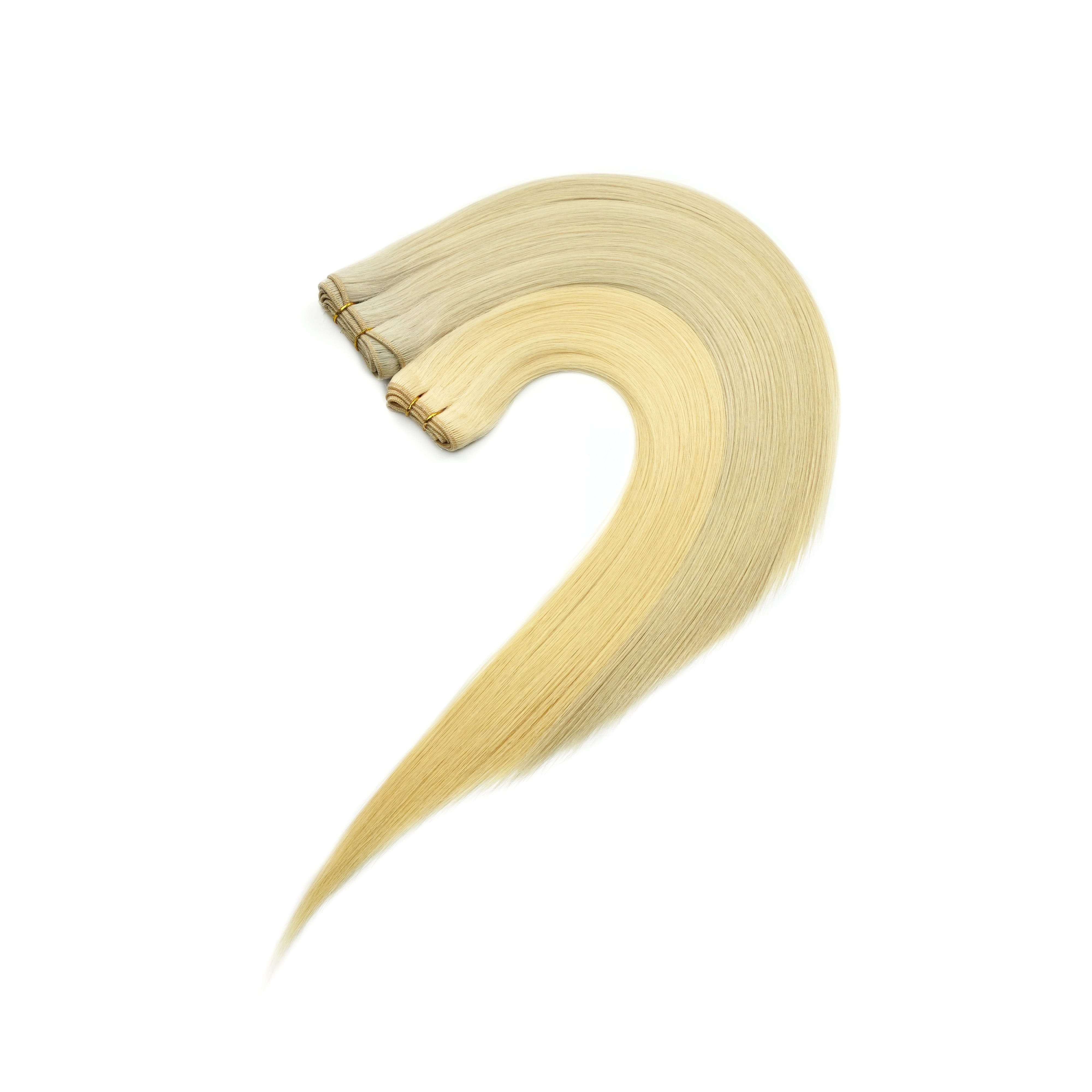
Additionally, smooth row construction helps when the finished style needs a clean side profile. Straight hair, loose waves, and half-up styling can reveal raised bulk quickly. Therefore, a flatter seam can make daily wear look more natural.
This choice can also support simple care routines. The row should brush smoothly, dry clearly, and keep its shape during regular styling. In other words, the product should support the whole service cycle, not only the first photo.
Color and length planning for broader menus
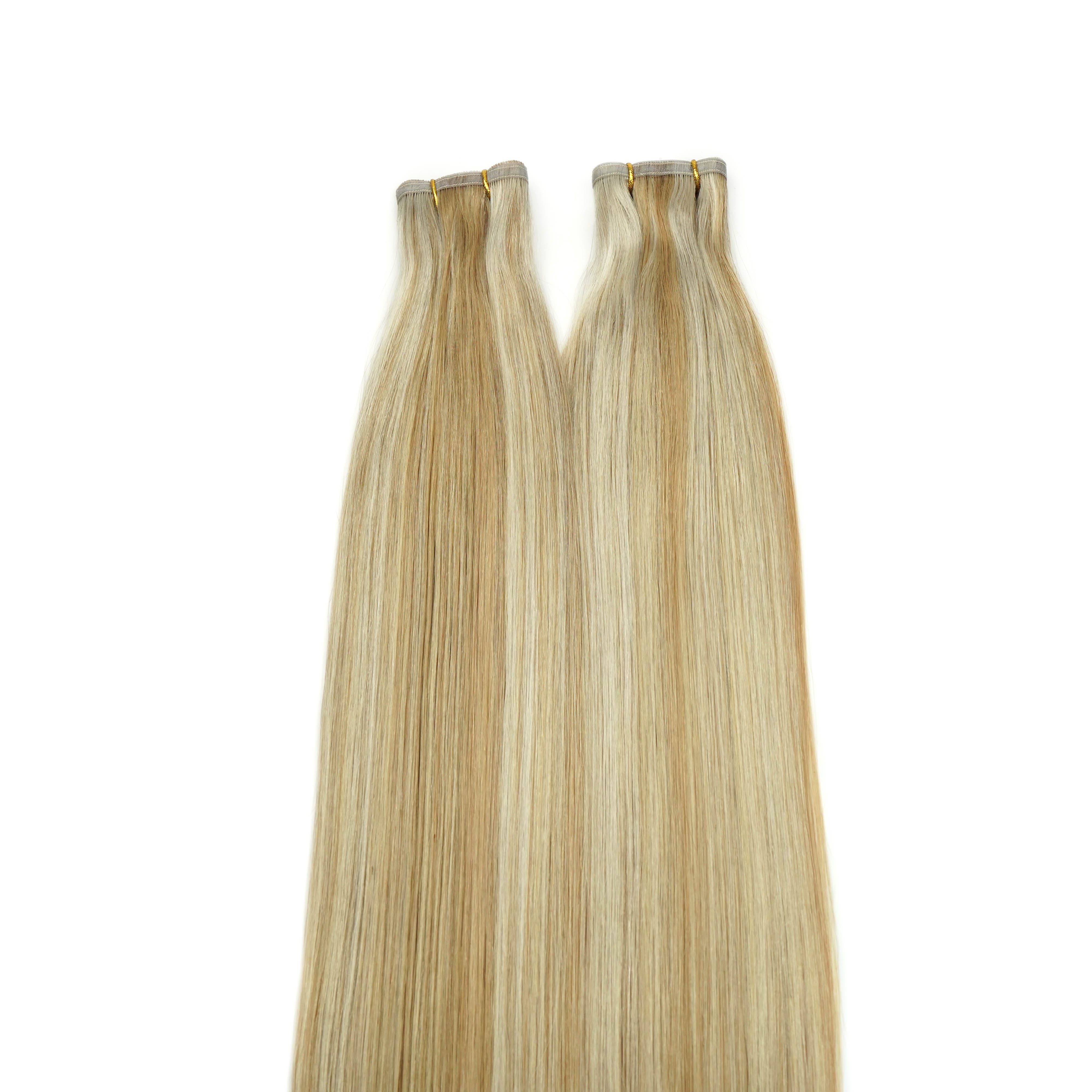
Finally, product planning should include color and length logic. Natural black, dark brown, chocolate brown, beige blonde, ash blonde, and rooted blonde shades often support regular salon work. Meanwhile, dimensional blends can help color services look softer.
For weft hair extensions, the most useful range usually combines core colors with several blend shades. Human hair weft extensions should also be checked after washing and styling, because the first wash reveals more about movement and end softness.
05 / Experience Tips
A Hands-On Sample Test Should Feel Like a Real Appointment
First, sample testing should copy real service use. A sample should be brushed, washed, dried, sectioned, and styled before approval. Otherwise, the decision may depend too much on packaging shine.
Next, the seam should be placed under natural hair or a mannequin section. This small test shows whether the row looks raised, flat, soft, or too visible. It also helps compare comfort before a larger order.
Then, color should be checked in daylight, salon mirror light, and warm indoor light. Blonde shades can shift under warm light. Brunette shades can look flatter under studio lighting.
Step 1
Brush Test
Hold the top and brush from ends upward. Watch shedding, tangling, and how the ends settle.
Step 2
Wash Test
Wash once and dry fully. Check whether softness remains after water and normal handling.
Step 3
Light Test
Compare shades in several lighting conditions before confirming regular color stock.
Step 4
Style Test
Curl and straighten with normal settings. The hair should move naturally after styling.
06 / Actual Use
Installation and Care Decide the Long-Term Result
First, row placement should follow the head shape. A copied row map can create pressure, raised corners, or uneven density. Therefore, sectioning should consider natural hair density, parting habits, and the final haircut.
Meanwhile, tension should stay controlled. A row that feels tight during installation can become uncomfortable after grow-out. Balanced weight distribution helps the service feel calmer in daily wear.
After installation, care instructions should stay simple. Brush from the ends upward, support the row while brushing, dry the attachment area fully, and use heat protection before styling. These habits protect softness and reduce avoidable stress on the seam.
Additionally, maintenance timing should match lifestyle and density. Frequent washing, active routines, and fuller rows may need closer follow-up. As a result, care planning should begin during the consultation, not after problems appear.
07 / Common Mistakes
Common Mistakes When Comparing Weft Types
First, choosing only by seam thickness can create the wrong result. A very thin seam may feel comfortable, yet it may not provide enough weight for dense natural hair. Therefore, seam feel should be judged with grams, end fullness, and final style shape.
Second, ignoring cutting rules can damage stock. Some wefts support custom trimming better than others. However, every construction still needs clean handling, controlled sectioning, and correct edge finishing.
Third, using one product for every service limits the menu. Fine hair, thick hair, bridal styling, color enhancement, and full transformations all need different planning. As a result, a balanced product range often performs better than a single-option approach.
08 / Final Summary
Build the Weft Range Around Real Services
Overall, a strong sew-in extension range should not depend on one seam type. A soft row, a fuller row, and a flat row each solve different service problems. Therefore, the most useful range is not the largest range, but the range that supports repeatable salon work.
In addition, Surblond Beauty can support discussions around color, length, grams, texture, packaging, and sample preparation. For teams comparing genius weft with other weft constructions, a focused sample plan can make the next sourcing step clearer.
Start with one low-profile option, one fuller row option, and one flat seam option.
Test samples through brushing, washing, drying, sectioning, and styling.
Confirm shade demand, length range, grams, texture, and packaging before scaling stock.
09 / FAQ
FAQ: Salon Weft Selection Questions
What is the main difference between lightweight, machine-sewn, and flat seam wefts?
First, the main difference is the seam structure and row behavior. Lightweight constructions focus on soft movement and lower bulk. Machine-sewn constructions support stronger density and classic row coverage. Meanwhile, flat seam options focus on smoother placement. Therefore, the right choice depends on natural density, row visibility, maintenance timing, and the target hairstyle.
Which weft type works better for fine hair?
For fine hair, a lower-profile seam usually works better because it creates less visible bulk near the root. However, the final result also depends on section size, grams, color blend, and row position. A soft seam can still feel heavy if the row carries too much weight. Therefore, fine-hair services need careful mapping.
Are sew-in wefts only for full length transformations?
No. Sew-in wefts can support volume refreshes, side fullness, density correction, color enhancement, bridal styling, and full length services. Shorter lengths can fill weak ends without creating a dramatic change. Meanwhile, longer lengths can support stronger transformations when natural density allows enough coverage. The service goal should decide the seam type.
What should be checked before ordering a larger weft quantity?
First, sample testing should include brushing, washing, drying, sectioning, and heat styling. Then, color should be checked in daylight, mirror light, and warm indoor light. In addition, seam thickness, end fullness, cutting behavior, and texture recovery should be recorded. This process makes wholesale planning more stable and easier to repeat.
10 / Inquiry
Ready to Build a Focused Weft Sample Plan?
A practical inquiry can include seam type, shade direction, length range, texture, grams, packaging preference, and target service scene. With these details, Surblond Beauty can prepare a clearer sample plan for professional sew-in extension programs.
Request Sample Order → Contact Surblond Beauty → Browse Product Range →