

Stocking genius weft is not only a product decision. It is a service-flow decision, a shade-planning decision, and a quiet promise that the salon can handle extension work with more control. On a busy morning, the difference becomes clear when a stylist opens the drawer and finds the right tone, the right length, and a weft that fits the planned row without extra stress. This guide explains when the format belongs in regular stock, how to judge real demand, and how to use samples, color families, and care guidance to build a more confident weft extension menu.
01 / STOCK SIGNALS
Stock When the Salon Starts Needing Speed, Not Just Options
First, the strongest signal is not a trend. It is the moment when extension consultations begin to repeat the same needs. A person sits in the chair, lifts the top layer, and asks for fuller sides, softer ends, or longer hair that still moves naturally. The stylist checks the nape, crown, and hairline, then realizes that a flexible weft format would make the plan cleaner.
In that moment, stock matters. Without the right shade or length on hand, the consultation becomes slower. The stylist may need to delay the service, compare too many product types, or build a plan around what is available instead of what fits best. Therefore, regular stock becomes useful when the salon wants smoother decisions during real appointments.
Meanwhile, occasional interest does not always justify a full shelf. A salon that receives one weft request every few months can start with samples. However, a salon that handles weekly extension discussions should build a compact stock range. That range does not need to be large. It needs to be accurate.
As a practical rule, stock should follow repeated consultation patterns. If the same three brunette shades, two rooted blondes, and one highlighted blend appear again and again, those colors deserve attention. If most services aim for subtle fullness, mid lengths may matter more than dramatic long lengths. Stock should reflect real salon scenes, not guesswork.
02 / PRODUCT FIT
What This Weft Format Actually Helps With
A salon does not add a new weft only because it looks neat in a product photo. The format should make daily work easier. In many extension services, the important question is simple: can the finished hair fall naturally after the wearer leaves the chair, brushes it at home, ties it low, or walks outside in daylight?
This is where a low-profile weft can help. A flatter attachment area can reduce the visual ridge under the top layers. In addition, a weft that supports controlled customization can help stylists shape rows around different head curves. Therefore, the product becomes useful for both the finished look and the installation plan.
The Genius Weft product can be considered when a salon needs a weft option for smoother row placement, natural volume work, and flexible salon mapping. It should not replace every method. Instead, it can sit beside machine weft, flat weft, hand tied weft, tape in, clip in, and keratin tip services as one clearly defined option.
However, the format still needs professional judgment. Fine hair, thick hair, layered hair, and short hair all behave differently. A good stylist does not choose by name alone. Instead, the stylist reads the head shape, checks the density, studies the color, and decides whether the weft can support the final style without adding unnecessary weight.
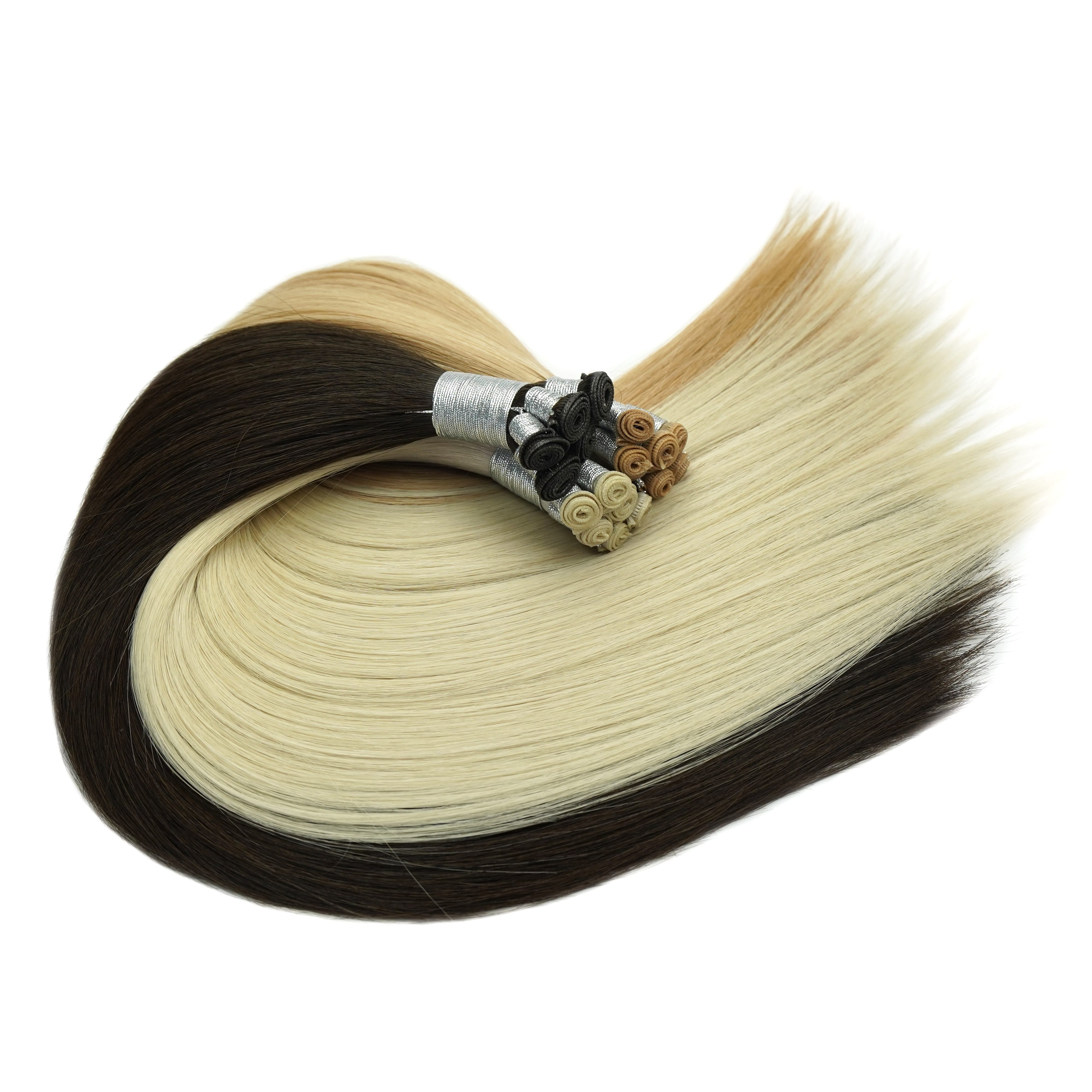
PRODUCT SCENE
For consultations that need a flatter weft plan
The image should lead the reader directly to the matching product. Here, the full image and the button both open the same product page, which keeps the visual path clear and supports product discovery without clutter.
VIEW GENIUS WEFT PRODUCT03 / SALON SCENES
The Real-Life Moments That Make Stock Worthwhile
A useful weft stock plan begins with life scenes. For example, a wearer may want hair that looks fuller in a smooth blowout but does not feel heavy on a workday. Another may want soft waves for a wedding season, yet still needs the hair to tie back during the week. A third may want fuller ends after color work, not a dramatic transformation.
In these scenes, the salon needs more than a pretty strand sample. The stylist needs enough product knowledge to decide how many rows to plan, where the weight should sit, and which shade family will blend after styling. Therefore, a weft becomes valuable when it supports small, practical decisions during the appointment.
Additionally, a salon may face different needs in different seasons. Spring and early summer can bring more event styling and brighter blonde requests. Autumn can shift toward richer brunette tones and softer depth. Holiday appointments may bring stronger makeover goals. A focused stock plan helps the salon move through these periods without rushing every order.
The key is not to stock every possible shade. Instead, the salon should stock what supports repeated real-life use. This includes low-maintenance brunette blends, rooted blondes, natural highlighted tones, and mid lengths that can serve both volume and moderate length goals.
Subtle Fullness
For fuller sides, thicker ends, and natural density without a dramatic length change.
Event Styling
For soft waves, polished blowouts, low ponytails, and photo-ready finishes.
Color Blending
For rooted blonde, balayage, brunette melt, and highlighted shade matching.
04 / SELECTION CHECKLIST
A Practical Way to Judge Whether the Weft Belongs in Stock
Before ordering, the salon should move through a simple judging process. First, review the last few months of extension consultations. Which hair goals kept appearing? Which shades slowed down the appointment? Which lengths were mentioned often? This review makes the first order more grounded.
Next, study how the product feels in hand. A sample should be brushed, washed, dried, waved, and photographed under salon light. It should also be checked near a window, because daylight can reveal warmth or ash that indoor light hides. Therefore, sample testing should feel like a mini service, not a quick glance.
After that, compare the weft to the existing menu. If the salon already carries hand tied weft, machine weft, and tape in, the new format needs a clear reason. It may support lower-profile placement, cleaner row shaping, or more flexible section control. If the reason is unclear, the product will be hard to explain during consultation.
Finally, confirm order terms before scaling. Shade, length, grams, packaging, and custom requests should be checked carefully. The return policy should also be reviewed before larger stock or special production decisions.
Stock Readiness Checklist
The salon receives regular weft or volume extension consultations.
Stylists can map rows, control tension, and finish the blend with confidence.
Core shade families are known from actual color work.
Mid lengths and useful gram ranges are more important than random variety.
Samples have been washed, dried, brushed, styled, and checked in daylight.
The service menu can explain why this weft format is different from other methods.
05 / COMPARISON TABLE
Compare Weft Options by Service Scene, Not by Name Alone
A salon menu becomes easier to understand when each weft format has a job. Machine weft may work for sturdy volume plans. Hand tied weft may suit lightweight placement. Flat weft can support a smooth band-style result. Meanwhile, a low-profile cuttable format can help when custom row control matters.
This comparison helps keep the product range clear. It also helps wholesale teams build a category page that supports real decisions. The wider human hair weft extensions category can then guide readers toward the right format without forcing one product to solve every need.
| Stock Question | Why It Matters | Practical Decision |
|---|---|---|
| Does the salon need a flatter attachment area? | Smooth blowouts and fine top layers can reveal bulk. | Test low-profile samples before building full stock. |
| Do stylists need to adjust row lengths often? | Head shapes, side panels, and nape sections vary. | Choose formats that support controlled customization. |
| Are shade requests repeating? | Repeated colors are safer than broad shade guessing. | Stock core brunette, rooted blonde, and highlighted families first. |
| Is the team ready to install and maintain wefts? | Technique affects comfort, coverage, and repeat service. | Train first, sample second, promote after internal confidence grows. |
| Does the service menu explain method differences? | Unclear wording makes consultation harder. | Give each method a simple role and use scene. |
RELATED PRODUCT
Flat Weft for smooth band-style comparison
Flat weft is useful to compare when the salon studies attachment feel, row profile, and how different weft structures sit against the head. The full image links to the matching product page.
VIEW FLAT WEFT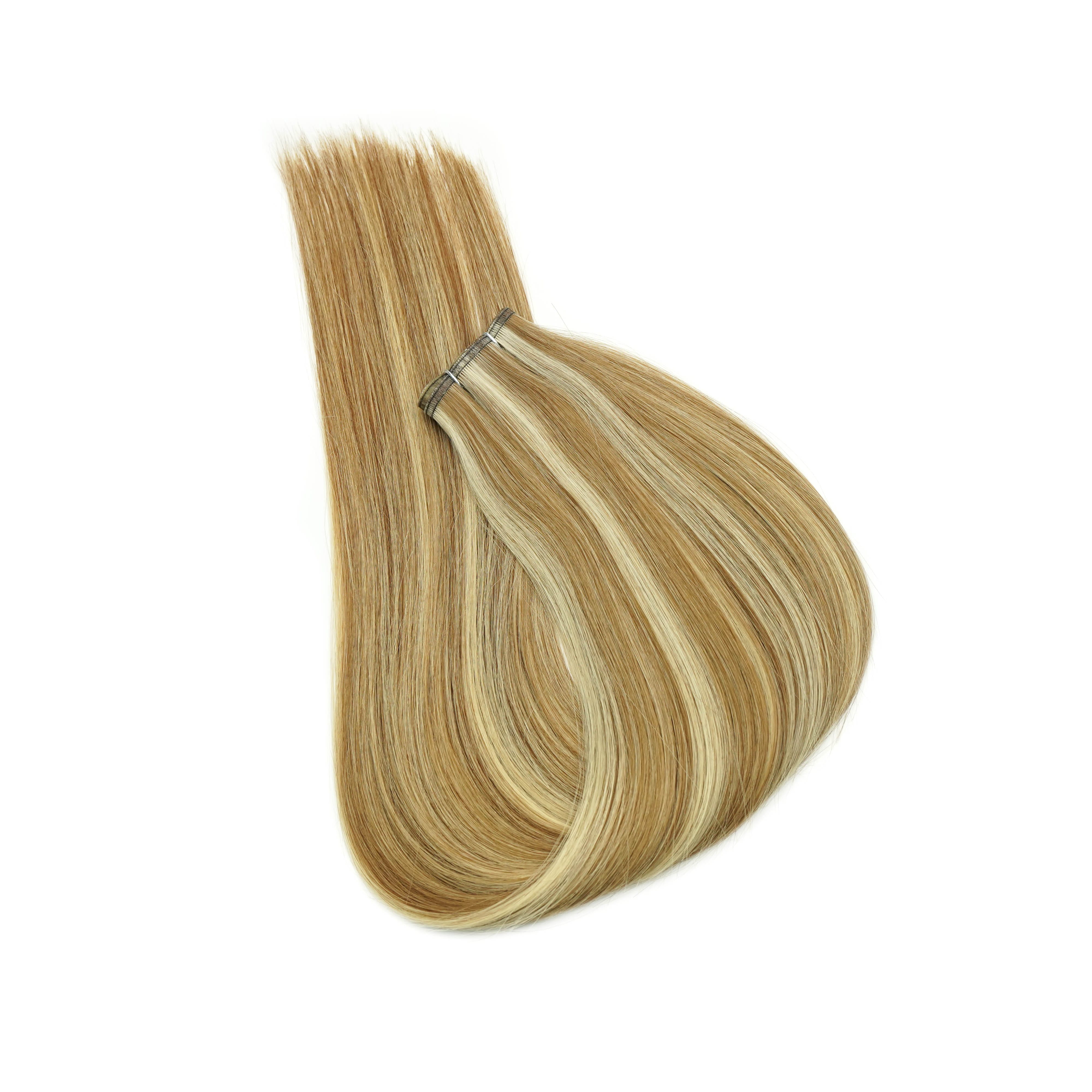
06 / REAL USE
How the Weft Works Inside an Actual Appointment
A realistic appointment usually starts with observation. The stylist looks at how the natural hair falls when it is dry. Then, the hair is moved at the crown, sides, and nape. This step shows whether the top layers can cover a row and whether the sides need lighter support.
Next, color matching begins. A sample may look correct on a table, but it must also blend near the face and through the ends. Therefore, the stylist should check the shade against the natural hair under salon light and daylight. For blondes, the difference between beige, cool, and golden tones can decide whether the final look feels soft or slightly off.
After shade selection, the row map takes shape. A volume-only service may need fewer sections and softer density. A length service may need more grams and stronger blending through the haircut. Meanwhile, side panels should stay discreet because many people tuck hair behind the ear during daily life.
Then, installation becomes a series of small choices. The stylist checks tension, row curve, spacing, and coverage. If a section needs a shorter piece, the weft should be measured before cutting. The goal is not to use more hair. The goal is to place the right amount of hair in the right area.
Finally, the haircut and styling finish the result. Soft waves can hide small differences in layer flow. A smooth blowout can show whether the color and density are balanced. Therefore, finishing time should always be included in the booking plan.
For Volume Services
Start by judging the ends. If the length is already suitable but the shape looks light, the weft can support density through the lower section. This approach often feels more natural than forcing dramatic length.
For Length Services
Start by checking blend length. If the natural hair is too short or too blunt, extra layering may be needed. A longer result works best when grams, shade, and haircut shape are planned together.
07 / CARE GUIDANCE
Care Advice That Makes the Stock Perform Better
Aftercare is part of the product experience. A weft can look beautiful after installation, yet daily habits decide how it feels after several weeks. Therefore, a salon should explain care in plain language before the wearer leaves.
First, brushing should feel calm and controlled. The attachment area should be supported with one hand while the other hand brushes from the ends upward. This simple habit reduces pulling and helps keep the row comfortable.
Next, washing should avoid rough circular motion around the row. The scalp can be cleaned carefully, while the mid-lengths and ends need gentle handling. Conditioner should be used thoughtfully, especially near attachment points. In addition, the weft area should be dried well after washing.
Heat styling also deserves attention. Extensions do not receive scalp oil the same way growing hair does. Therefore, moderate heat, heat protectant, and moisture care can help maintain softness. The salon should also suggest sleeping with a loose braid or a soft tie to reduce friction.
Most importantly, maintenance should be scheduled before problems appear. A planned refit or row check supports comfort and keeps the service professional. It also gives the stylist a chance to note which shades, lengths, and grams are performing best.

METHOD COMPARISON
Hand Tied Weft for lightweight service planning
Hand tied weft can be compared when a salon studies lightweight placement, soft movement, and refined weft service positioning. The image and button both guide readers to the matching product page.
VIEW HAND TIED WEFT08 / COMMON MISTAKES
Mistakes That Make a Good Product Hard to Sell Through
The first mistake is overbuilding the first order. A large shade wall can look impressive, but it may not match real appointment demand. Slow-moving colors take space and create pressure. Therefore, a focused range often works better at the start.
The second mistake is choosing shades from screen images alone. Product photos are helpful, but salon lighting, wall color, mirrors, and daylight all change how hair appears. Therefore, physical samples are important for professional shade matching.
Another mistake is ignoring grams. A shade may match perfectly, yet the final look can still appear thin if the total hair amount is too low. At the same time, too much hair can feel heavy on fine density. As a result, grams should be planned with natural hair density and service goals.
Also, some salons launch a method before the team has shared language. One stylist may describe the weft as invisible, while another describes it as a volume method. This creates confusion. A better approach is to define the product role in one or two calm sentences.
Finally, poor care education can make a strong product feel disappointing. If the wearer does not know how to brush, wash, dry, or return for maintenance, the result may decline faster. Therefore, care cards, verbal reminders, and maintenance scheduling all support better long-term experience.
Better Stock Habits
Start with sample shades that match real salon formulas.
Choose lengths that support both volume and moderate length services.
Record every install by shade, length, grams, and service goal.
Train stylists on row mapping before promoting the method.
Review reorder notes every month during the first launch period.
09 / WHOLESALE PLAN
How Wholesale Teams Can Build a Cleaner Weft Category
Wholesale planning should not present every weft as the same solution. A professional catalog becomes more useful when each format has a clear purpose. One product may support stronger volume work. Another may support lightweight placement. Another may fit smooth row customization.
Therefore, a wholesale range should guide salon teams through service scenes. A product card can explain whether the format is best for volume, length, low-profile placement, partial support, or color-blended transformations. This kind of structure helps readers choose faster.
In addition, sample-friendly sourcing supports better decisions. A sample allows the professional team to feel the seam, test the softness, photograph the shade, and compare the hair with existing stock. This small step can prevent a large order that does not fit the actual service menu.
Product pages should also be consistent. Shade names, length options, gram options, images, and inquiry buttons should stay clear. If a reorder is difficult to identify, even a well-liked product can lose momentum. A clean catalog makes repeat sourcing easier.
Finally, wholesale communication should remain realistic. Professional readers do not need exaggerated promises. They need clear use cases, reliable images, careful color information, and flexible custom options for color, length, grams, and packaging discussions.
CATEGORY SUPPORT
Machine Weft for sturdy volume comparison
Machine weft can help wholesale teams show a wider weft range. It works well as a comparison point when discussing volume-focused services and traditional weft planning.
VIEW MACHINE WEFT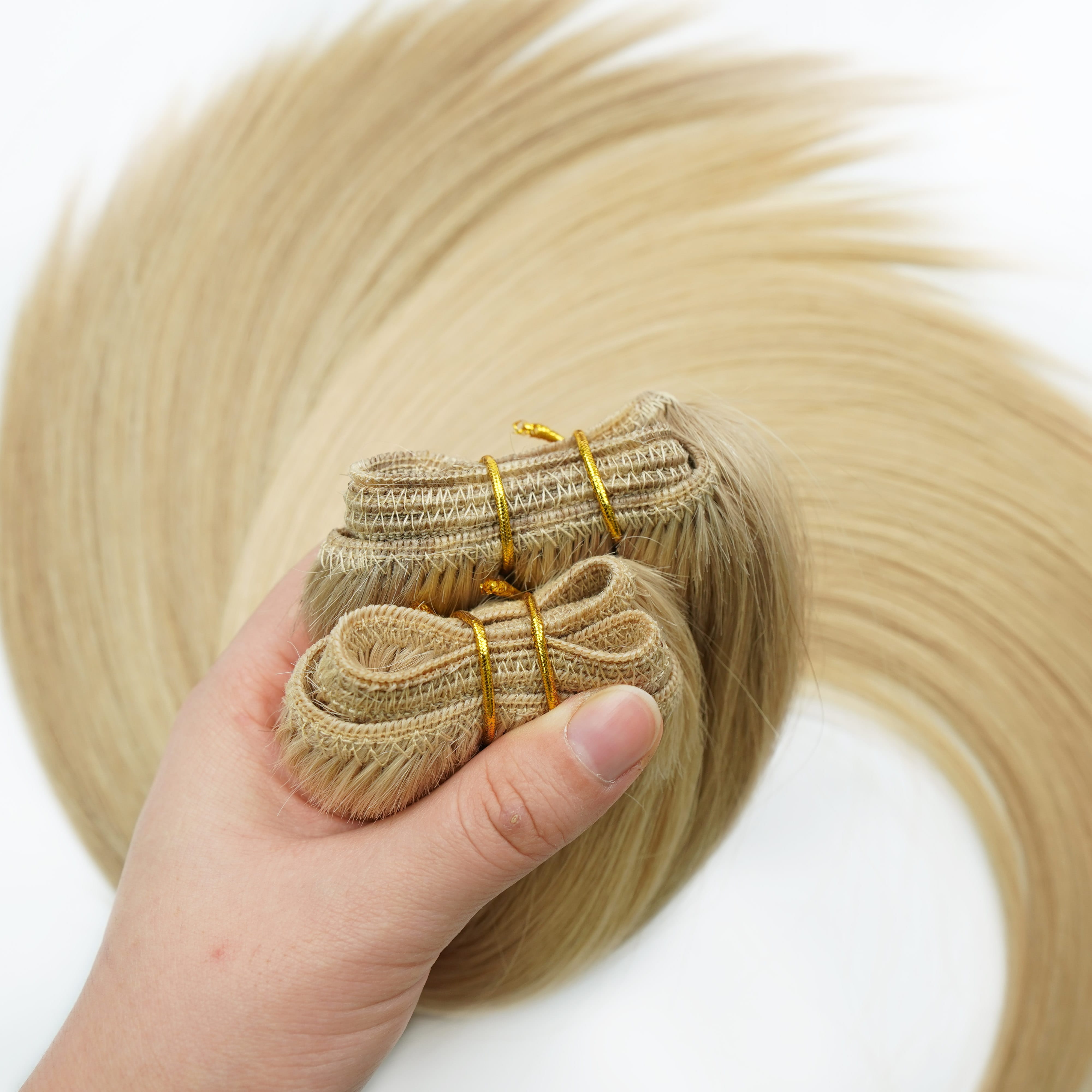
10 / STOCK PLAN
A Simple First-Order Framework for Salons
A first stock plan should feel useful, not oversized. The salon can begin with sample pieces and a narrow set of practical shades. This creates enough choice for consultations without filling drawers with products that rarely move.
First, build the shade range around repeated color work. If the salon often creates brunette softness, dark brown and chocolate families should lead. If blonding is a major service, rooted blonde, beige blonde, and highlighted tones may need stronger representation.
Next, choose lengths that can serve several goals. Mid lengths often support fuller ends and natural length changes. Long lengths may be kept as samples or ordered after consultation until demand becomes steady. This keeps cash and storage under control.
Then, set gram logic by service type. Volume services may need less hair than full length transformations. Fine density should be handled with care. Thick density may need more total hair to avoid a thin finish. Therefore, grams should be discussed during consultation and recorded after every install.
Finally, prepare the back-room system. Labels, shade codes, reorder sheets, sample notes, and maintenance records should stay organized. A beautiful product can still create confusion if the inventory process is messy.
STEP 1
Sample
Test shade, softness, seam feel, washing, drying, and styling response.
STEP 2
Small Batch
Order proven shades and mid lengths for real appointments.
STEP 3
Track
Record shade, length, grams, placement, finish, and maintenance notes.
STEP 4
Scale
Move only repeated shades and lengths into core stock.
11 / EXTENDED READING
Related Pages for Faster Product Decisions
The following links support the next step after reading. Each page connects to an existing Surblond Beauty page, so readers can compare products, review weft options, or check order-related information without leaving the website flow.
PRODUCTS
Hair Extensions Products
Explore weft, tape in, clip in, keratin tip, nano ring, and tool options.
WEFT CATEGORY
Weft Hair Extensions
Compare different weft formats for salon service planning and sourcing.
FEATURED
Genius Weft Product
View the product page for images, inquiry access, and related weft products.
12 / FINAL SUMMARY
Stock With Real Appointment Logic
In summary, a salon should stock this weft format when extension demand is steady, shade needs are repeating, stylists are trained, and the service menu can explain the product clearly. The best reason to add it is not hype. The best reason is a smoother appointment, a cleaner row plan, and a more confident consultation.
A smart launch can begin with samples. Then, a small batch can support real services. After that, reorder data can decide which shades, lengths, and grams deserve core stock. This approach keeps the inventory professional and avoids unnecessary pressure.
Finally, Surblond Beauty supports salon and wholesale planning with product inquiry, custom color, length, gram, and sample discussions. For professional teams comparing genius weft hair extensions with other weft methods, a focused sample order is a practical starting point.
Three Action Steps Before Stocking
Start with sample shades that match real salon color demand.
Train stylists on sectioning, row mapping, cutting, blending, and care guidance.
Track every install by shade, length, grams, service goal, and reorder timing.
FAQ
Common Questions About Stocking This Weft Style
When is the right time for a salon to stock this weft format?
The right time is usually when weft consultations become regular and the team already understands row placement. Repeated requests for fuller sides, smoother attachment areas, rooted blonde blends, brunette volume, or longer natural-looking finishes are strong signs. However, a sample stage should come first if demand is still unclear. This keeps the first order focused and gives stylists time to test shade, softness, seam feel, and styling response.
Which shades should be included in a first stock order?
A first stock order should follow actual color work rather than broad shade variety. Many salons can begin with natural brunette, chocolate brown, rooted blonde, beige blonde, and highlighted blend samples. However, local service patterns should guide the final mix. A salon with strong blonding demand may need more rooted and highlighted blondes. A brunette-focused salon may need deeper tones and soft lowlight-friendly options first.
How can stylists decide between volume service and length service?
The decision starts with the natural hair. If the current length is already close to the desired look but the ends feel light, a volume service may be enough. If the goal is visible length, the stylist should check whether the natural hair can blend into the added length. In both cases, shade, grams, row placement, haircut shape, and maintenance timing should be planned together before installation.
What should wholesale teams check before adding this product to a catalog?
Wholesale teams should check product role, shade range, length options, gram options, sample availability, product images, packaging needs, and reorder clarity. The catalog should explain how the weft differs from hand tied weft, flat weft, and machine weft. Clear product data helps salon teams compare formats faster. Sample testing is also important because it confirms seam feel, color accuracy, softness, and styling response before larger orders.
How should this weft be cared for after installation?
Care should be simple and consistent. Brushing should begin at the ends while supporting the attachment area. Washing should avoid rough movement near the rows, and the weft area should be dried carefully after each wash. Moderate heat, heat protectant, and moisture care help maintain softness. A loose braid or soft tie during sleep can reduce friction. Scheduled maintenance keeps the rows comfortable and supports better long-term results.