E-mail: admin@surblondbeauty.com
Thin hair needs more than a light product description. It needs a calm, believable wearing experience: a part line that still looks clean, a low ponytail that does not reveal the row, and ends that feel fuller without looking forced. For salon programs, distributors, and private-label sourcing teams, genius weft can be considered when the goal is soft fullness, flat placement, and flexible blending for fine or low-density hair.
CONTENTS
Quick jump guide
01 / REAL NEED
Thin hair can look elegant, soft, and expensive when the shape is balanced. However, it also reveals extension mistakes faster than medium or thick hair. A row that feels only slightly raised in the hand can become visible when the crown separates under mirror light.
In real salon work, the concern is often not only whether a weft can add length. The better question is whether the result still looks natural after brushing, walking outside, lifting the hair, or styling a loose wave. Therefore, the product must support movement as well as volume.
Fine hair also has less natural cover around the sides, crown, and nape. Because of that, a heavy row can create a visible shelf, even when the hair itself looks smooth. A flatter weft structure can help, yet the final result still depends on placement, weight, shade, and finishing work.
For professional sourcing, this difference matters. A product that looks beautiful in a catalog may not solve the real wearing problem. Instead, the best thin-hair choice should help create quiet fullness, not obvious thickness.
Practical principle: thin hair services should be built around comfort, coverage, and soft movement first. Length and dramatic density should come only after those three points are secure.
02 / FIT SCENES
First, this format suits fine to medium-fine hair that still has enough natural cover at the crown. When the upper layer can fall over the row with ease, the finished look has a better chance of staying discreet. This is especially important for straight or softly waved styles.
Second, it works well when the goal is fuller ends rather than a major transformation. For example, shoulder-length hair may need a denser perimeter, not waist-length drama. A modest change can feel more luxurious because it supports the natural haircut instead of fighting against it.
Third, it can support services where the lower shape needs more polish. Thin hair often looks transparent through the last few inches. Therefore, adding controlled density can make the hair appear healthier, smoother, and easier to style.
However, very sparse crowns, weak temples, recent shedding, or fragile chemical damage need caution. In those situations, the better decision may be fewer grams, lower placement, or a different extension method. A flat row is helpful, but it should not be treated as permission to overload fragile hair.
Fine hair with enough top coverage, soft density goals, moderate length increases, and salon services focused on natural fullness. In these cases, the product can support a polished result without making the attachment area feel heavy.
Sparse crowns, active shedding, weak edges, or very short layers need a conservative plan. Therefore, the service should begin with hair condition, not with the maximum amount of extension hair possible.
03 / WEARING EXPERIENCE
A strong thin-hair service changes small daily moments. The hair falls over the shoulder with a fuller line. A soft curl does not collapse as quickly. A low bun looks balanced instead of small and flat.
Moreover, comfort creates confidence. If the row feels tight, the wearer will notice it every time the head turns. If the seam feels bulky, half-up styling becomes stressful. Therefore, a premium result should feel almost uneventful in daily life.
In the mirror, thin hair wearers often notice the ends first. Transparent ends can make the whole style look less finished, even when the root color is fresh. Because of that, fuller lower lengths can bring emotional value without needing an extreme change.
A salon-ready result should also survive ordinary movement. A quick brush before work, a scarf in cold weather, a humid afternoon, or a tucked-behind-the-ear moment can all expose weak planning. The best extension work stays calm through those scenes.
Therefore, product selection should not be reduced to grams, length, or shade alone. The real standard is whether the hair still feels natural after the first wash, the first sleep, the first restyle, and the first busy day.
04 / PRODUCT BENEFITS
The most useful benefit is low visual bulk. Thin hair does not provide much cover, so the attachment area must sit quietly. A flatter row can help reduce the raised look that often makes weft work noticeable on fine hair.
Another benefit is controlled placement. Fine hair rarely has even density from side to side. Therefore, a flexible weft layout helps stylists build fullness where the hair needs support and avoid areas that cannot carry extra weight comfortably.
Additionally, the format can support softer blending. Thin natural ends often need careful connection with the extension ends. When the weft sits close to the head and the total density stays realistic, the final haircut can look more natural.
For professional range planning, genius weft hair extensions can help fill a thin-hair service niche. The strongest use is not exaggerated volume. Instead, the value appears in clean row work, wearable fullness, and easier customization during salon mapping.
05 / COLOR BLENDING
Thin hair separates more easily, so color mismatch becomes visible faster. A shade that looks close in a product photo may still appear too cool, too warm, too solid, or too dark near fine natural ends. Therefore, shade testing should happen under more than one light source.
For blonde services, undertone is especially important. Beige blonde, ash blonde, golden blonde, and pale blonde can look similar at first glance. However, they behave differently beside natural regrowth, highlighted mids, and transparent ends.
Meanwhile, brunette services need depth control. A rich brown can make the lower shape appear fuller, but a flat dark shade may look too heavy beside fine natural hair. Dimensional browns, rooted shades, and soft transitions often create a more believable result.
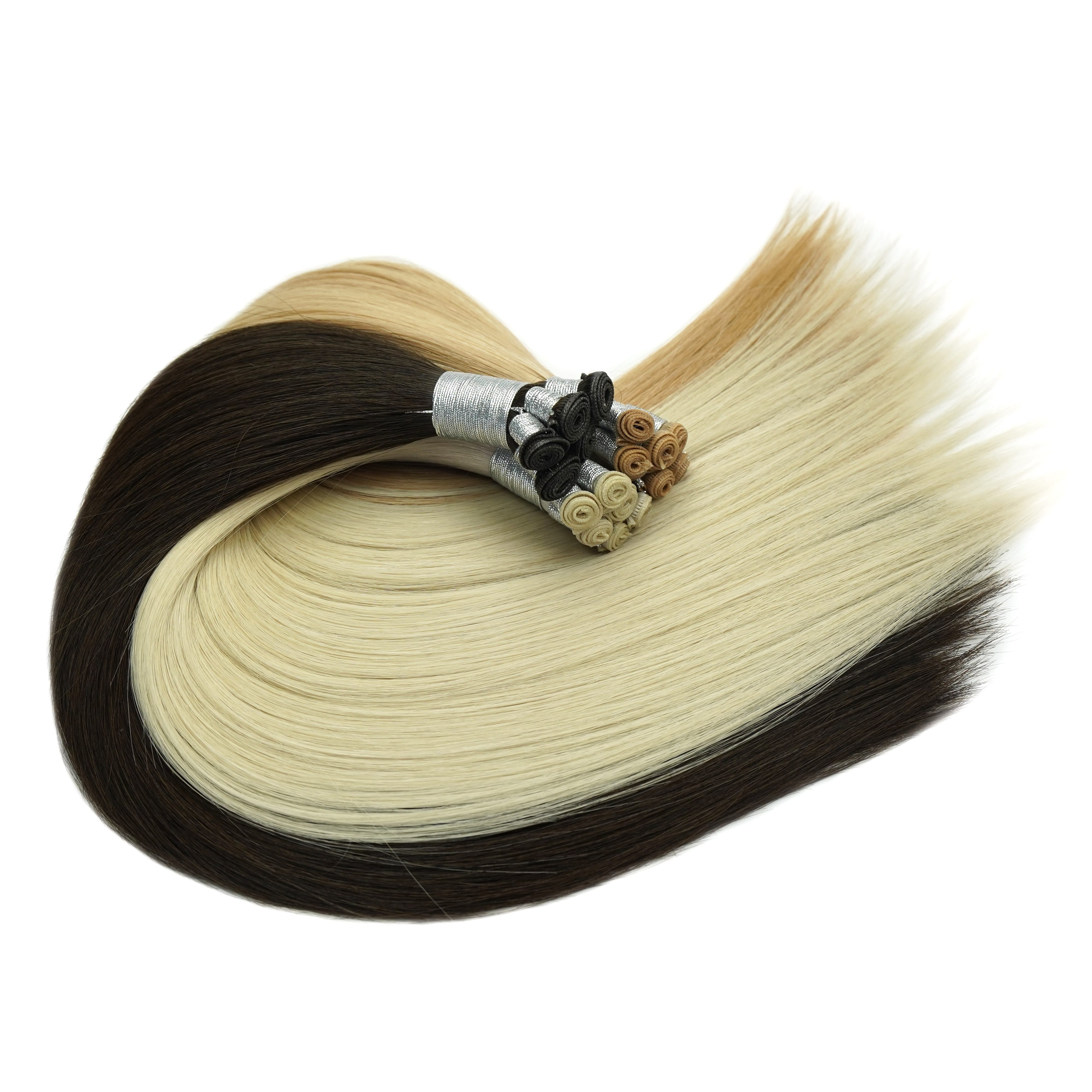
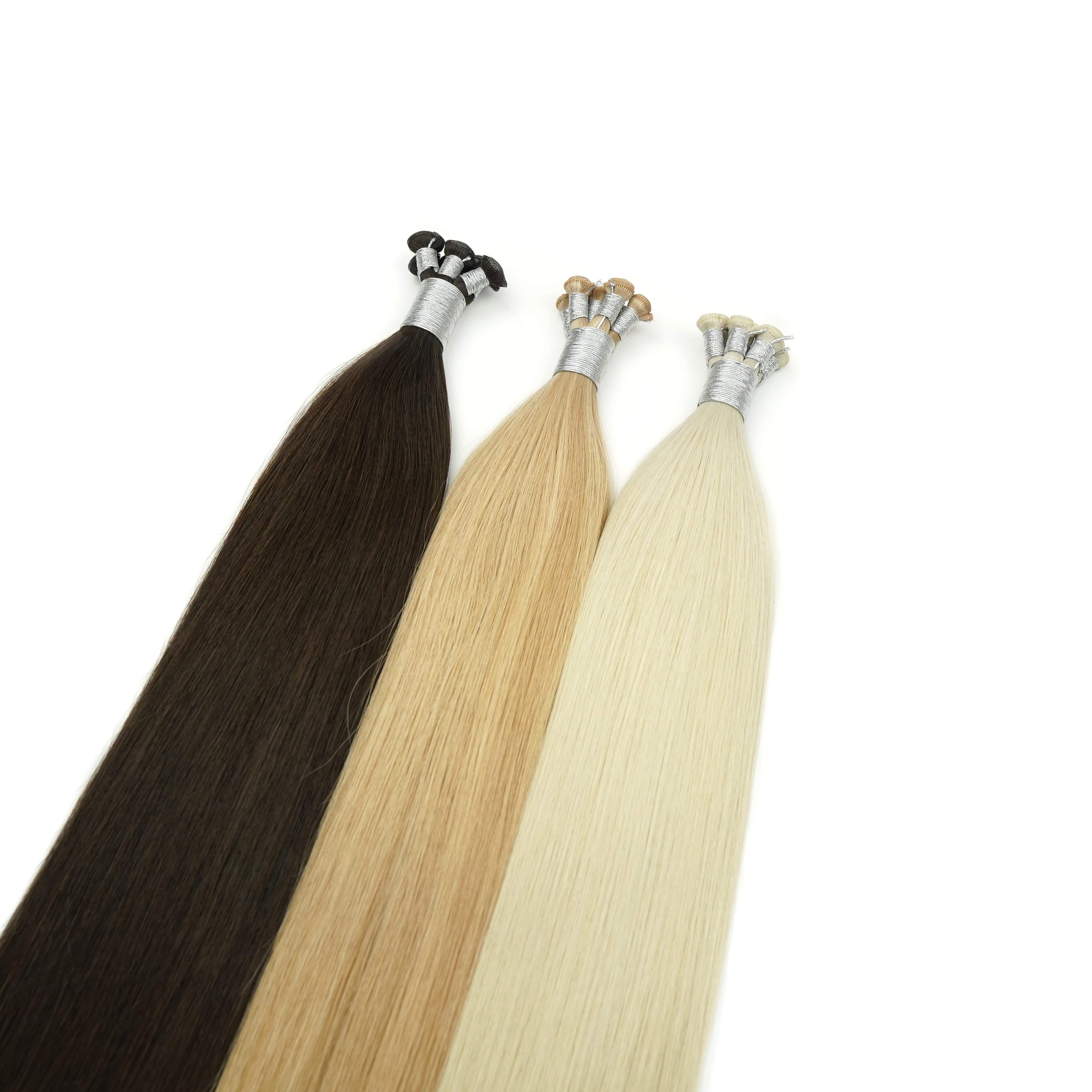
This product image works well beside color-selection content because it shows a range of light, dark, and dimensional tones. For thin hair, that variety matters. A natural blend often comes from matching the mid-lengths and ends, not simply copying the root shade.
Additionally, mixed tones can soften the final look. A single flat color may create a visible panel under fine hair, while a dimensional match can move more naturally in daylight.
06 / SELECTION LOGIC
A thin-hair service should begin with the scene where the hair must perform. For a daily office look, the priority may be smooth ends and easy brushing. For event styling, the priority may be soft curl support and a fuller lower shape.
Because of that, length should remain realistic. A dramatic jump from short fine hair to very long hair often creates blending stress. A moderate increase usually looks more refined and feels easier to maintain.
Density should also stay balanced. More hair does not always mean a better result. In fact, thin roots can look flatter when the lower half becomes too dense. Therefore, a lighter density plan can create a more expensive-looking finish.
The end finish matters as well. Thin natural hair often has airy, feathered ends. If the extension ends look too blunt, the two textures may separate visually. A soft finishing cut can help the whole style move as one shape.
First, compare the desired length with the natural end density. If the natural ends are very transparent, a shorter extension length can look fuller and more believable. Then, add shape through cutting rather than forcing the hair into an extreme length.
Next, choose density by comfort and coverage. A light row that disappears during movement is often better than a thick row that looks impressive only when the hair is still. Fine hair rewards restraint.
Finally, review the style after brushing out curls. Many extension services look good before movement, but the real test starts when waves loosen and hair falls naturally. A good finish should still look soft after that moment.
07 / DECISION MAP
A clear decision table helps avoid emotional over-ordering and unclear salon recommendations. Instead of asking whether one product is best, the table asks whether the natural hair can hide, hold, and maintain the service. This makes sourcing decisions more practical.
Therefore, the following map can support product testing, sample approval, training notes, and service menu planning. It is especially useful when fine hair has uneven density around the crown, sides, and nape.
| Check Point | Good Fit Signal | Caution Signal | Practical Move |
|---|---|---|---|
| Crown Coverage | Natural hair hides a low-profile row during movement. | Scalp shows easily near the part or crown. | Use lower placement, fewer grams, or another method. |
| Side Density | Sides can cover small sections when tucked or waved. | Temple hair separates and exposes the row. | Keep side placement minimal and focus fullness toward the back. |
| End Transparency | Natural ends can blend into added density with cutting. | Natural ends look too sparse against thick extension ends. | Choose moderate length and soften the perimeter. |
| Daily Styling | Loose waves, blowouts, and low styles are common. | Daily high ponytails or tight buns are expected. | Plan placement around tension and visibility. |
| Care Routine | Regular brushing, drying, and maintenance are realistic. | Wet sleeping and long gaps between upkeep are likely. | Keep the install lighter and provide simple care notes. |
| Color Match | Shade blends through mids and ends in daylight. | Root, seam, and ends create clear contrast. | Use rooted, dimensional, or mixed shades. |
08 / INSTALLATION USE
Installation planning should start before the row is placed. First, the stylist should study how the hair falls when it is dry, brushed, and moved. Fine hair can separate differently after washing, so the natural fall pattern matters.
Next, row height should respect cover hair. A row placed too high may look hidden in one position and appear once the hair turns. Therefore, the install should be checked from the back, side, and slightly above.
Section size also matters. A section that is too small may carry too much weight. A section that is too large may reduce hold and control. Balanced sectioning helps the result feel secure without creating unnecessary tension.
Finally, the finishing cut should connect the extension hair to the natural haircut. Thin hair often needs soft blending through the ends and front pieces. Without this step, even a well-placed row can look separate from the natural hair.
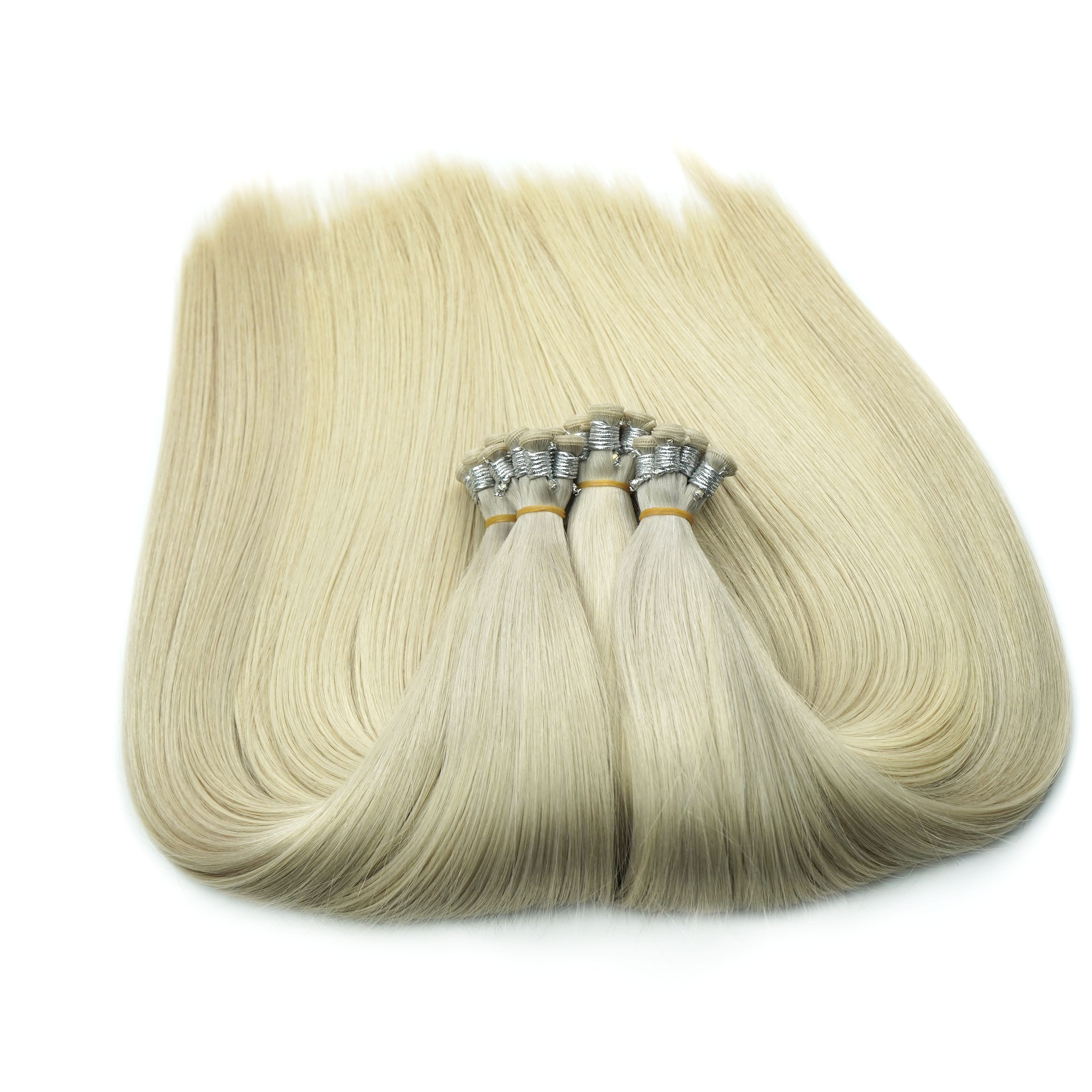
The image shows a clean product presentation that fits a discussion about row planning. During sample testing, the row should be touched, brushed, moved, and reviewed after handling. A thin-hair service needs a row that feels quiet but still reliable.
Additionally, a stylist can test how the hair falls when the weft is held close to the head shape. This simple step gives better information than viewing the product flat on a table.
09 / ACTUAL USE
A good product can lose its beauty when the routine is unclear. Therefore, aftercare should be simple enough to remember. Thin hair services need gentle brushing, dry roots, low tension, and clean product use.
First, brushing should begin at the ends. One hand should support the row area while the brush moves upward in small steps. This reduces pulling and prevents small tangles from tightening near the attachment area.
Next, washing should avoid rough root movement. Shampoo can clean the scalp, but heavy circular rubbing over the row may create tangles. Conditioner should stay mainly on the mids and ends, while oily products should not sit near attachment zones.
Drying is especially important. Fine hair can tangle near the nape when left damp. Therefore, the row and root area should be dried carefully before sleeping or tying the hair.
At night, a loose braid or soft low tie can reduce friction. A silk pillowcase can also help the hair move more smoothly. Meanwhile, tight high ponytails should remain occasional because repeated tension can make fine hair less comfortable.
10 / STYLING AND PAIRING
Thin hair usually looks most refined when the style has movement. Loose waves can make the perimeter appear fuller without exposing the row. A soft blowout can create polish while keeping the top area light.
For event styling, the lower half often needs more support. A low bun, half-up style, or brushed wave can look more balanced with added density through the back. However, the row placement should match the planned styling direction.
Color can also support styling. A dimensional blonde can brighten the lower shape. A rooted shade can create depth near the top. A soft brunette can make the perimeter look denser without a dramatic color shift.
In a broader product plan, weft hair extensions can work beside tape-in, clip-in, keratin tip, and strand methods. Each method has a different use. The right mix depends on hair density, styling habits, and the desired service menu.
Blonde shades can look beautiful on thin hair, but they show dryness, undertone mismatch, and uneven end density more clearly. Therefore, a blonde sample should be washed, dried, curled, brushed out, and checked again.
Additionally, light shades should be reviewed near the face and ends. This is where fine hair often separates, so the blend needs to look natural from more than one angle.
11 / SOURCING CHECKLIST
A sample should not be approved only because it looks smooth in the package. Instead, it should move through a small service journey. Brush it, wash it, dry it, style it, and check how the ends settle after handling.
First, photograph the sample before testing. Then, brush from the ends upward while holding the top. This shows whether the ends stay smooth and whether shedding appears during normal handling.
Next, wash the sample with the type of products normally used in a salon environment. After drying, check whether the hair still feels soft and flexible. Some hair looks polished before water reveals the real texture.
Then, curl and straighten small sections with normal professional heat settings. The purpose is not stress testing with extreme heat. The purpose is to see whether the hair responds naturally and reflects light evenly.
Finally, compare shades under daylight, mirror light, and warm indoor light. Thin hair exposes tone differences quickly, so this step can prevent avoidable ordering mistakes.
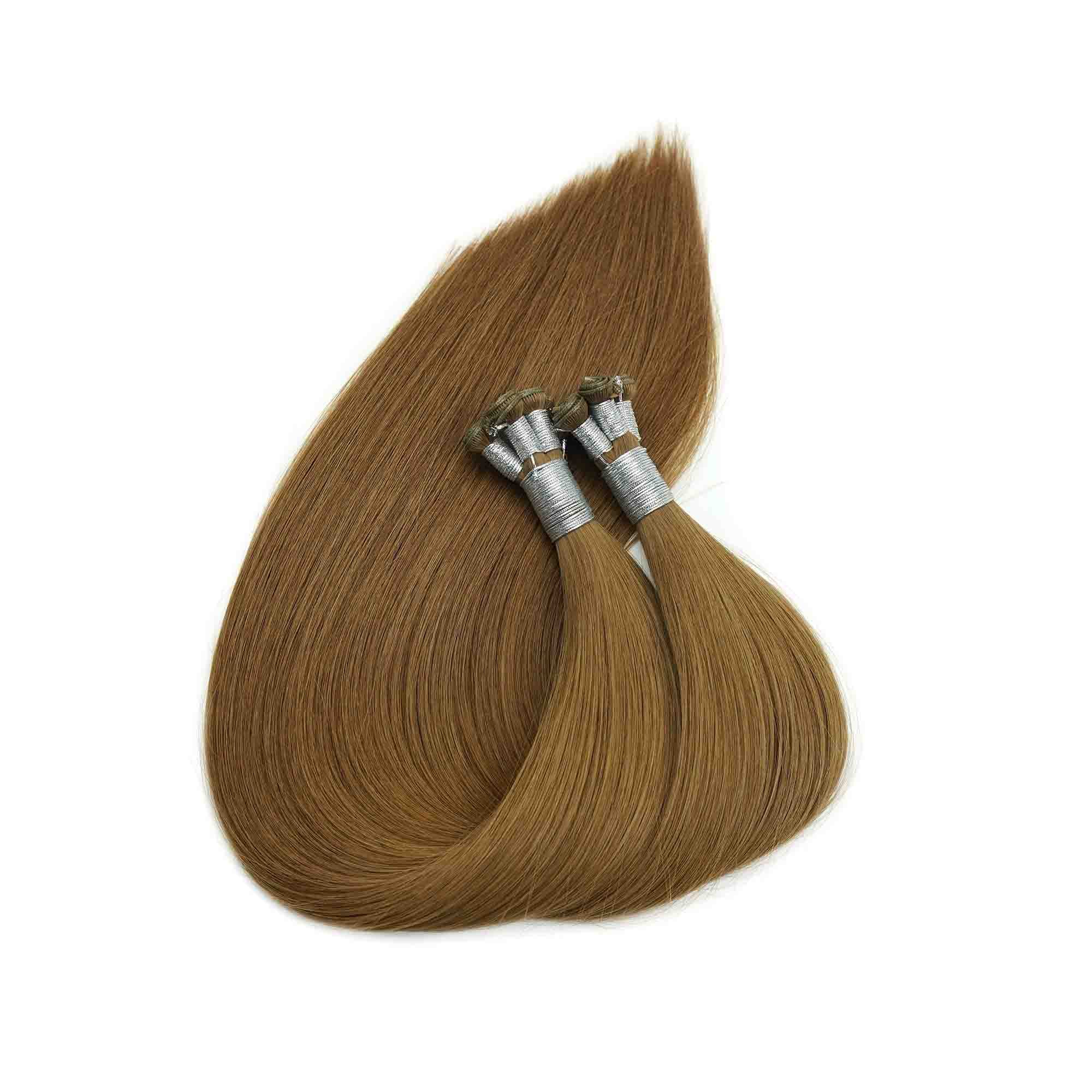
Darker and warmer shades make shine, depth, and density easier to judge. If the hair looks flat or overly solid, thin hair may show the mismatch quickly. Therefore, brunette samples should be checked for movement, not only color depth.
A warm brown or dimensional brunette can also help build natural fullness through the lower shape. This makes the shade useful for practical salon menus focused on everyday volume.
12 / COMMON MISTAKES
The first mistake is using too much hair. Heavy density can make the lower half look full at first, but the root area may look flat or strained. Therefore, thin hair often needs restraint more than maximum volume.
The second mistake is placing the row too high. A high row may look hidden while the hair is still, yet show when the head turns or the crown separates. A movement check should always happen before finishing the service.
Another mistake is matching only the root color. Fine hair often has lighter or more transparent ends. Therefore, the extension shade should blend through the mids and ends, where the final look is most visible.
A fourth mistake is skipping the finishing cut. Even a well-chosen product can look separate if the natural ends sit above the extension ends. Soft point cutting and face-frame blending can make the result feel more connected.
Finally, unclear aftercare creates avoidable problems. If brushing, drying, and maintenance timing are not explained, tangling and tension may appear. A simple care plan protects both the natural hair and the final style.
13 / EXTENDED READING
Extended reading should help the page guide action without interrupting the article. Therefore, the following links support product review, category browsing, and method comparison. Each link leads to a Surblond Beauty page that fits this topic.
Review the dedicated product page when checking images, inquiry access, and thin-hair sample planning.
Category PageBrowse related weft options when building a wider salon or wholesale product range.
Related ArticleUse this article only when a separate construction comparison is needed during product research.
14 / FAQ
It can suit some very thin hair, but only when natural coverage is strong enough to hide the row. The crown, sides, and nape should be checked before installation. However, visible scalp, active shedding, fragile edges, or recent chemical damage need caution. In those cases, fewer grams, lower placement, or another extension method may create a safer and more natural result.
Moderate lengths usually look most natural because they add polish without creating too much contrast. For example, collarbone, chest, and mid-back finishes often blend better than a very long transformation. However, the best length depends on natural end density and haircut shape. If the natural ends are transparent, a shorter extension plan can look fuller, softer, and easier to maintain.
Color should be checked through the mids and ends, not only at the root. Thin hair separates easily, so undertone mismatch can appear in daylight, mirror light, and photos. Therefore, sample testing should include straight hair, loose waves, and a low ponytail view. In many cases, rooted or dimensional shades create a softer result than one flat color.
Thin hair often needs fewer rows than medium or thick hair. One or two carefully placed rows may create enough fullness for many natural looks. However, the final number depends on crown coverage, head shape, length goal, and gram weight. A lighter row plan usually feels more comfortable and looks more discreet during daily movement.
Gentle brushing, dry roots, and low-tension styling matter most. Brushing should start at the ends while the row area is supported. After washing, the attachment area should be dried before sleep. Heavy oils should stay away from the root area. Additionally, a loose braid or soft low tie can reduce friction and help the style stay cleaner between maintenance visits.
Yes, thin hair can look fuller while still appearing natural when the service uses restraint. The best plan usually adds density through the lower shape, keeps row placement discreet, and blends the ends with careful cutting. Color should match the mids and ends, while total weight should stay comfortable. A subtle improvement often looks more premium than an extreme change.
Thin hair services become stronger when product selection, shade testing, installation planning, and aftercare work together. For salon programs, distributors, and private-label projects, Surblond Beauty can support custom color direction, length planning, gram-weight discussion, sample review, and range development.
To prepare a practical inquiry, include the target service scene, color family, length range, texture preference, and density goal. Then review suitable sample options, including genius weft, for thin-hair services that need natural fullness, comfortable wear, and a refined salon finish.
Back to top ↑
zhang