

Choosing keratin hair extensions for a professional heat bond service is not only about length, grams, or a clean product photo. In real salon work, the best strand is the one that disappears into the hair after brushing, keeps a soft shape after washing, and gives the final style a calm, natural feeling in daily life.
This guide explains how to judge heat bond extensions through real service scenes: strand movement, bond comfort, F Tip and U Tip selection, color matching, sample testing, daily care, and stock planning. Instead of repeating a basic “what is” explanation, it focuses on how a salon team can choose products that actually support better appointments, better styling, and cleaner repeat orders.
01 / Principle Education
First Understand What a Heat Bond Service Must Solve
A fusion service starts before the first strand is attached. It starts when the natural density is checked, when the parting habit is noticed, and when the final hairstyle is imagined under real salon light. Therefore, the product should not be judged by a single photo or a single specification line.
In daily wear, a good heat bond service should feel quiet. The attachment points should not draw attention when the hair moves. The added strands should not swing away from the natural hair. Instead, they should follow the haircut, settle into the layers, and keep a soft outline after brushing.
Because each strand is placed separately, the method gives more control than wide-panel or row-based systems. However, this control also makes small details more important. Section size, strand weight, bond distance, heat response, color depth, and aftercare all decide whether the finished service feels refined.
A strand that looks beautiful on a table may still feel wrong in the hair. For example, if the bond is too bulky, the side profile can look raised. If the ends feel dry after one wash, long styles may need more cutting than expected. If the shade looks slightly warm under daylight, the face frame can look disconnected.
Therefore, heat bond selection should begin with a simple question: what should the finished hair feel like after one week of real life? The best product is not only smooth in the package. It should support brushing, washing, curling, sleeping, maintenance, and professional removal.
02 / Scene-Based Judgment
Choose by Real Salon Scenes, Not by Product Names Alone
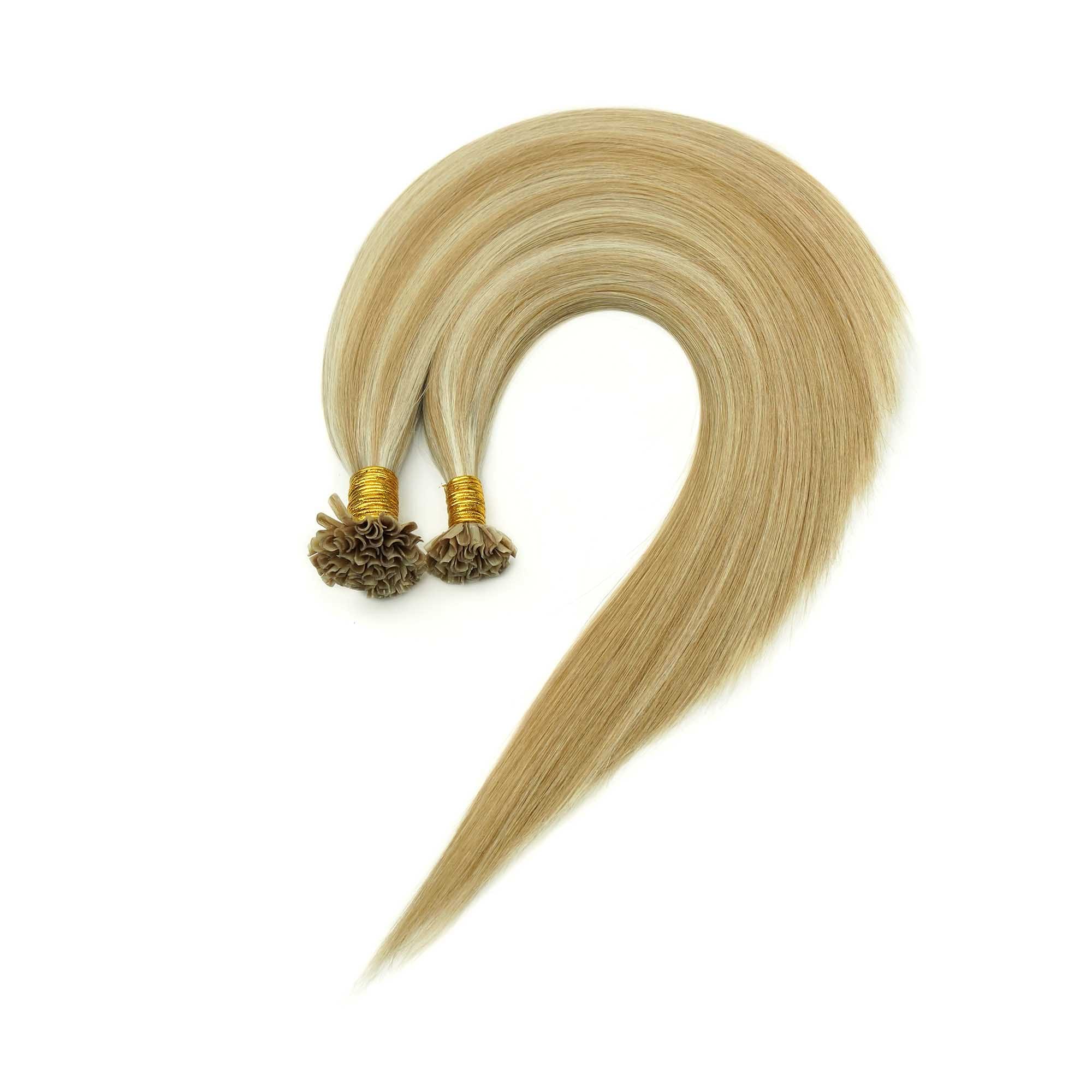
fusion hair extensions are useful because they give detailed control. Yet the method should not be treated as a fixed answer for every head of hair. A full transformation, a soft volume refresh, a face-frame color accent, and an event styling plan all ask for different placement logic.
For a full length service, the main problem is balance. The added hair must connect the natural hair to the new length without creating a weak line through the ends. Because of that, strand distribution through the back and sides matters more than simply adding more hair.
For a volume service, the goal is often quieter. The natural length may already be suitable, but the lower outline looks thin after blow-drying. In this case, heat bond strands can fill the sides, support the perimeter, and create a fuller shape without making the style look heavy.
For color detail, the value is different again. A few well-placed blonde, rooted, or lowlight pieces can add dimension without another chemical process on the natural hair. Therefore, heat bond products can support color correction, soft highlights, or seasonal shade updates when the hair needs a gentler approach.
For event styling, movement becomes the test. Hair that looks perfect when worn down may show the bonds when lifted. A practical test should include a low ponytail, a half-up style, a side part, and a tucked-behind-the-ear finish. These simple positions reveal whether placement is truly comfortable.
For correction work, the method can rebuild the visual shape of a haircut. Uneven layers, thin ends, and over-lightened areas can make hair look tired. Carefully placed strands can restore softness, density, and movement without making the result look forced.
Quick Scene Map
Full Length
Focus on end density, balanced distribution, and cutting allowance after installation.
Soft Volume
Focus on low-bulk bonds, natural side shape, and enough fullness through the perimeter.
Color Detail
Focus on undertone, face-frame placement, and shade checks under different lights.
Event Styling
Focus on hidden bonds when hair is lifted, waved, pinned, or tucked behind the ear.
03 / Product Features
The Product Details That Change the Final Experience
A product feature only matters when it changes the result in the hair. Smoothness matters because it reduces brushing stress. End fullness matters because long styles reveal weak density quickly. Bond shape matters because it affects comfort, visibility, and the way the strand moves near the root.
First, the hair should feel soft beyond the package. Some hair feels polished before washing because the surface is freshly finished. However, the first wash reveals more about real texture. A useful sample should remain manageable after water, blow-drying, and light heat styling.
Second, the ends should not collapse into a thin point too early. Long extension services often need trimming after installation. If the last few inches already look weak, the final visual length may become shorter than planned. Therefore, end fullness should be checked before stock decisions.
Third, the bond should be neat and consistent. A clean prepared tip helps with faster sectioning and more predictable application. However, the bond should not feel oversized. A bulky attachment can look obvious near fine sections, especially around the temples and lower side areas.
Fourth, shade accuracy needs more than one light source. A blonde shade can look beige in a product photo but warmer near a salon mirror. A brunette shade can look deep indoors but too red in daylight. Because of that, shade checks should happen in natural light, mirror light, and phone camera light.
Finally, clear labeling supports repeat orders. Method, shade, length, texture, strand weight, and pack weight should be easy to record. When this information is organized, the team can repeat successful services instead of guessing from memory.
04 / F Tip Product Logic
When F Tip Works Better for Heat Bond Services
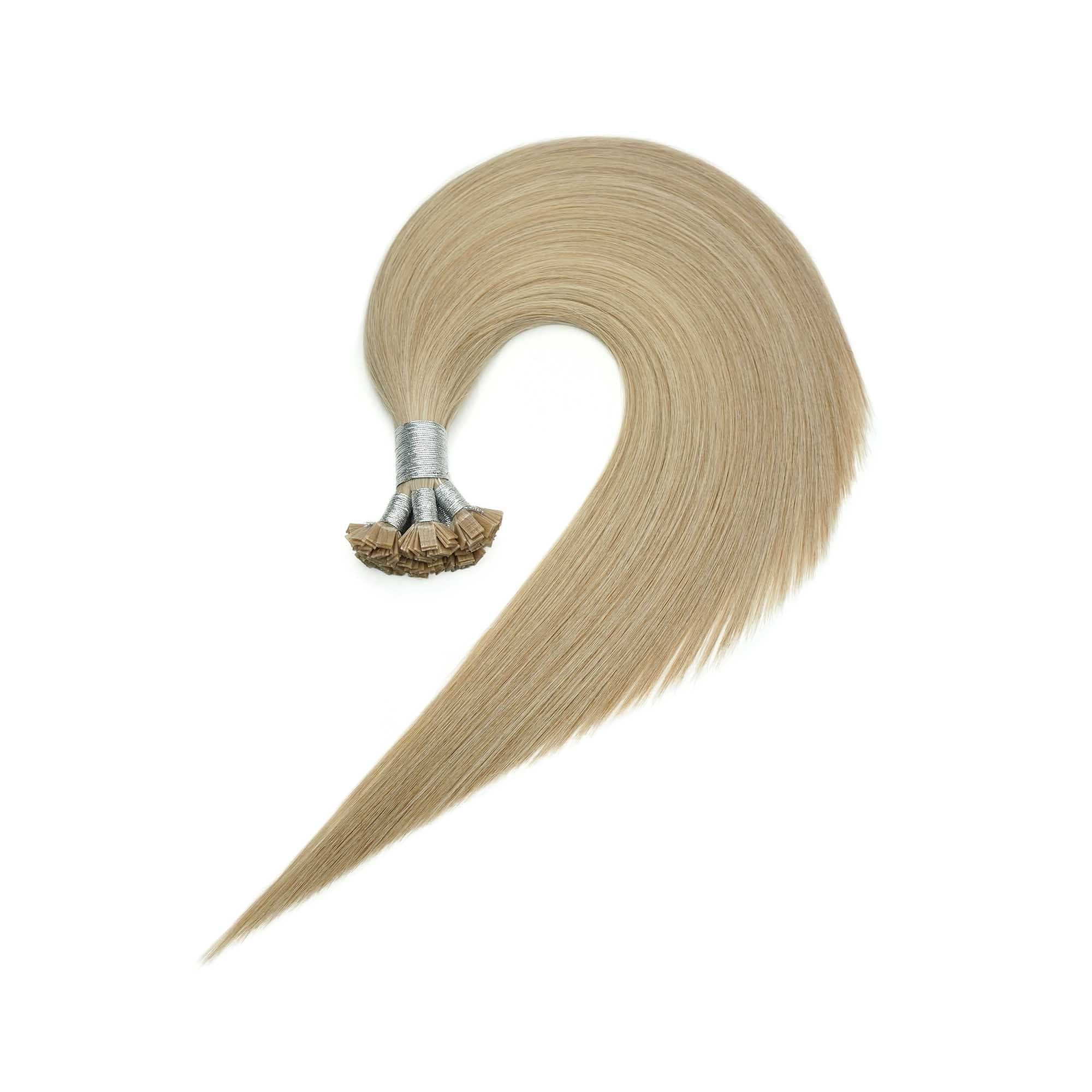
The F Tip product is useful when a flatter prepared bond supports the service goal. A flatter attachment can help the strand sit closer to the section, which may be helpful in detailed placement areas.
Around the side sections, temples, and lower crown, bulk becomes more noticeable. Hair often moves forward, gets tucked behind the ear, or falls around the face. Therefore, a lower-profile bond can help the finished result feel calmer and less raised.
However, F Tip does not remove the need for skill. The natural section still needs enough strength to support the added strand. The heat still needs to be controlled. The bond still needs enough distance from the scalp so the hair can move without pulling.
F Tip also helps with color planning because strand samples are easy to compare. A small test set can show how different blondes, browns, rooted tones, and dimensional shades behave under salon light. This is useful when the product range needs to support both natural blends and visible color accents.
For a first sample plan, F Tip can be tested in both a light shade and a darker shade. Blonde shades reveal end dryness more quickly, while brunette shades reveal shine, tone depth, and smoothness under light. Together, they give a more balanced view of the product.
05 / U Tip Product Logic
When U Tip Supports Classic Fusion Work
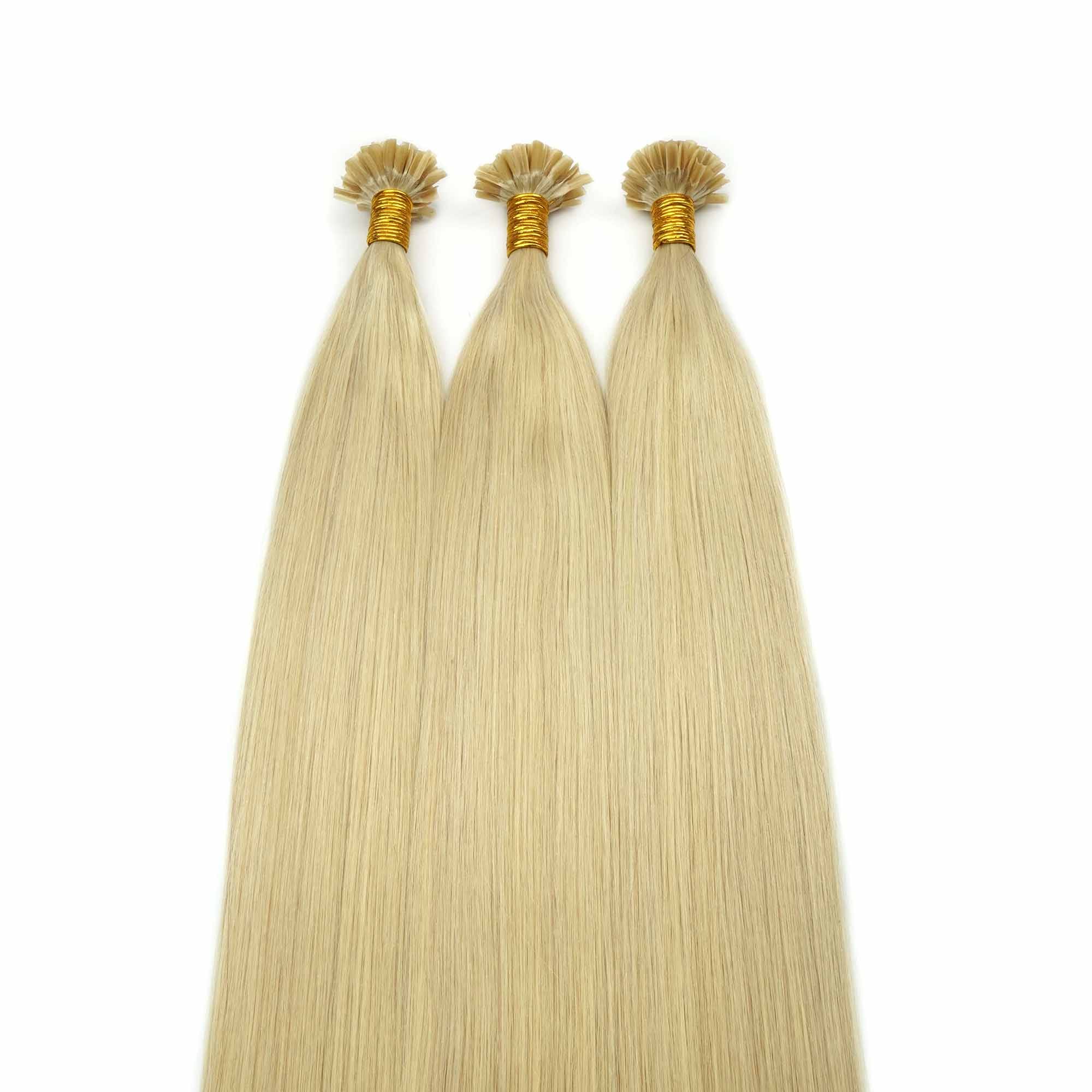
U Tip extensions support a classic fusion service structure. The U-shaped bond softens with heat and wraps around a small natural hair section. As a result, this option feels familiar for teams that already work with traditional heat bond technique.
The strongest value of U Tip appears during shaping. A trained stylist can soften the bond, position the strand, and form the attachment around the section. This makes U Tip useful when the service needs a controlled classic bond rather than a flatter prepared shape.
Still, section proportion is very important. If the section is too small, the strand can feel heavy. If the section is too large, the bond may not close cleanly. Therefore, U Tip testing should include section practice, not only a touch test in the hand.
U Tip also works well as part of a complete heat bond catalog. F Tip can support flatter attachment preferences. U Tip can support classic fusion technique. When both options are explained clearly, the product range feels more professional and easier to navigate.
The best comparison is simple. Install a small F Tip test section and a small U Tip test section. Then brush, wave, lift, and move the hair. The better option is often the one that disappears during movement, not only the one that looks neat before installation.
06 / Professional Checklist
A Heat Bond Checklist That Reflects Real Salon Use
A useful sourcing checklist should feel close to a real appointment. The product should be imagined from unpacking to color matching, from sectioning to heat application, and from first brushing to professional removal. Therefore, the checklist should focus on performance, not only product labels.
Start with the strand. Hold the bond area and let the ends fall naturally. The hair should not look hollow through the last few inches. Then brush from the bottom upward. A good sample should feel smooth without needing aggressive force.
Next, check the shade. The color should be compared near the mid-lengths and ends of natural hair, not only near the root. Many mismatches happen because the sample is matched to the wrong area. This is especially true for blondes, balayage tones, and rooted shades.
After that, test the bond. A professional heat bond should soften predictably, form cleanly, and cool without leaving a messy attachment. The goal is not to overheat the product. The goal is to see whether the bond behaves in a controlled way.
Finally, check removal. A bond must hold during wear, but it should also release under professional removal. If a sample is difficult to remove, the service may create extra labor later. For this reason, removal should be part of the test, not an afterthought.
| Checkpoint | What to Review | Why It Matters |
|---|---|---|
| Hair feel | Brush, wash, dry, and style the sample | Real handling shows more than package softness. |
| End density | Check fullness through the last few inches | Long services look better when the ends stay balanced. |
| Bond shape | Compare F Tip flatness and U Tip wrapping control | Attachment profile affects comfort and visibility. |
| Shade match | Check daylight, salon light, and phone camera light | Color mismatch often appears after installation. |
| Heat response | Review softening, shaping, and cooling behavior | Predictable bonding supports cleaner application. |
| Removal | Remove professionally and check residue | Clean removal protects future service planning. |
07 / Pre-Bonded Planning
How Pre-Bonded Extensions Help When Details Are Clear
pre bonded hair extensions can make service planning easier because the attachment is already prepared. This helps the stylist focus on sectioning, heat control, and placement instead of preparing every strand from the beginning.
However, pre-bonded does not mean one product fits every service. A flat bond and a U-shaped bond create different working feelings. A lighter strand and a fuller strand also create different tension. Therefore, every pre-bonded product should be connected to a clear service role.
The strongest advantage appears when the stock system is organized. A simple label can include method, shade, length, texture, strand weight, pack weight, and sample note. With this system, a successful service can be repeated more easily.
For a professional range, the first order does not need to include every possible shade. A focused sample plan is often more useful. Test the colors, lengths, and bond types that match the service menu. Then expand the range only after real salon feedback supports it.
08 / Installation and Care
Installation and Care Decide Whether the Service Feels Premium
A beautiful product can still perform poorly if the installation is careless. First, the natural hair should be clean and dry. Heavy oil, conditioner, or styling residue near the root can reduce bond control. Therefore, preparation belongs to the service result.
Section size comes next. A very small natural section should not carry a heavy strand. At the same time, a very large section may stop the bond from forming neatly. The correct section should feel secure, balanced, and able to move after the attachment cools.
Bond distance also matters. If the bond sits too close to the scalp, daily brushing and sleeping can feel tight. If it sits too far away, the strand may twist. Therefore, the attachment should leave enough movement space while staying close enough to sit cleanly.
Daily care should be simple enough to remember. Brush from the ends upward. Support the bond area during detangling. Keep heavy oils and conditioner away from attachment points. Dry the root area before sleeping. Avoid pressing hot tools directly on the bonds.
These habits are not complicated, but they make the service feel better. A calm care routine helps the hair stay smoother, reduces unnecessary pulling, and makes maintenance appointments easier to manage.
09 / Common Mistakes
Common Heat Bond Selection Mistakes
The first mistake is choosing by image alone. A product photo can show color family and bond shape, but it cannot show movement after washing or brushing. Therefore, a sample should always be handled like real service hair before approval.
The second mistake is using one strand weight for every situation. Fine sides, dense back sections, face-framing areas, and full length services all need different support. A single weight may simplify stock, but it can create tension or a weak visual effect.
The third mistake is ignoring the side profile. Many extension services look full from the back but raised from the side. Therefore, a test section should be checked while the hair is turned sideways, tucked behind the ear, and gathered loosely.
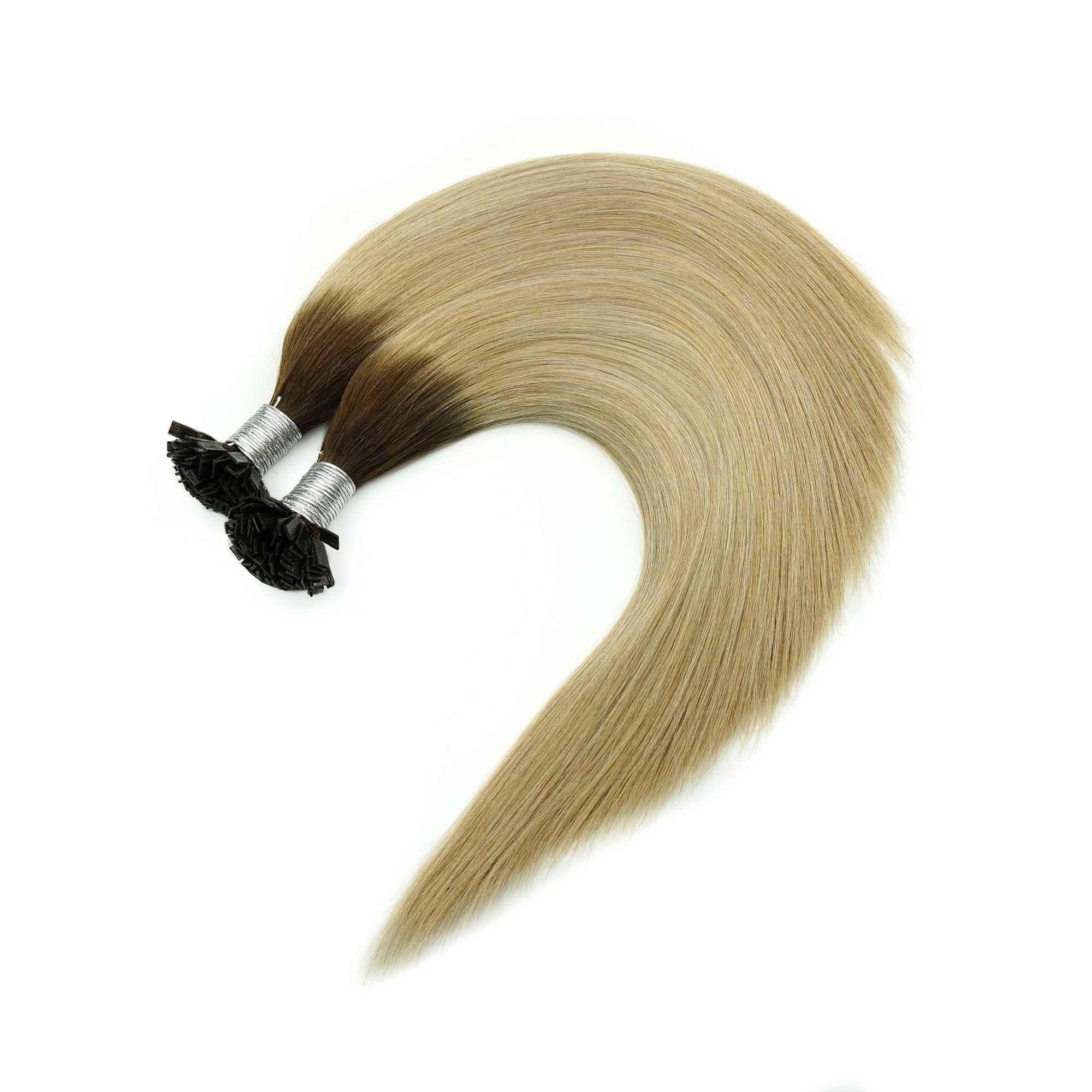
The fourth mistake is matching shade only near the root. Extensions blend through the mid-lengths and ends. If the sample is compared with the wrong area, the final result may look disconnected, especially in blonde and highlighted services.
The fifth mistake is forgetting removal. Heat bond products need to hold during wear, but they should also release under professional removal. If a sample feels difficult to remove, that problem may become bigger during regular service work.
The final mistake is weak record keeping. A successful service should leave clear notes: method, shade, length, strand weight, density plan, placement area, aftercare result, and maintenance feedback. These notes become a practical stock system over time.
10 / Sample Testing Flow
A Sample Test Should Feel Like a Small Appointment
A heat bond sample should not be approved after one touch. Instead, it should pass through a small appointment journey. This makes the test more realistic and helps the product decision feel grounded.
Step 1
Photo Check
Photograph the sample before handling. Then compare the live shade with the photo under different light.
Step 2
Brush Test
Hold the bond area and brush from the ends upward. Watch tangling, shedding, and end behavior.
Step 3
Wash Test
Wash once and dry fully. Then check whether the hair still feels soft and manageable.
Step 4
Style Test
Curl and straighten with normal salon heat. The hair should remain smooth and flexible.
Step 5
Bond Test
Install a small section. Review heat response, bond shape, cooling feel, and movement.
Step 6
Removal Test
Remove professionally and check whether the bond releases cleanly without difficult residue.
11 / Stock Planning
Build Stock Around Services, Not Random Shade Curiosity
A strong stock plan should reduce hesitation during consultation. This does not mean ordering every possible color at the beginning. It means building a practical range that supports the most common services first.
Natural black, dark brown, chocolate brown, medium brown, rooted blonde, beige blonde, and dimensional blonde shades can form a useful starting point for many extension menus. However, the final selection should follow real local service demand, not a random color chart.
Length planning should also follow service scenes. Shorter lengths can support volume, fill-in work, and shape correction. Longer lengths support transformation services, but they require stronger end quality and more careful blending.
Over time, service notes become the best stock guide. Each completed appointment can record method, shade, length, strand weight, placement area, haircut type, final finish, and maintenance result. These notes show which products deserve deeper stock.
This approach creates a cleaner product system. Instead of guessing from online photos, the team can reorder based on proven service results. That makes stock more efficient and reduces wasted shades.
12 / Extended Reading
Useful Internal Links for Faster Method Research
These related pages help move from method education to product comparison without interrupting the reading path. Each page supports heat bond planning, strand method comparison, or sample inquiry.
Keratin Tip Product Category
Compare F Tip, I Tip, and U Tip product entry points in one method category.
F Tip Product Page
Review flat heat bond presentation, shade visuals, and product inquiry details.
U Tip Product Page
Check classic fusion bond shape and U Tip product presentation.
What is keratin hair extensions
Use this page for basic method education before deeper product selection.
13 / Natural Inquiry
Plan the Sample Set Around Real Services
A focused sample inquiry should include method preference, shade direction, length range, texture, strand weight, pack plan, and target service scene. This makes the sample plan more useful than a random mixed order.
For example, a volume-focused test can start with lighter strands and natural shades. A full length test can focus on longer lengths and end density. A color detail test can include rooted blonde, dimensional blonde, and deeper lowlight pieces.
Surblond Beauty can support professional teams with custom colors, lengths, gram weights, texture planning, packaging discussion, and sample preparation. For a complete strand-by-strand product range, keratin hair extensions can be planned together with F Tip, U Tip, and related heat bond options.
Summary: Make the Method Serve the Finished Look
Fusion heat bond extensions work best when product selection follows real service logic. The right strand should blend softly, move naturally, hold through daily care, and release cleanly during professional removal. Because of that, the method should be judged through touch, light, washing, styling, and maintenance planning.
F Tip can support flatter bond placement. U Tip can support classic fusion work. Pre-bonded products can improve workflow when labeling, shade planning, and sample testing are clear. Together, these details create a more reliable extension range.
Three Actionable Suggestions
First, test F Tip and U Tip samples through brushing, washing, styling, bonding, and removal before expanding stock.
Second, match shades to mid-lengths and ends, not only to the root area, especially for blonde and rooted services.
Finally, build product notes around service scenes such as length, volume, color detail, event styling, and correction work.
FAQ
FAQ: Fusion Heat Bond Extension Selection
Are fusion heat bond extensions suitable for fine hair?
Fine hair can support heat bond extensions in selected cases, but the plan should stay careful. A lighter strand, smaller placement map, and comfortable bond distance are important. Fragile edges and weak side areas should not carry heavy pieces. Therefore, a consultation and strand test should happen before a full service. If the natural hair breaks easily or feels stressed, another method may be safer.
What is the difference between F Tip and U Tip extensions?
F Tip and U Tip extensions both support professional strand-by-strand work, but the bond shape changes the application feel. F Tip has a flatter prepared bond, which may support a lower-profile attachment. U Tip has a classic U-shaped bond that wraps during heat application. Therefore, the better choice depends on technique, section size, desired bond profile, and the final service goal.
How should a heat bond sample be tested before larger ordering?
A useful sample test should copy real salon use. First, check shade and end fullness before handling. Then brush from the ends upward, wash once, dry fully, and style with normal heat. After that, install a small test area and review movement in side parts, ponytails, and loose waves. Finally, remove the bond professionally and record whether it releases cleanly.
What aftercare points matter most for fusion extension services?
The most important aftercare points are gentle brushing, careful washing, and heat control near the bonds. Brushing should begin at the ends while the attachment area is supported. Conditioner and heavy oils should stay away from the bonds. Also, heat tools should not press directly on attachment points. Dry hair before sleeping and regular maintenance checks can reduce tangling and tension.