

Choosing between U Tip and F Tip is not only a small product detail. In real salon work, the bond shape affects sectioning, root comfort, strand movement, color placement, and daily aftercare. Therefore, a professional keratin hair extensions range should be built around real wearing scenes, not around product names alone.
This guide compares U Tip and F Tip through salon workflow, product benefits, suitable scenarios, color planning, installation notes, care routines, and sample-checking logic. As a result, the selection process becomes clearer, calmer, and easier to use for professional sourcing and service planning.
First Understand Why Bond Shape Changes the Wearing Experience
At first glance, U Tip and F Tip extensions seem close. Both belong to the pre-bonded strand family. Both can support natural movement, flexible placement, and detailed blending. However, the small bond at the top changes how the strand sits near the root.
For example, a rounded bond may feel easier to shape around a small natural section. Meanwhile, a flatter bond may feel more controlled when a neat row and lower profile are needed. Therefore, the difference becomes obvious during real installation, not only during product browsing.
In a salon mirror, small details matter. The hair should still look calm when it is brushed backward. It should still fall softly when it is tucked behind the ear. Also, the attachment should not create a hard line when the hair moves under light.
This is why the best selection process starts with service scenes. A full length transformation, a soft volume refresh, a face-frame color effect, and a fine-hair correction service do not need the same placement logic. Each scene needs a different balance between hold, comfort, movement, and visibility.
In other words, U Tip and F Tip should not be judged as simple alternatives. Instead, they should be treated as two practical tools for different salon results.
U Tip Hair Extensions Suit Classic Fusion and Flexible Strand Movement
U Tip hair extensions have a curved bond that looks like a small nail or half-circle. Because of this shape, the strand can be wrapped and shaped during heat fusion. As a result, U Tip is often useful for classic strand-by-strand services.
In daily salon work, this format gives the stylist room to build density gradually. For example, more strands can be placed through the back where the haircut needs support. At the same time, fewer strands can be placed near the sides to keep the profile softer.
This method can also support natural swing. Since each extension strand is installed separately, the finished hair does not depend on one continuous row. Therefore, soft waves, layered cuts, and half-up styling can look more relaxed when the placement map is balanced.
However, U Tip does not forgive careless sectioning. A bond that is too large can feel bulky. A strand that is too heavy for the natural section can create tension. Therefore, the right strand weight and the right natural hair section must work together.
For professional service planning, U Tip works especially well when the goal is detailed density building. It can help with longer transformations, discreet volume support, highlight-style color placement, and natural movement around layered areas.
Also, U Tip can be useful for training because the bond shape teaches section discipline. When the attachment is shaped correctly, it feels compact and smooth. When the section is wrong, the mistake is easy to notice during touch and movement checks.
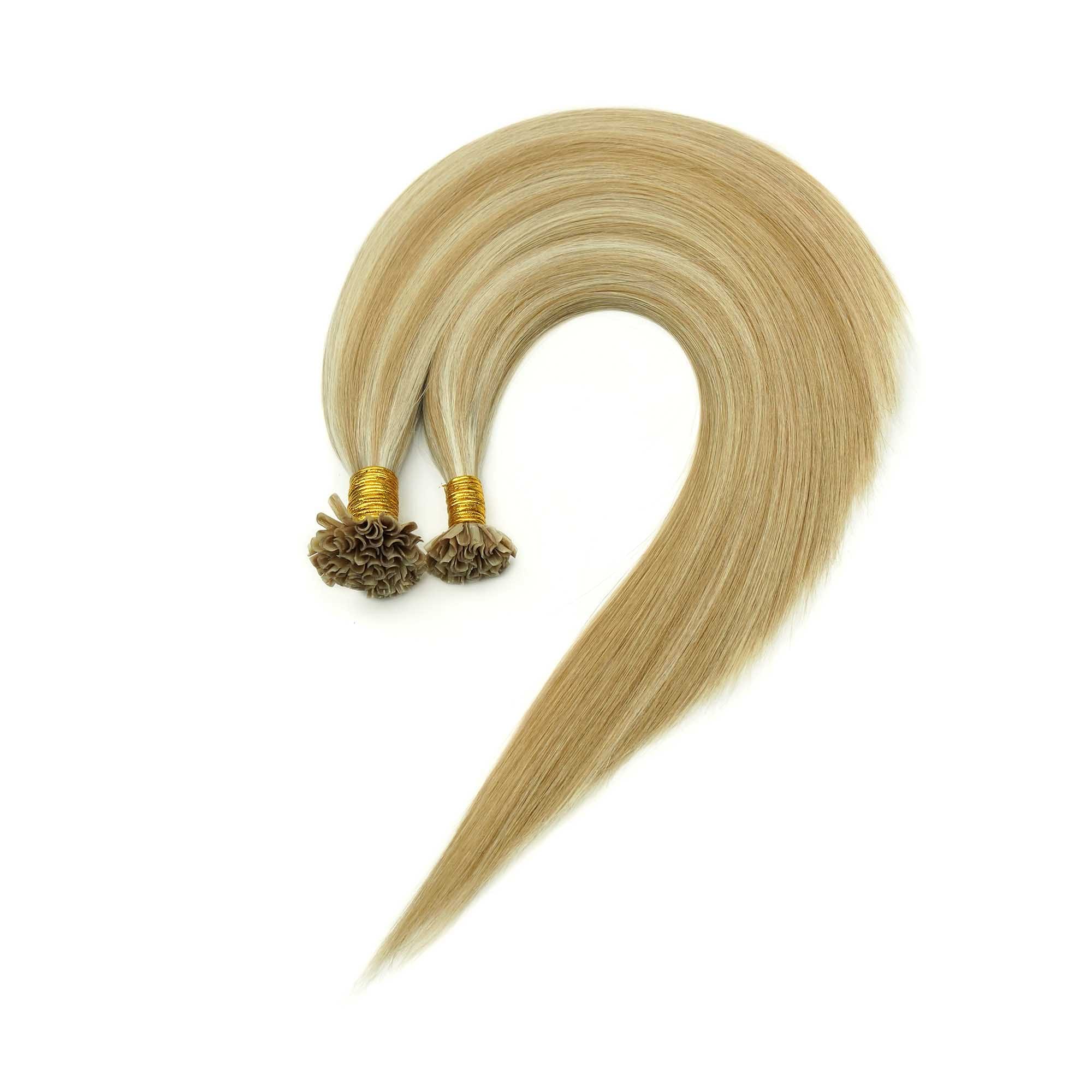
F Tip Hair Extensions Help Create a Flatter and Cleaner Root Area
F Tip hair extensions use a flatter bond shape. Because the attachment surface is less rounded, the finished bond can sit closer to the head in many placements. Therefore, this format is useful when a neat root feel is important.
In a straight or lightly waved finish, the side profile can reveal attachment quality quickly. A bulky bond may show when the hair is tucked behind the ear. Meanwhile, a flatter bond can make the area look cleaner when the sectioning and heat control are correct.
F Tip can also help with organized shade presentation. The strands sit neatly in sample boards, color rings, and training displays. As a result, it becomes easier to compare warm blondes, cool blondes, rooted shades, medium browns, and deeper tones during internal review.
Still, a flatter bond is not a shortcut. It still needs correct placement, steady pressure, and controlled heat. If the bond is pressed too wide, it may feel hard. If the natural section is too thin, the strand may not feel supported.
For salon menus, F Tip can be positioned as a refined bonded option. It works well when the service goal is tidy rows, smooth movement, and controlled root visibility. Also, it can help with side-section services where a large attachment would feel too obvious.
In short, F Tip is especially helpful when the finished style needs calm root behavior. It can support a polished result without making the attachment area feel visually heavy.
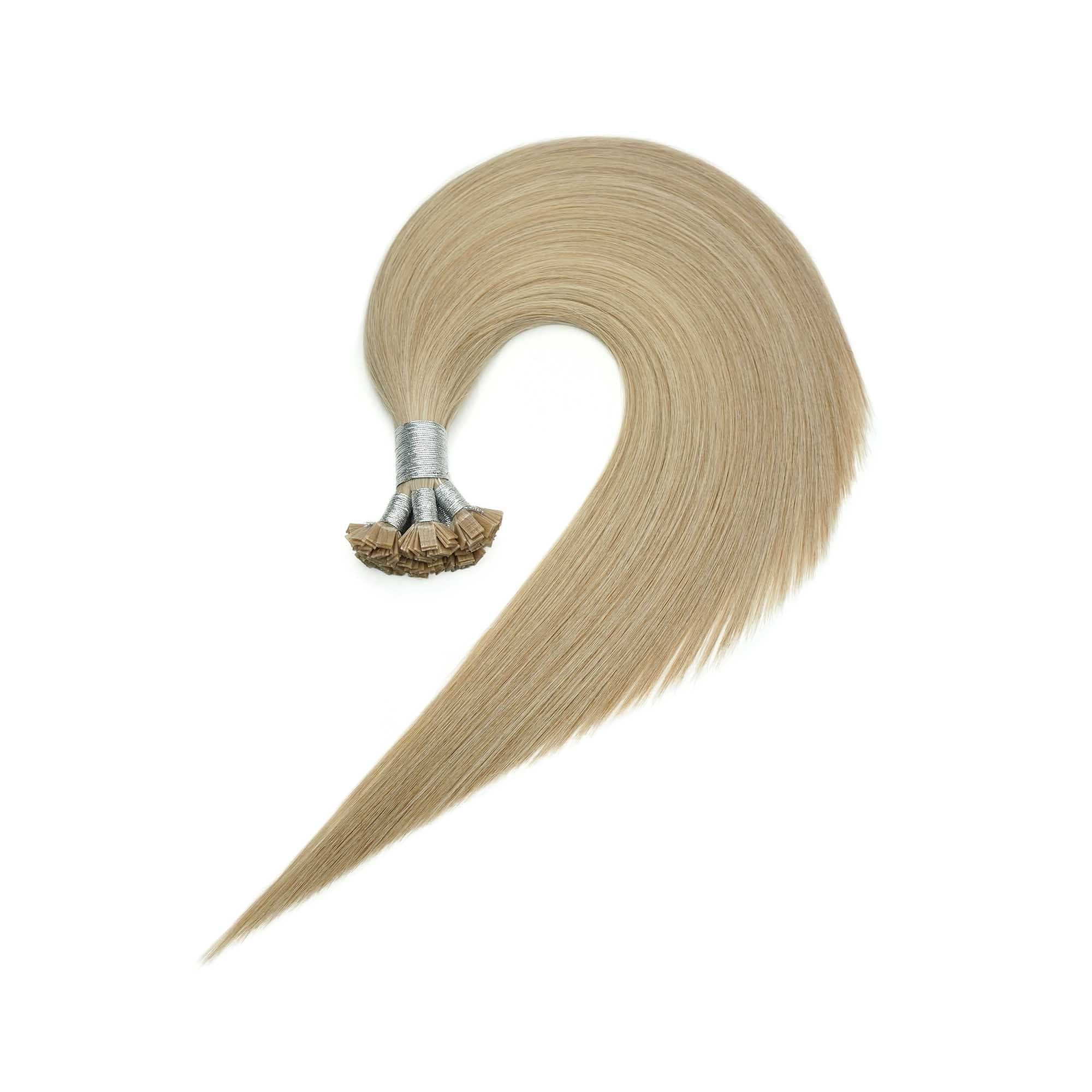
Choose by the Moment the Hair Has to Perform
A practical extension method should be judged by real use. The hair may look smooth in a product photo, but the final service must survive brushing, washing, drying, sleeping, curling, straightening, and daily movement. Therefore, the selection should start with the wearing scene.
For a full length transformation, density through the back matters first. The natural hair must connect to the extension length without leaving a short shelf. In this case, U Tip can help because the stylist can build coverage strand by strand and adjust density by zone.
For a soft side-volume service, the attachment must stay discreet. A heavy or rounded root area can become visible when the hair is moved forward. In this case, F Tip may be tested because the flatter bond can support a cleaner side profile.
For color dimension, both formats can work. A few lighter pieces near the face can brighten the style. A few darker pieces underneath can add depth. However, the placement must follow the haircut, or the color can look striped instead of blended.
For fine hair, comfort is the first rule. The extension strand should not carry more weight than the natural section can support. Also, the bond should not show near the parting, temple, or hairline. Therefore, lighter strand planning is often more important than dramatic length.
For dense hair, the challenge is different. Too few strands may disappear under natural thickness. Too many bonds may make the root area feel crowded. As a result, a clear section map matters before the first strand is installed.
For event styling, movement becomes the test. Soft waves, low buns, loose ponytails, and half-up styles reveal whether the attachment placement feels natural. If the bond area feels stiff, the final look may lose the relaxed feeling that professional extension services should create.
U Tip vs F Tip: Practical Comparison for Salon Sourcing
The table below keeps the decision practical. It compares each bond shape by use, feel, installation logic, styling result, and range-planning value. Therefore, the selection becomes easier to discuss with stylists, educators, and product teams.
| Decision Point | U Tip | F Tip | Selection Thought |
|---|---|---|---|
| Bond shape | Curved, rounded, nail-like tip | Flatter bond surface | Choose by root feel and installation habit. |
| Best use | Classic fusion and density building | Low-profile strand placement | Match method to the strongest salon service scene. |
| Movement | Flexible individual strand swing | Flexible movement with flatter root control | Final movement depends on strand weight and sectioning. |
| Side profile | Needs careful shaping to avoid bulk | Often easier to keep visually flat | Check from side view after installation. |
| Color work | Useful for blended highlights and density support | Useful for tidy shade mapping and visible-area placement | Compare root, mid-length, and end tones. |
| Training focus | Rolling, shaping, cooling, and section control | Flat positioning, heat control, and pressure balance | Training notes should show clean and incorrect bonds. |
This comparison shows that the best choice is not universal. A salon may prefer U Tip for full transformation services and F Tip for flatter side-section services. Meanwhile, another salon may choose only one format because training and service consistency matter more than having many options.
Therefore, the strongest range is not always the largest range. It is the range that fits real service habits, shade demand, and repeatable maintenance results.
A Good Sample Test Should Feel Like a Small Salon Appointment
A sample should not be approved only because it looks smooth in the package. Instead, it should be moved through the same steps that happen in a salon. First, the hair should be brushed from the ends upward while the bond area is supported.
Next, the sample should be washed once. This step reveals more than a quick touch test. Hair that feels coated in the package may become harder to manage after water, while better hair usually keeps a softer fall after drying.
Then, the strand should be styled with normal salon tools. A curl test checks softness and memory. A straightening test checks shine and surface smoothness. Also, a gentle shake test shows whether the ends move naturally or separate too quickly.
After that, the bond should be installed on a mannequin section or training head. This step is important because the hand feel during installation is different from the hand feel during browsing. A bond that looks neat may still feel too large, too stiff, or too sensitive to heat.
Finally, the test section should be checked from three angles: back, side, and top. The side view is especially important because bulky attachments often show there first. Therefore, a side-profile photo should be part of every internal sample record.
Brush
Check shedding, tangling, and end behavior.
Wash
Confirm softness after water and drying.
Style
Curl, straighten, and check natural movement.
Install
Test bond comfort, shape, and side visibility.
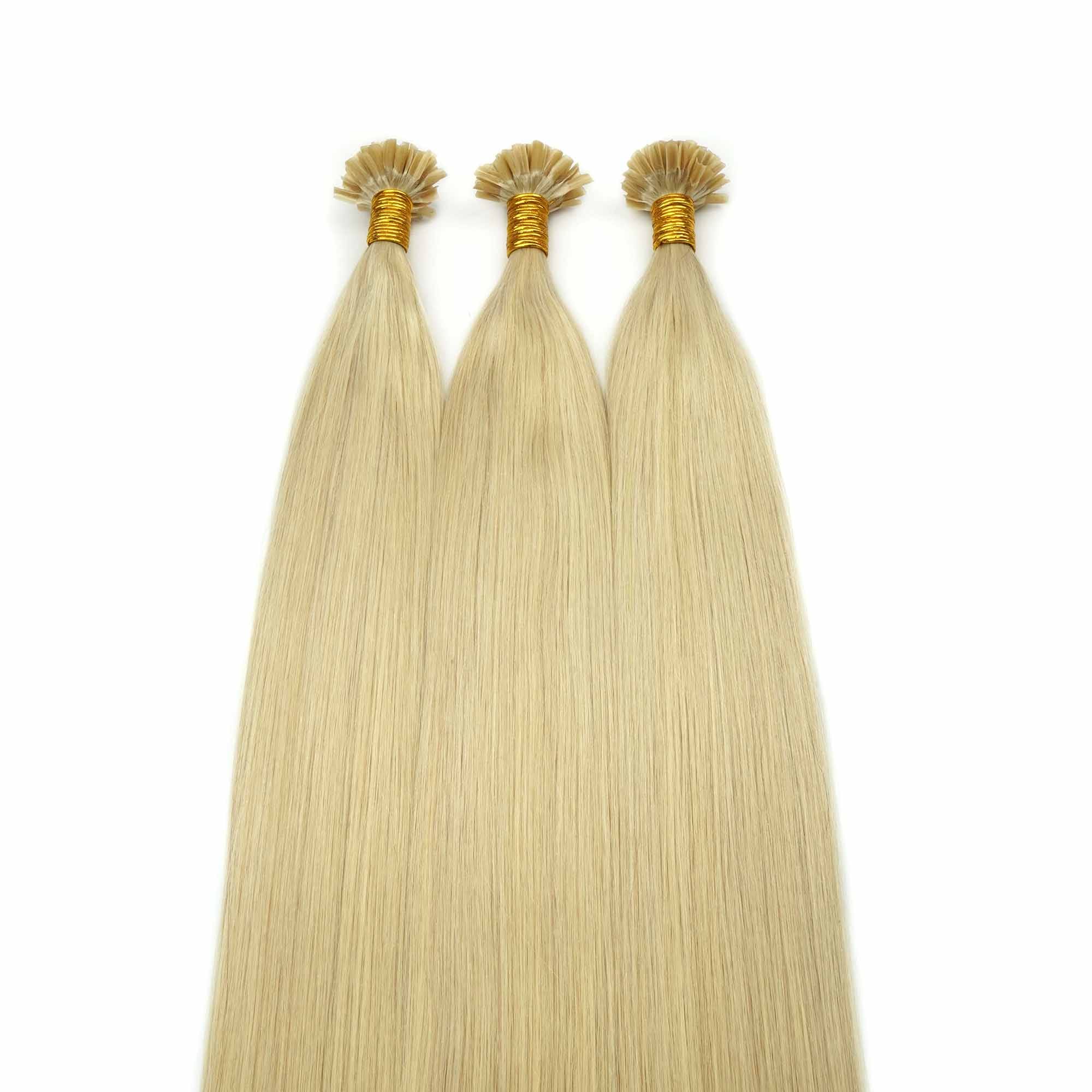
Plan Color, Length, and Gram Weight Around Real Services
A strong bonded extension range does not need every possible shade at the start. Instead, it needs the right core shades for common salon work. Natural black, dark brown, medium brown, warm brunette, beige blonde, ash blonde, and rooted blonde often form a practical beginning.
However, color choice should follow real service demand. A salon focused on blonde work may need more beige, ash, and rooted shades. Meanwhile, a salon focused on natural volume may need deeper brunette options and soft black shades.
Color matching should also look beyond the root. The mid-lengths and ends usually decide whether the final style blends well. Therefore, samples should be checked in daylight, salon mirror light, and warm indoor light before a larger order is confirmed.
Length planning needs the same realism. Very long hair can look attractive in photos, but short natural layers may need extra density and cutting work to blend. Sometimes a moderate length looks more refined because the natural hair can connect to it more softly.
Gram weight also changes the wearing experience. A heavier strand can build fullness faster, but it needs enough natural hair to support the attachment. A lighter strand can feel softer on fine hair, although more strands may be needed for visible density.
For broader range planning, the Keratin Tip category can help organize U Tip, F Tip, and related pre-bonded formats. This keeps product browsing clear and prevents every page from repeating the same message.
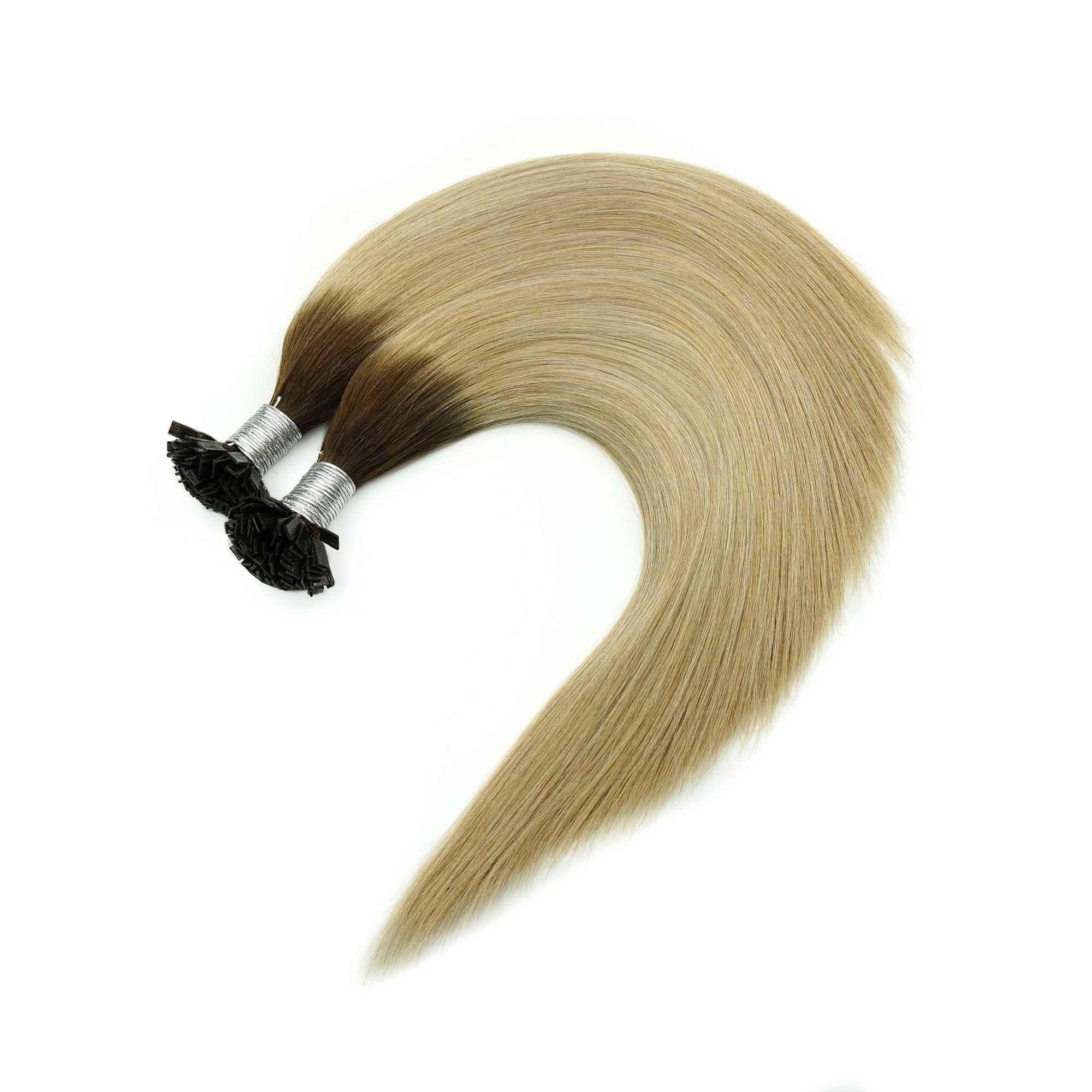
Installation and Care Decide Whether the Service Feels Premium
A bonded strand service starts with clean preparation. The natural hair should be dry, organized, and sectioned carefully. Then, each strand should be matched with enough natural hair to support the bond without creating tension.
For U Tip, the main skill is shaping. The bond should close smoothly around the section. It should not feel sharp or oversized after cooling. If the attachment feels rough, brushing and daily movement may become less comfortable.
For F Tip, the main skill is pressure control. The flatter bond should stay smooth without being pressed too wide. Also, heat should stay focused on the bond area instead of spreading into the hair above or below the attachment.
Placement distance from the scalp is also important. A bond placed too close may pull when the head moves. A bond placed too far may twist sooner. Therefore, a steady and even root distance helps the finished result feel calmer.
After installation, the haircut completes the service. Even beautiful hair can look disconnected when the natural ends are not blended. Soft layering, point cutting, and face-frame refinement help the added length look more natural.
Care instructions should stay simple. Brush from the ends upward. Support the bond area while brushing. Keep heavy oils and conditioners away from attachments. Dry the root area before sleeping. Also, avoid direct hot-tool pressure on the bond.
Maintenance should be scheduled before the bonds grow too low. As natural hair grows, attachments move downward. Regular checks help prevent twisting, product buildup, tangling, and unnecessary stress on natural hair.
Common Mistakes That Make Good Hair Feel Wrong
The first mistake is choosing only from photos. A product image can show shade family and general finish. However, it cannot show how the hair behaves after washing, how the bond feels during installation, or how the ends move after styling.
The second mistake is using one strand weight for every hair type. Fine hair often needs lighter planning. Dense hair may need more coverage. Therefore, strand weight should follow natural density and service goal.
The third mistake is ignoring the side profile. From the back, the hair may look full and smooth. From the side, the bond area may look bulky. Therefore, test installations should always be checked from several angles.
The fourth mistake is ordering too many shades too early. A wide shade range can look professional, but slow-moving stock can become confusing. A focused shade group with custom support often works better during the first stage.
The fifth mistake is writing care notes that feel too technical. A simple routine is easier to remember and follow. Brushing, washing, drying, sleeping, heat styling, and maintenance timing should be explained in plain words.
Finally, U Tip and F Tip should not be placed in the same product range without clear roles. Each format should answer a different service need. When the role is clear, the product story becomes easier to explain.
Keep the Reading Path Useful
The following links support method comparison, product browsing, and sample planning. They are placed here to guide action without interrupting the main reading flow.
FAQ: U Tip vs F Tip Hair Extensions
Which feels more natural, U Tip or F Tip?
Both can feel natural when the strand weight, section size, color match, and placement map are correct. However, the feeling is different. U Tip often supports classic fusion movement with a rounded bond. Meanwhile, F Tip may create a flatter root feel in certain areas. Therefore, the better option depends on hair density, styling habits, and installation control.
Is U Tip or F Tip better for fine hair?
Fine hair usually needs lighter strand weight, smaller sections, and careful visibility checks. F Tip may be tested when a flatter bond feel is preferred. U Tip may also work when the stylist uses precise fusion shaping and suitable strand weight. In both cases, the side profile, temple area, and parting area should be checked before a full service plan is built.
Can U Tip and F Tip be used in the same product range?
Yes, both can sit in one professional range when each format has a clear role. U Tip can support classic fusion and flexible density building. F Tip can support flatter placement and tidy root planning. However, the service menu should stay simple. Clear training notes, shade boards, and aftercare cards help prevent confusion during daily salon work.
What should be checked before placing a larger order?
A larger order should follow a real sample test. The test should check bond consistency, strand weight, hair touch, end finish, washing response, styling response, shade accuracy, and side-profile visibility. In addition, a small installation test can show whether the bond shape fits the salon’s preferred technique. This process reduces guesswork and supports cleaner repeat orders.
How should aftercare be explained for bonded strand extensions?
Aftercare should be simple and easy to repeat. Brush from the ends upward, support the bond area while brushing, keep heavy conditioners and oils away from attachments, dry the root area before sleeping, and avoid direct heat on the bond. Regular maintenance checks also help prevent twisting, buildup, tangling, and unnecessary stress as the natural hair grows.
Build the Range Around Real Salon Results
U Tip and F Tip are not simply two product names. They represent two different ways to solve bonded strand service needs. U Tip supports classic fusion shaping and flexible density control. F Tip supports flatter placement and cleaner root-area planning.
For a stronger bonded extension range, three practical actions matter most:
First, compare U Tip and F Tip through brushing, washing, styling, and a small installation test.
Second, choose shade, length, and gram plans according to actual salon services.
Finally, prepare simple training and aftercare notes so the service result stays consistent.
Surblond Beauty can support sample planning, custom colors, length options, gram choices, and private-label preparation for professional keratin hair extensions ranges.
Contact Surblond Beauty → Request Sample Order →