

For professional extension work, a bonded strand is never just a small piece of hair with a tip. Instead, it affects sectioning, comfort, movement, shade blending, daily styling, and repeat service planning. Therefore, this checklist explains how keratin hair extensions fit into a salon product menu, without turning the decision into a dry specification sheet. It focuses on practical use, suitable scenes, tip selection, sample testing, care notes, stock logic, and custom order planning.
01 / Service Fit
Start With the Salon Scene, Not the Product Name
First, keratin tip work suits services that need small, controlled placement. A stylist can add support around the sides, crown, nape, and face frame without building one heavy row. As a result, the finished look can move more naturally when the hair turns, lifts, or falls over the shoulder.
At the same time, bonded strand placement is not only for dramatic length. It can help fill thin ends, soften layers, add density around delicate areas, or create small color accents. Therefore, the product should be judged by the real salon result it needs to support.
In a full transformation service, the main concern is balance. The back needs enough density, yet the sides should not look bulky. Meanwhile, the natural ends must blend into the added length, or even good hair will look separate.
For detail work, the priority changes. The stylist may need a softer side profile, a cleaner ponytail line, or a few brighter pieces around the face. In those cases, strand size, bond shape, and color tone matter more than simply adding more grams.
02 / Product Features
Check the Details That Change the Finished Result
A neat bond shape helps the stylist work with cleaner sections. In addition, it makes placement easier to plan before the hair is fully installed. When the bond looks uneven, the whole service may feel slower and less predictable.
Hair direction also matters in daily wear. Smooth movement depends on fiber alignment, end density, and processing control. Therefore, a sample should be brushed, washed, dried, and styled before it becomes regular salon stock.
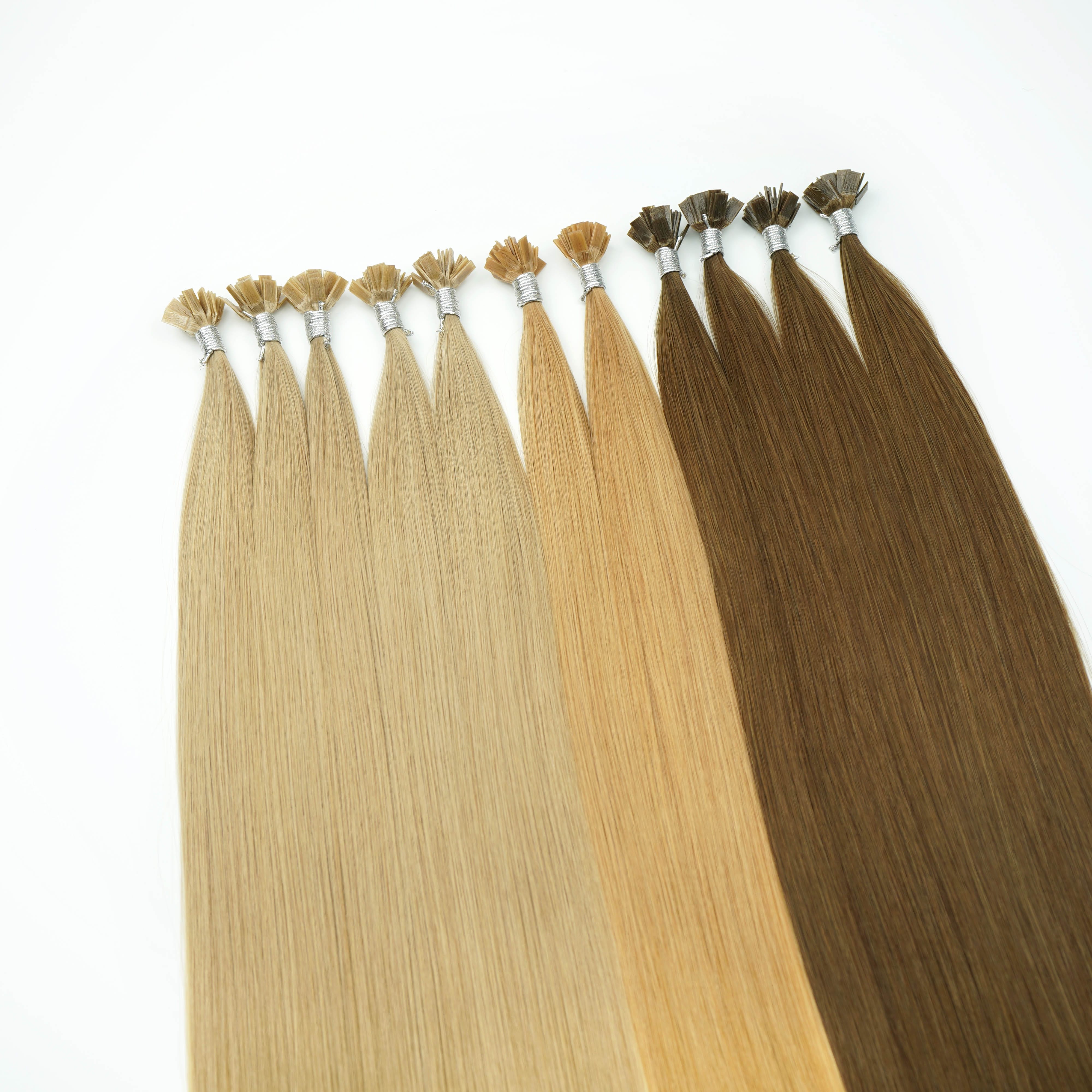
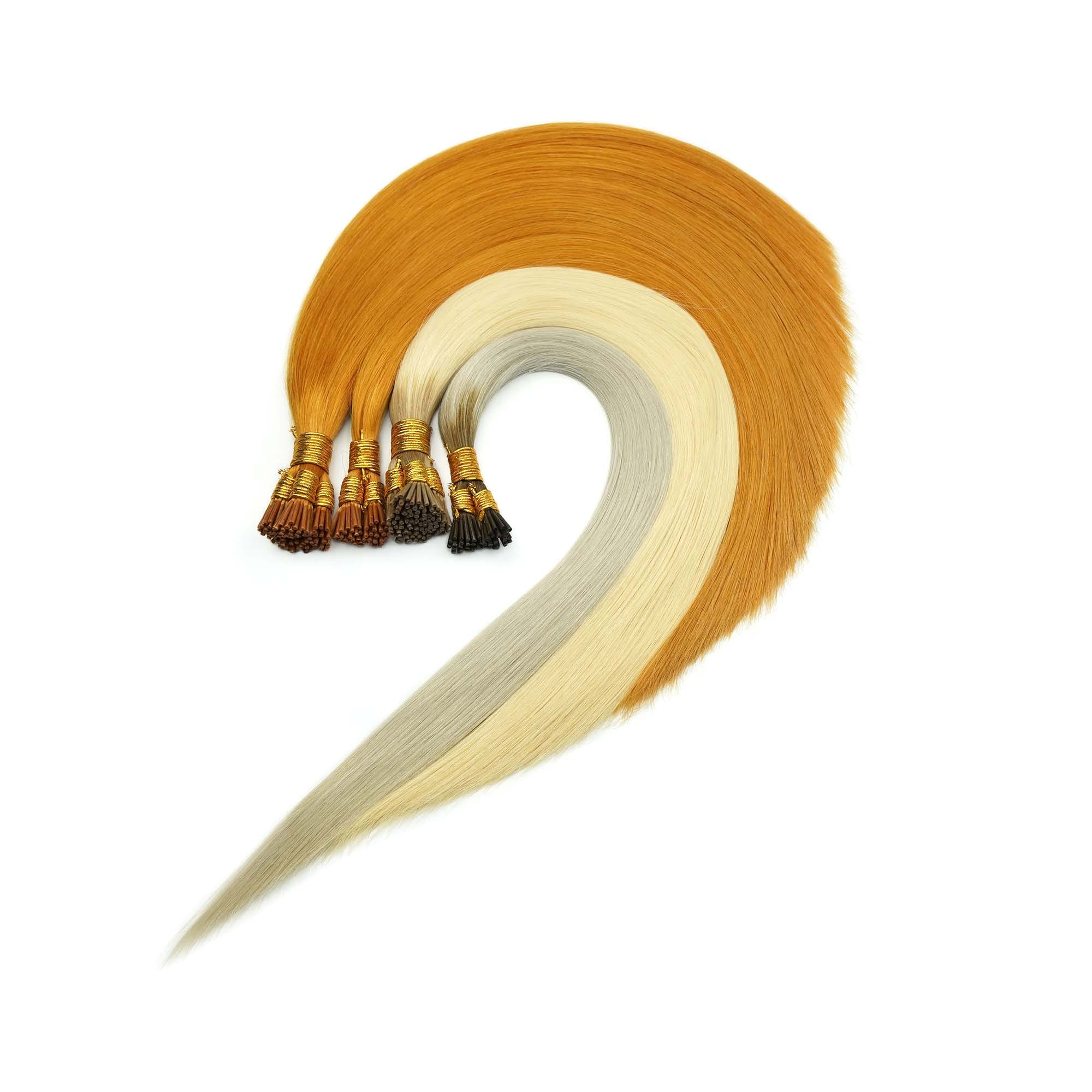
Color range should be judged under real light. Natural black, dark brown, chocolate brown, beige blonde, ash blonde, rooted blonde, and mixed tones all reflect differently. Meanwhile, dimensional shades can reduce extra coloring work before installation.
Strand weight needs the same attention. Fine areas usually need lighter planning, while thicker sections may support more density. However, comfort depends on matching the added strand to the natural section, not on choosing the heaviest option.
03 / Tip Map
Match Tip Shape With the Service Method
Different tip shapes solve different salon problems. Therefore, one product menu should not treat every pre bonded hair extensions option as the same item. A better plan separates flat placement, fusion placement, and no-heat strand placement.
F Tip: Flat Bond Shape for Tidy Placement
keratin tip hair extensions are often selected for precision, and F Tip is useful when the bond needs to sit flatter. This shape can help create organized rows and cleaner section control.
Additionally, flat placement can help around areas that need a lower profile. Side panels, crown blending, and soft density work can benefit from careful F Tip mapping. However, comfort still depends on correct section size and spacing.
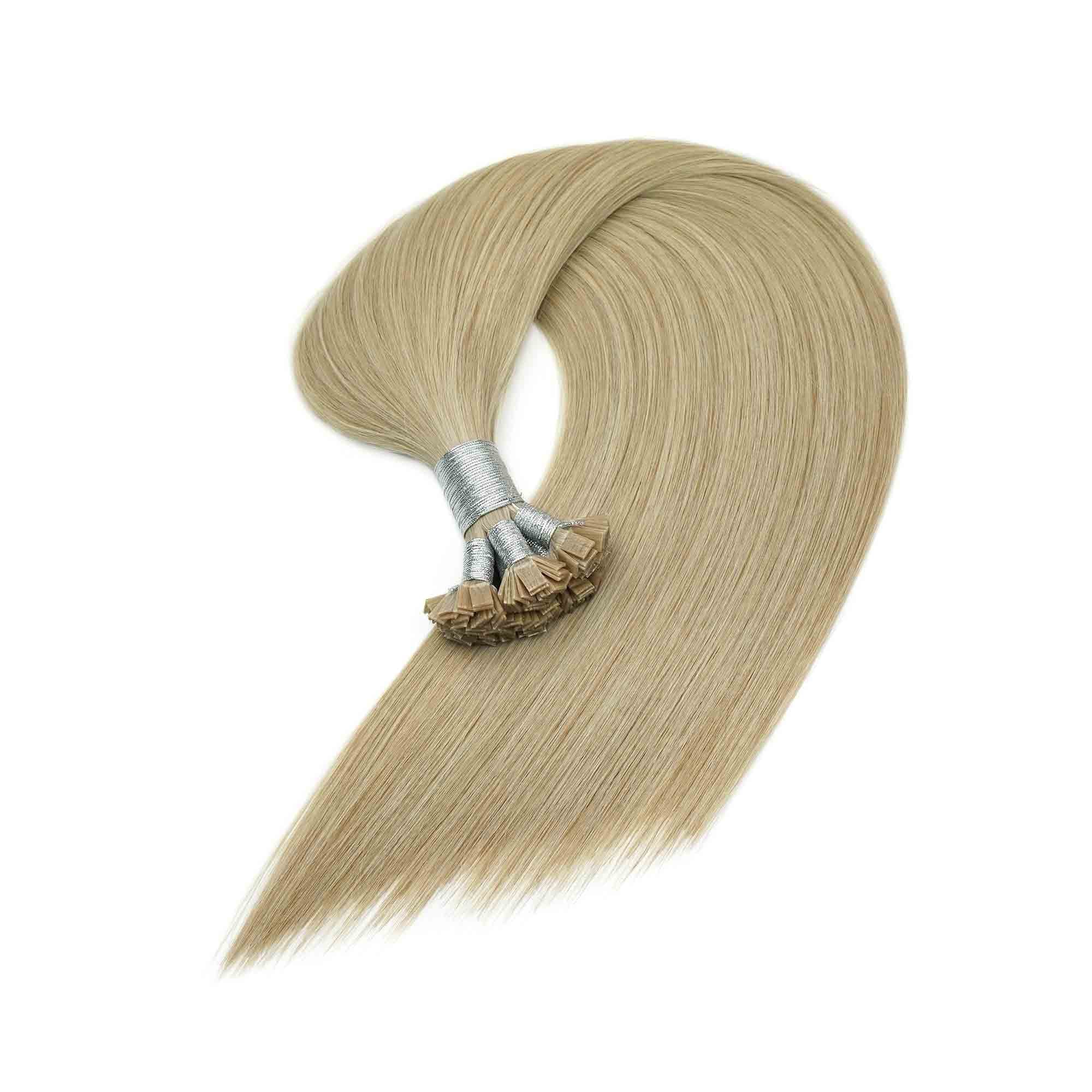
U Tip: Fusion Placement for Long-Wear Strand Work
U Tip products suit trained fusion services. The tip shape helps the stylist form a bonded attachment around a small natural section. Therefore, heat control, bond rolling, and distance from the scalp all affect the final feel.
In salon work, U Tip can support full-length transformations and detailed density placement. Still, the best result comes from careful mapping. Too much hair on a fine section can feel heavy, even when the product itself looks smooth.
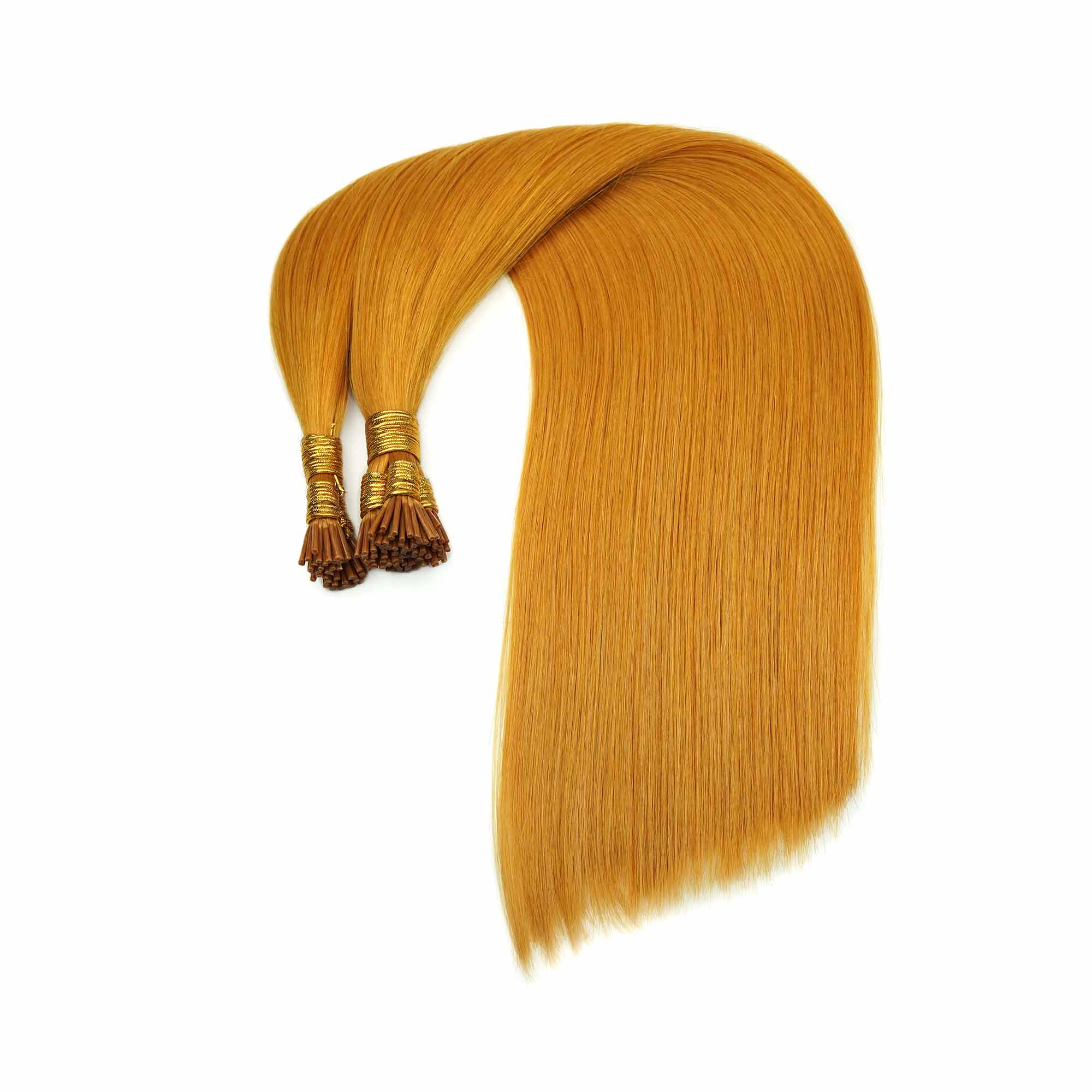
I Tip: Individual Movement Without Heat
I Tip products support individual strand movement without heat bonding. Instead, the installation often works with rings or beads. Therefore, this option fits menus that need flexible placement and a no-heat route.
For ponytail movement, side detail, and soft density around visible areas, I Tip can be practical. However, bead size, strand weight, and natural hair density should stay balanced. The product should move with the head, not sit like a separate layer.
04 / Procurement Checklist
A Practical Checklist Before Ordering Samples or Stock
A useful checklist connects product details with real service results. Otherwise, stock may look attractive in photos but stay difficult to use in daily salon work. Therefore, each line below links a product feature with a practical decision.
| Checklist Item | What to Confirm | Why It Matters |
|---|---|---|
| Tip shape | F Tip, U Tip, I Tip, or mixed sample set | It decides installation method, bond profile, and placement feeling. |
| Strand grams | 0.5g, 0.8g, 1g, or custom weight | It affects comfort, density, and natural hair support. |
| Color range | Natural shades, rooted tones, blondes, brunettes, and mixed colors | It helps reduce extra color correction before fitting. |
| Length plan | Layered lengths, standard lengths, and longer options | It supports better blending through the ends. |
| Texture | Straight, body wave, loose wave, or custom texture | It should match the final styling menu. |
| Bond quality | Clean shape, steady size, smooth finish | It helps installation stay neat and predictable. |
| Pack planning | Grams per pack, strands per pack, shade label, and storage notes | It makes repeat ordering and salon storage easier. |
| Sample testing | Brush, wash, dry, style, and light check | It reveals more than a product photo can show. |
Additionally, sample planning should include several shade families. A single blonde sample cannot show how brunette tones reflect light. Likewise, one dark shade cannot reveal how lighter ends respond after washing and heat styling.
A smart sample set should answer three questions. First, does the hair still feel soft after water? Next, does the bond stay neat after handling? Finally, does the shade still look natural under salon mirror light?
05 / Color, Length, and Grams
Plan Color, Length, and Strand Weight Together
Color matching needs natural lighting whenever possible. Salon lighting can shift blonde, ash, and brown tones. Therefore, shade rings, sample strands, and daylight checks all help reduce mismatch before installation.
Length planning should follow the final haircut. For example, a long layered finish may need more than one length. Meanwhile, a blunt long look often requires enough density through the ends, not only a longer bundle.
Grams should match both the desired effect and the natural hair density. Fine hair usually needs lighter planning, while thick hair often needs more grams for visual balance. However, adding too much weight can create tension near the root area.
For stock planning, a narrow but useful shade range works better than random color depth. Natural black, dark brown, medium brown, ash blonde, golden blonde, and mixed highlight tones often cover many salon requests. In addition, custom color support can help with regional shade preferences.
06 / Installation and Care
Daily Use Decides Whether the Service Feels Premium
Even a good product can perform poorly when sectioning is rushed. Therefore, the sourcing plan should match the stylist’s working method. Clean parts, balanced section size, and correct spacing reduce avoidable tension.
The bond should not sit too close to the scalp. A small movement gap helps the wearer brush and style the hair more comfortably. Meanwhile, placement should avoid areas where bonds may show during common hairstyles.
Aftercare should stay simple enough to remember. Brush from the ends upward, support the attachment area, dry the root area before sleeping, and keep heavy oils away from bonds. These habits help the service look polished longer.
Heat also needs control. Styling tools can shape the mid-lengths and ends, but direct heat near the attachment area should stay limited. In addition, heat protection helps protect softness and shine.
For basic product education, the article What is keratin hair extensions can support introductory learning. This checklist, however, focuses on sourcing decisions, salon service planning, and sample review.
07 / Common Mistakes
Avoid the Mistakes That Make Stock Hard to Use
The first mistake is choosing only by photo color. Product images are useful, but screens change tone. Therefore, shade checks should include physical samples, daylight, mirror light, and warm indoor light.
Another mistake is ignoring strand weight. A heavier strand can look full in the package, but it may not suit fine areas. Conversely, a lighter strand may create better comfort and softer movement around delicate sections.
A third mistake is treating every bonded product as a full-head solution. Some products work better for density. Others work better for color placement, face-frame brightness, or side blending. Therefore, service purpose should guide product depth.
Packaging is also easy to overlook. Clear pack weight, shade codes, labels, and storage protection support smoother daily work. In wholesale planning, these details can reduce confusion during repeat orders.
Finally, weak sample testing creates avoidable risk. A sample should pass brush, wash, dry, style, and light checks. Only then does it become useful for larger stock planning.
08 / Sample Plan
Build a Sample Plan That Feels Like a Real Appointment
A professional sample test should copy salon reality. Do not only touch the hair once and make a decision. Instead, move the sample through a small service journey that includes brushing, washing, drying, styling, and shade checking.
First, photograph the sample before handling. Then brush from the ends upward while holding the top area. This shows whether the ends settle smoothly and whether shedding appears during basic handling.
Next, wash the sample with the same type of shampoo and conditioner used in the salon. After drying, check whether the hair still feels soft. Some hair looks polished before washing because of surface treatment, but the first wash reveals more about the real texture.
Then, use normal styling tools. Curl a small section, straighten another section, and check how the hair reflects light. The goal is not to use extreme heat. The goal is to see whether the hair responds like salon hair should.
Finally, place the sample near real hair shades. Color should be checked near the mid-lengths and ends, not only near the root. Many mismatches happen because the extension shade is compared to the wrong part of the natural hair.
09 / Stock Logic
Build Stock Around Services, Not Random Shade Curiosity
A salon stock plan should reduce hesitation during consultation. This does not mean ordering every possible shade. Instead, it means choosing a core range that supports the most common services.
Natural black, dark brown, chocolate brown, medium brown, rooted blonde, beige blonde, and dimensional balayage tones often become practical starting points. However, the final selection should follow local service demand and real appointment notes.
Instead of filling drawers with rarely used colors, start with a focused sample plan. Test the methods that match the service menu. Then record which shades and lengths turn into repeat services.
Every successful service should leave a short note. Record the method, shade, length, gram plan, natural density, haircut type, final finish, and maintenance result. Over time, these notes become a better ordering system than guesswork.
For wholesale planning, the smartest first order is focused. Combine one or two proven methods with a narrow but useful shade range. After real salon testing, increase the stock depth only in products that show steady performance.
10 / Inquiry Direction
Ready to Build a More Focused Bonded Extension Plan?
A strong bonded extension plan starts with service use, not random shade curiosity. First, define the method. Next, confirm shade direction, length, strand grams, texture, and packaging needs. Finally, test samples through brushing, washing, drying, styling, and lighting checks.
Surblond Beauty can help professional teams compare keratin hair extensions by tip shape, color, length, grams, texture, packaging, and sample requirements.
Start with one F Tip, one U Tip, and one I Tip sample group.
Compare light, medium, and dark shades under real salon lighting.
Confirm grams, pack size, labels, and care notes before repeat stock planning.
11 / FAQ
FAQ: Salon Sourcing Questions
What should be checked first when choosing keratin tip products?
First, the installation method should be checked before shade or length. Tip shape affects how the product attaches, how it feels, and how the finished style moves. Next, strand grams, color range, bond shape, and texture should be reviewed. A short sample test also helps confirm brushing feel, washing behavior, and styling response before deeper stock planning.
Are bonded extensions suitable for fine hair?
Yes, bonded extensions can suit fine hair when the strand weight and section size stay balanced. However, heavy strands may create too much tension around delicate areas. Therefore, lighter grams, smaller sections, and careful spacing often work better near the hairline and temples. A trained stylist should also avoid placing bonds too close to the scalp.
How should samples be tested before repeat stock planning?
A sample should move through a real salon routine. First, brush it from the ends upward. Next, wash and dry it fully. Then, style a small section with normal heat and compare the shade under different lighting. This process shows softness, shedding control, texture recovery, and color behavior better than a quick package inspection.
What details help with custom product planning?
A clear request should include tip type, color family, length range, strand grams, texture, pack weight, and packaging needs. In addition, reference photos or shade numbers can reduce misunderstanding. When the intended service scene is also included, such as full length, volume filling, or color accent work, product matching becomes more accurate.