E-mail: admin@surblondbeauty.com
Choosing human hair extensions is not only a material question. It is also a service question, a styling question, and a daily-wear question. In a salon or wholesale range, the right hair should look calm under mirror light, move naturally after brushing, and support the method without adding stress to the final look. This guide compares real hair and synthetic hair through real scenes, touch points, product uses, care routines, and sample checks.
Contents
Quick jump guide
01 / Principle Education
First, the clearest difference between real hair and synthetic hair appears during movement. A product may look smooth in a flat photo, but service value appears when the hair is brushed, lifted, curled, tucked behind the ear, or checked from the side. Therefore, the first test should not be a parameter list. It should be a small styling moment.
Real hair usually falls in a softer way because the strand behaves closer to natural hair. It can move with the head, catch light with a quieter shine, and blend more naturally through mid-lengths and ends. Synthetic fiber can look neat and uniform at first. However, it may feel more fixed, glossy, or firm when the style needs natural swing.
Meanwhile, extension hair is no longer attached to the scalp. It does not receive natural oil from the root. Because of that, the ends become the most honest testing area. If the ends feel dry, hollow, or stiff before use, the final service will usually need more styling effort to look soft.
In other words, material quality is not one single claim. It is a chain of details: strand selection, cuticle direction, processing control, color depth, end density, attachment construction, and care guidance. When those details work together, the result feels less forced. The hair can look polished without looking overworked.
For everyday styling, real hair gives more room to adjust the finish. A soft wave can be refreshed, a blowout can be smoothed, and a layered cut can be blended after installation. As a result, the style does not depend only on the factory shape. It can become part of a normal hair routine.
At the same time, real hair supports a more natural emotional result. The hair should not feel like a separate piece that needs constant checking. Instead, it should feel calm when the head turns, when a section moves forward, or when the ends rest over a sweater or dress. This kind of quiet confidence is often what makes a premium extension service feel successful.
However, synthetic hair should not be dismissed completely. It can support mannequins, temporary fashion color, costume looks, display boards, and short-term creative styling. It may also help with basic training when the goal is sectioning practice rather than final wear performance.
Still, synthetic fiber needs a clear position. It should not be presented as the same solution for services that need repeated heat styling, soft daily movement, and close color blending. Therefore, the best catalog structure separates premium daily wear, temporary looks, training pieces, and display items.
02 / Scene-Based Judgment
A strong extension range begins with real scenes. One service needs quick volume before a weekend event. Another needs soft curls that hold through a wedding trial. Another needs extra fullness around the sides without creating visible bulk near the ear. Therefore, the question should be practical: what must the hair do after installation?
For daily wear, the hair needs to survive normal mornings. It should brush smoothly, settle after sleep, and respond to simple styling without looking heavy. Real hair usually performs better in these moments because it can be handled more like natural hair. Synthetic fiber may work for occasional styling, but daily friction can reveal its limits sooner.
For event styling, the expectation changes. The hair may need to hold waves for photos, sit well in a half-up style, and blend with face-framing layers. In this case, natural movement and heat response become important. Real hair can usually support those needs better when quality and care are suitable.
For temporary fashion effects, synthetic hair can be useful. A bold color panel, party look, or display style may not need repeated washing or heat changes. Therefore, synthetic fiber can serve creative projects when the purpose stays clear and the care limits are explained from the beginning.
Daily wear with natural brushing, movement, and touch.
Bridal styling, soft waves, and photo-focused services.
Color enhancement with rooted shades, lowlights, or balayage effects.
Premium length and fullness services that need soft ends.
Salon education that includes washing, drying, curling, and finishing.
Display boards, mannequins, and simple visual education.
Temporary fashion color or short-term event styling.
Basic sectioning practice before using higher-value material.
Fixed textures that do not need frequent heat changes.
Seasonal or themed looks where daily wear is not the goal.
In practice, many sourcing mistakes happen because the scene is unclear. A temporary display piece does not need the same material investment as a premium daily-wear service. Likewise, a daily-wear service should not be built from material that cannot support brushing, heat, or natural movement. Once the scene is clear, product choice becomes easier.
Finally, stock planning becomes more organized when products are grouped by use. Fast finish, full transformation, color enhancement, detailed movement, temporary styling, and training support should each have a clear role. This structure also helps product pages guide action without interrupting reading.
03 / Material Comparison
Next, a clear table helps compare the two materials without overcomplicating the decision. The goal is not to make one material sound perfect. Instead, the goal is to show which material fits which service expectation.
However, a table cannot replace hands-on review. Hair should be brushed, washed, dried, moved, and checked in several lighting conditions. Therefore, use this table as the first filter, then confirm the decision through sample testing.
| Decision Point | Real Hair | Synthetic Hair | Practical Check |
|---|---|---|---|
| Movement | Usually moves closer to natural hair and settles softly after brushing. | May move in a more fixed or uniform way, especially around the ends. | Shake the sample gently and watch how the ends fall. |
| Touch | Often feels more natural through mid-lengths and ends. | Can feel smooth at first, yet less natural in daily handling. | Brush after washing, then feel the ends again. |
| Heat Styling | Can support controlled heat when quality and care are suitable. | Often has strict heat limits and may change under hot tools. | Use moderate heat only after checking product instructions. |
| Color Matching | Works better for subtle tone, root depth, and dimensional blends. | Usually arrives as a fixed shade with limited correction options. | Compare root, mid-length, and end tone under different light. |
| Daily Wear | Better for services that need regular brushing and restyling. | Better for occasional wear, displays, or fixed creative looks. | Match the material to the expected wear schedule. |
As a result, material choice becomes less emotional and more practical. Real hair should be tested for softness, fullness, color behavior, movement, and attachment quality. Synthetic hair should be tested for shine level, heat limit, fixed texture, friction response, and correct use case.
Furthermore, the best value is not always the lowest initial cost. A product that cannot support the intended service can create extra styling time, extra explanation, and weaker final confidence. A product that fits the exact scene can make the service feel smoother from consultation to aftercare.
04 / Method Logic
First, material and method should work together. A real hair weft creates a different experience from a real hair tape-in panel. A synthetic clip-in piece also serves a different purpose from a synthetic training strand. Therefore, method choice should follow the service plan.
For quick volume, flatness and timing matter most. Tape-in pieces can support a clean surface and efficient placement when sectioning is correct. For temporary styling, clip-ins can add length or fullness without adhesive or bonding. For fuller transformations, wefts can build density through the back and sides.
Meanwhile, strand methods can support detailed movement. I tip, nano ring, and keratin tip formats allow smaller placement choices around fine areas, temples, and sections that need more natural separation. However, strand weight must match the natural section. Too much extension hair on too little natural hair can create discomfort later.
Use this logic when the service needs efficient fullness, a clean surface, or soft color accents. Tape-in and clip-in formats often fit this role because they are easy to explain and easy to organize in a menu.
Use this logic when the service needs visible length, density, and shape change. Genius weft, hand tied weft, machine weft, and other row structures can support this type of work when placement respects natural density.
Use this logic when placement needs flexibility around hairlines, temples, fine sides, or ponytail movement. Strand methods can help create separation and softer movement when section sizing stays balanced.
Use this logic for events, photos, styling demos, and quick try-on moments. Clip-ins and selected synthetic pieces can support flexible looks when the wearing plan is short and clearly defined.
In other words, product format should not be chosen only because it is popular. It should solve a specific styling problem. When method logic is clear, product photos, sample tests, and stock decisions become easier to manage.
05 / Product Entry Points
The product entries below follow the same practical logic. Each image is fully clickable and leads to the matching Surblond Beauty product page. Each button repeats the same destination, so the path to the product remains clear without forcing extra searching.
Additionally, the text around each product focuses on use, feeling, and service scene. This keeps product recommendation secondary to the material comparison, while still supporting useful internal navigation.
View Tape In Product →Tape-in pieces are often chosen when the appointment needs speed and a clean surface. The panel structure feels easy to explain, and the final result can sit close to the head when sectioning is careful. This makes tape-in useful for volume refreshes, soft length, and low-commitment color enhancement.
However, the main judgment is not only whether the hair feels smooth. The tab area should stay neat. The panel should not feel too heavy near the root. The color should also blend naturally around the face. For category planning, review Surblond Beauty tape in hair extension options.
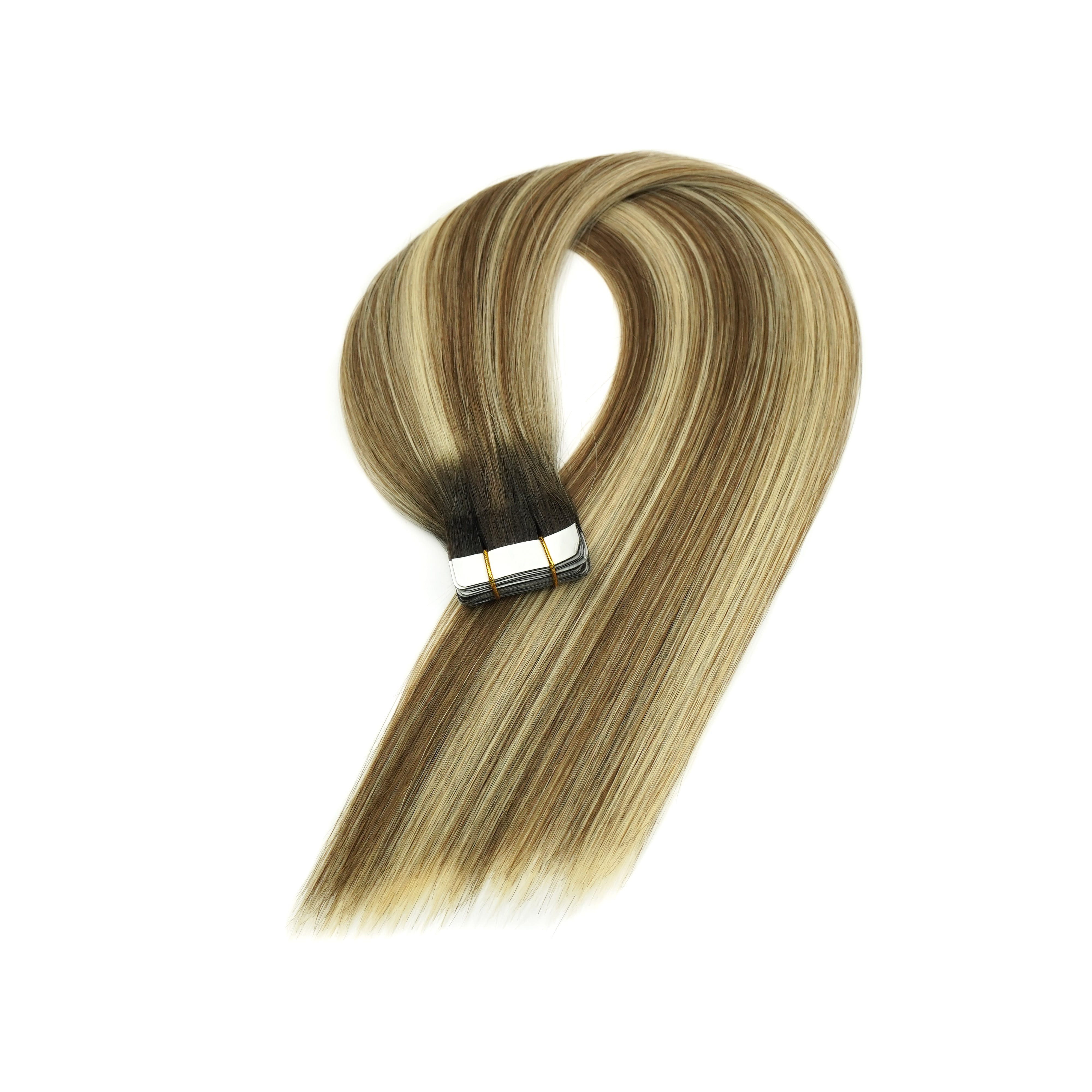
Experience tip: place a tape-in sample on a mannequin or test section, then move the hair forward. If the tab shape becomes visible from the side, the final service may need smaller sections, a softer shade transition, or a different placement plan.
View Clip In Product →Clip-ins work well when the style needs change without a semi-permanent method. They can support photo shoots, bridal trials, content days, display styling, and quick length demonstrations. Because the pieces can be removed, the service feels flexible and easy to control.
Still, a good clip-in set should not feel bulky at the crown. The clips should open and close cleanly, grip firmly, and stay comfortable during movement. The shade also needs careful checking because clip-ins often sit close to visible layers. Browse Surblond Beauty clip in hair extension options for format direction.
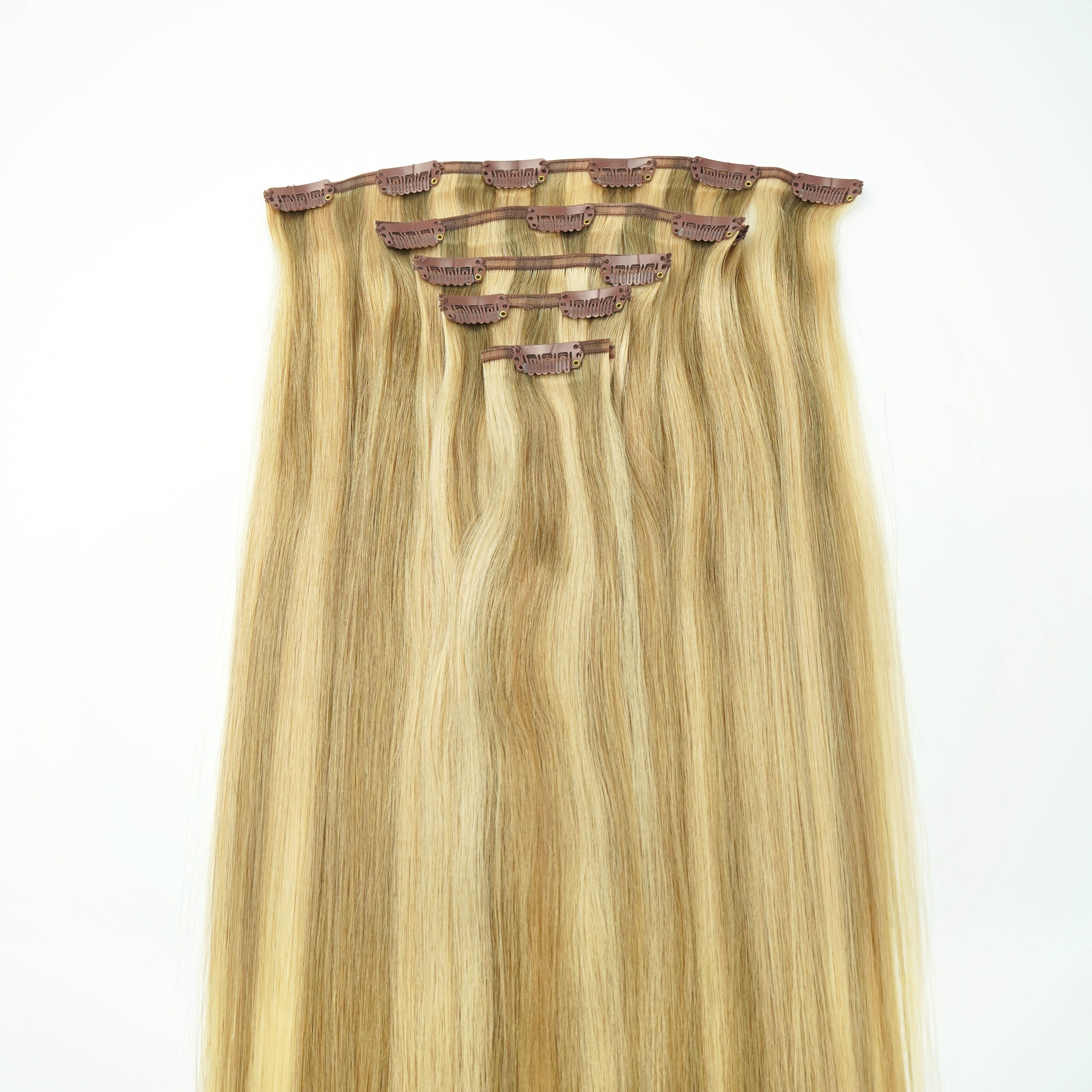
In real styling, clip-ins often create a strong mirror moment. A few pieces can change the shape quickly, especially around the back and lower layers. However, the pieces should be stored clean, dry, and brushed after removal. Otherwise, even good extension hair can look tired before the next use.
View Genius Weft Product →Genius weft can support fuller transformations when the row needs to sit flatter and follow the head shape more carefully. It is useful when the service requires shorter pieces near the temples, stronger density through the back, or a cleaner curve around the nape.
The strongest value appears during mapping. A stylist can decide where the shape needs support and where the row should stay lighter. Therefore, the final result can feel balanced rather than heavy. This makes Genius Weft useful for premium row services that need natural movement.
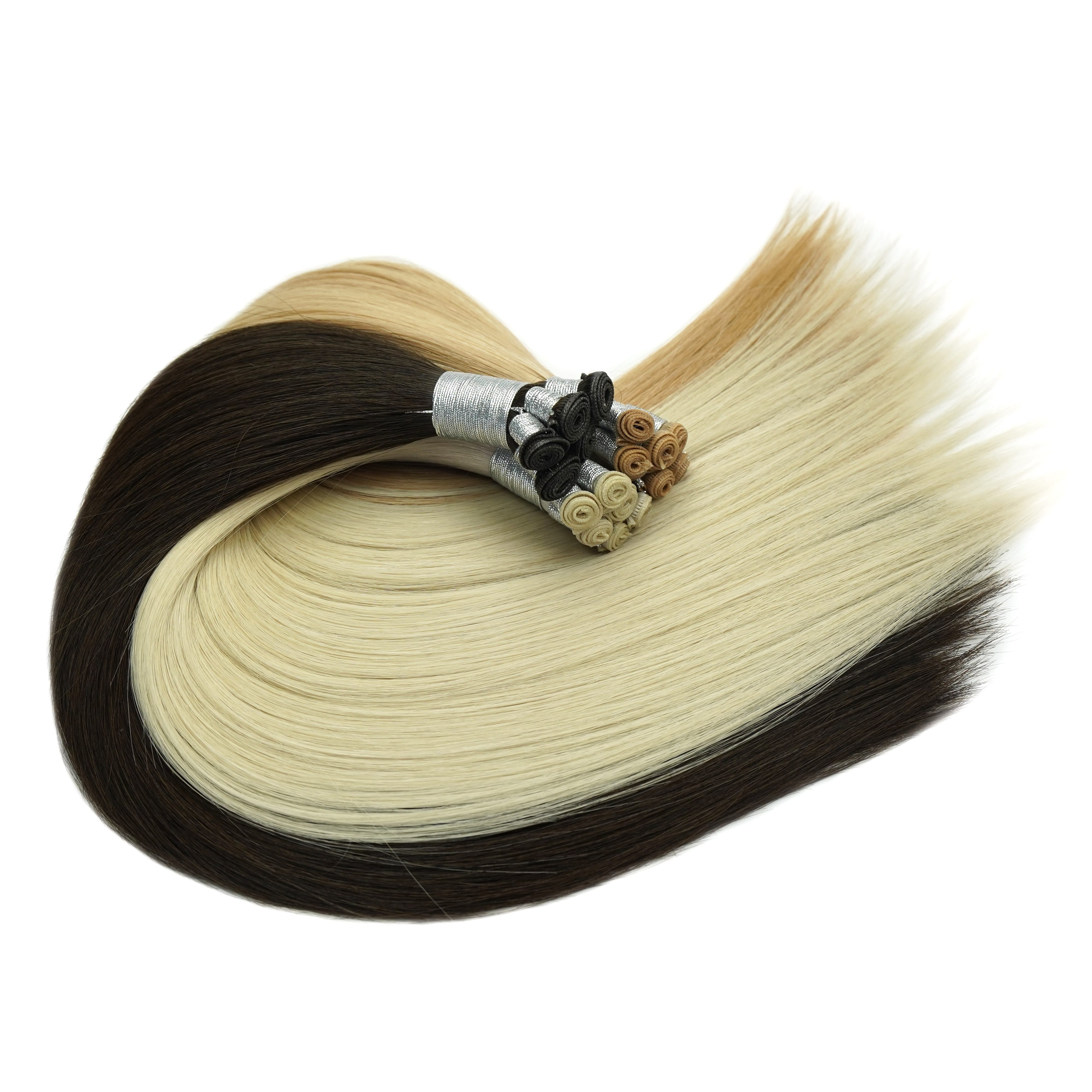
Experience tip: after cutting or customizing a sample row, brush the seam and shake the hair gently. The edge should still feel reliable after handling. A flat row should not only look clean before installation. It should remain practical during real salon work.
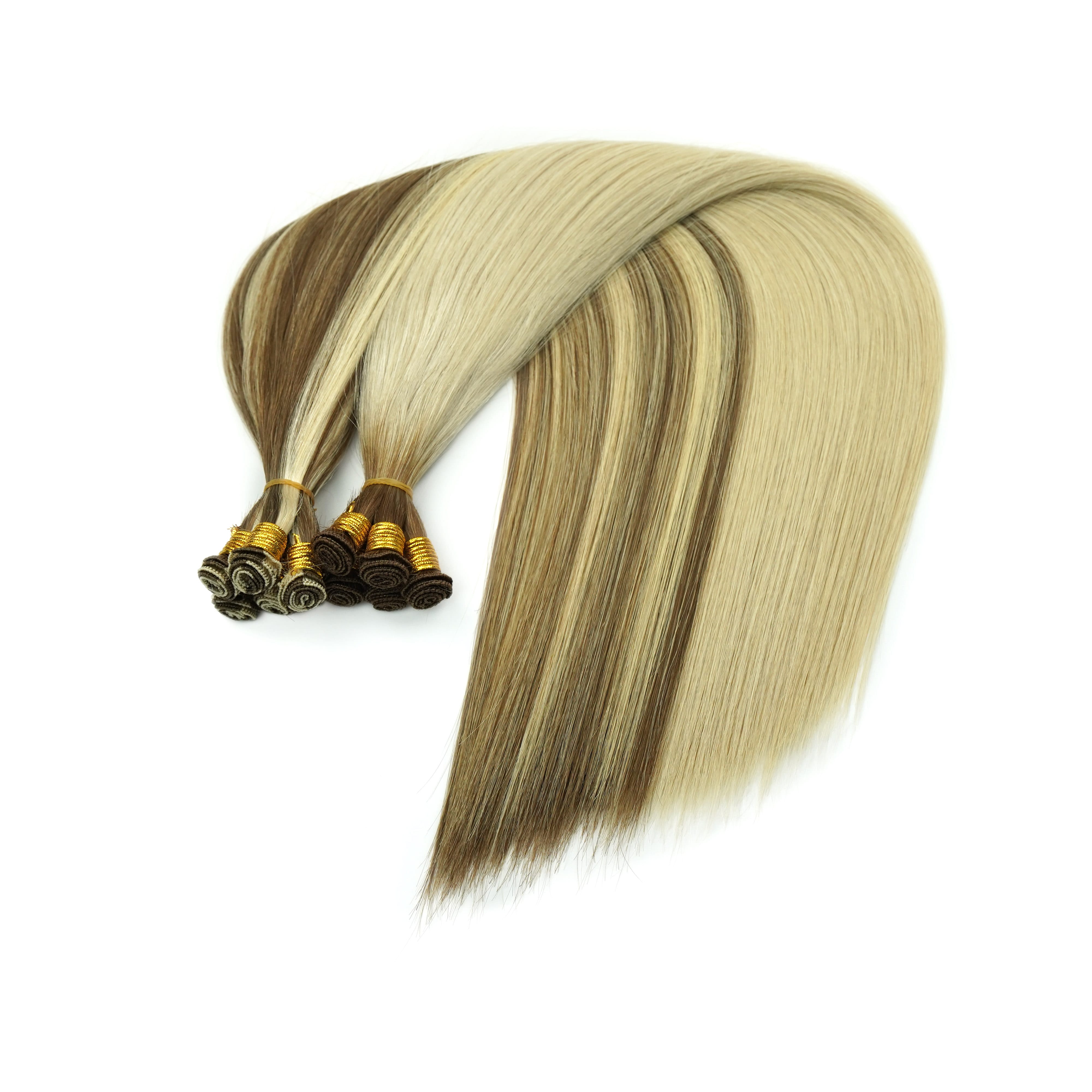
View Hand Tied Weft →Hand tied weft is often valued for a softer row feeling. It can help build fullness while keeping the attachment area more refined. This is useful for services that focus on natural movement, layered finishing, and a polished but not overbuilt result.
However, row work should always respect natural density. Too much hair in a fine section can feel heavy, even when the product looks beautiful in a photo. Therefore, sample testing should include side profile, brushing, row comfort, and movement after styling.
06 / Experience Tips
A professional sample test should copy real service conditions. Do not only touch the hair once and make a decision. Instead, move the sample through a small appointment journey. This helps reveal softness, movement, color behavior, and attachment quality in a more honest way.
First, photograph the sample before handling. Then brush from the ends upward while holding the attachment area. This shows whether the ends are smooth and whether shedding appears during basic handling. Next, wash the sample with a gentle routine and dry it fully.
After drying, check whether the hair still feels soft. Some hair looks polished before washing because of surface finish. However, the first wash reveals more about the real texture. A useful sample should remain manageable after water, not become rough, puffy, or difficult to detangle.
Hold the top and brush from the ends upward. Watch shedding, tangling, and how the ends settle.
Wash once, dry fully, and check whether the hair still feels soft without package shine.
Compare shade in daylight, mirror light, warm indoor light, and phone camera view.
Curl and smooth with normal settings. The hair should still move naturally after styling.
In real wear, the hair must survive normal mornings. A brush moves through the ends. A side section is tucked behind the ear. A quick wave may be added before work. Therefore, the sample should be tested beyond a flat table view.
A practical test is simple. Brush the sample after washing and drying, then let it rest over a mannequin shoulder or chair back. If the ends settle softly and the surface stays calm, the hair gives a better sign for daily use.
Additionally, the side view can reveal problems that the back view hides. Tape tabs may look flat from behind but show a panel shape near the ear. Wefts may create a shelf if row placement or weight is not balanced. Strand methods may separate if the section size is too heavy.
For this reason, place the sample near the face and move it forward. The color transition should look gentle. The attachment area should not feel too visible. If the side profile feels off, the solution may be a different shade, lighter grams, smaller sectioning, or another method.
07 / Actual Use
Even high-quality hair can disappoint if installation and care are unclear. Extension hair needs a routine that feels easy to remember. If the instructions are too long, they may be ignored. If they are too vague, the service result may change faster than expected.
A simple routine is more useful. Brush from the ends upward. Support the attachment area while brushing. Keep conditioner and oils away from adhesive or bond points. Dry the attachment area before sleeping. Use heat protection before styling.
Meanwhile, care instructions should match the method. Tape-in wear depends on clean tabs and oil control. Weft wear depends on careful brushing around the rows. Clip-ins need clean storage after removal. Strand methods need balanced maintenance as natural hair grows.
Real hair can support several styling moods when the quality and care routine are suitable. One day may call for a smooth blowout. Another day may need loose waves. Later, the hair may be brushed into a soft ponytail or half-up shape. This flexibility creates practical value in salon services.
However, real hair still needs protection. Light blonde and highly processed colors can need extra moisture and careful heat control. Repeated hot-tool passes may dry the ends. Strong friction may roughen the surface. Therefore, the care routine should be treated as part of the product system.
Synthetic hair should follow fiber-specific limits. Some fibers can handle low heat, while others should avoid hot tools completely. Strong friction, heavy products, and rough brushing can shorten the useful life. Therefore, synthetic pieces should be placed in a controlled use category.
For display, training, or temporary color, synthetic hair may work well. For daily wear that needs repeated restyling, it may feel less practical. This is why honest positioning matters. Clear product roles protect the final experience and keep the catalog easier to understand.
08 / Selection Logic
First, define the service purpose. If the hair must be worn daily, styled often, blended closely, and photographed from several angles, real hair usually fits better. If the hair supports a fixed display, temporary fashion effect, or basic training task, synthetic fiber may be enough.
Second, review the color goal. Real hair can support natural tonal matching, rooted effects, lowlights, and balayage-inspired blends more comfortably. Synthetic hair may offer bold and stable fashion colors, but its tone is usually fixed. Therefore, color-led services often benefit from real hair.
Third, match the method to natural density. Fine hair often needs lighter, flatter, or smaller placement. Thick hair may require stronger coverage through the back. In both cases, material, attachment, length, grams, and texture should be decided together.
The style needs natural movement in daily life.
The service includes waves, curls, blowouts, or smoothing.
The color needs root depth, soft brightness, or dimensional blending.
The hair will appear in close-up photos or video content.
The product range supports premium salon services and repeat orders.
The look is short-term, fixed, or display-focused.
The piece supports mannequins, practice, or visual education.
The style does not need repeated heat changes.
The color is bold, seasonal, or temporary.
The category is clearly separated from premium daily wear.
Moreover, the most common sourcing mistake is treating color, length, and grams as separate choices. Long lengths need enough density to avoid thin ends. Fine hair may need less weight even when the goal is length. Blonde hair may need extra care because light shades reveal dryness more easily.
For example, a 24-inch transformation needs stronger end planning than a 16-inch fullness service. A rooted blonde tape-in service needs a different color check than a dark brown weft service. Therefore, every approved sample should record the full combination.
Remy human hair extensions are often discussed because aligned cuticles can help the hair brush more smoothly when processing is controlled. Still, the term should not be the only quality signal. Softness, post-wash feel, end density, color behavior, attachment construction, and inspection consistency matter too.
In short, a strong product is a chain of details. One weak link can affect the service. A soft bundle with unstable shedding, a beautiful color with hollow ends, or a neat tab with poor adhesive behavior can still create problems.
09 / Common Mistakes
First, judging only by product photos can create weak decisions. A polished image may hide stiffness, coating, uneven ends, or attachment issues. Therefore, photos should guide interest, not final approval.
Second, relying only on first-touch softness can be misleading. A surface finish can make hair feel smooth in the package. However, the first wash reveals more about real texture. A proper review should include post-wash softness and brushing response.
Third, comparing only price can distract from service fit. A lower-cost item may not support the intended result. A higher-value item may also be unnecessary for a display or basic training use. Therefore, value should be judged by performance in the planned scene.
Fourth, checking color at the root only can cause mismatches. Natural hair has root depth, mid-length tone, and end brightness. Extensions should be compared with the area where they will blend. Otherwise, the final finish may look separated after styling.
Fifth, attachment quality sometimes receives too little attention. Clips, tape tabs, seams, tips, and rings all influence comfort and durability. Good hair with an unsuitable attachment can still create a difficult service.
Finally, unclear product roles create messy stock. Premium daily wear, temporary fashion pieces, training samples, and display items should not sit together without clear labels. A clean role system makes education, reordering, and consultation easier.
A strong extension range does not feel professional because it contains every possible item. It feels professional because each item has a clear use, a clear test method, and a clear reason to be reordered.
First, define the scene: fast volume, full length, color enhancement, temporary styling, detailed placement, or training.
Next, choose the material based on styling needs, wear time, and movement expectations.
Then, match the method to natural density, placement area, and maintenance routine.
After that, test color under daylight, salon mirror light, warm indoor light, and camera view.
Finally, record every approved sample with photos, shade notes, grams, length, texture, and method.
10 / Extended Reading
After the material choice becomes clear, related pages can support deeper product planning. Category pages help compare method direction, while product pages help confirm structure and sample needs. Therefore, the links below are placed for practical navigation instead of decoration.
11 / FAQ
The questions below answer common material concerns in a practical way. Each answer focuses on real use, selection logic, and care expectations.
Not always. Real hair is usually better for natural blending, daily wear, heat styling, and color-sensitive salon services. However, synthetic hair can work well for temporary fashion looks, mannequins, training practice, and fixed display styles. Therefore, the better choice depends on the scene.
First, test the hair in the same way it will be used. Brush from the ends upward, wash once, dry fully, and check the feel after drying. Then compare the shade in daylight, salon mirror light, warm indoor light, and phone camera view.
Tape-in pieces often work well for fast volume because they can sit flat and create visible fullness efficiently. However, clip-ins may be better for temporary event styling, while wefts can support fuller transformations through the back.
Compare the sample with the mid-lengths and ends of natural hair, not only the root area. Then check the shade under daylight, salon light, warm indoor light, and camera view. A photo record of approved shades also helps keep future reorders consistent.
Synthetic hair makes sense when the purpose is temporary, fixed, or educational. It can support display boards, mannequin styling, costume looks, short-term fashion color, and basic sectioning practice. However, it should be separated from premium daily-wear services.
A useful sample inquiry should include method, color family, length range, texture, gram plan, and target service scene. It should also explain whether the test is for fast volume, full transformation, color enhancement, temporary styling, or detailed placement.
12 / Natural Conversion
In summary, real hair and synthetic hair both have useful roles. Real hair supports natural movement, styling flexibility, color blending, and premium daily wear. Synthetic hair supports temporary looks, display work, and fixed creative projects. Therefore, the strongest sourcing decision begins with the service scene, then moves into material, method, shade, length, and grams.
Next, product format should refine the choice. Tape-in pieces help flat and efficient volume. Clip-ins support temporary styling. Wefts build fuller transformations. Strand methods support detailed movement. When each product has a clear purpose, the range becomes easier to explain, test, and reorder.
First, define the target scene before choosing material, method, color, length, or grams.
Second, test each sample through touch, wash, light, movement, and controlled styling.
Finally, save notes and photos so future orders follow a proven reference.
For a focused sourcing plan, prepare the target method, shade direction, length range, grams, texture, and sample purpose. Surblond Beauty can help compare human hair extensions by method, shade, service scene, and sample testing needs, so the next order starts from practical evidence rather than guesswork.
Request Sample Order → Contact Surblond Beauty → Browse Product Range →
zhang